Artificial breeding techniques for mandarin fish: how to raise this delicate, delicious and precious fish
The mandarin fish grows fast. Under normal conditions, it can reach 50—100 grams in the same year, 0.5 kg the following year, and 1—1.5 kg in the third year. From the age of 4 winters onward, the growth rate of body weight and body length slows down. In natural waters, the largest mandarin fish individual reaches more than 7 kg.
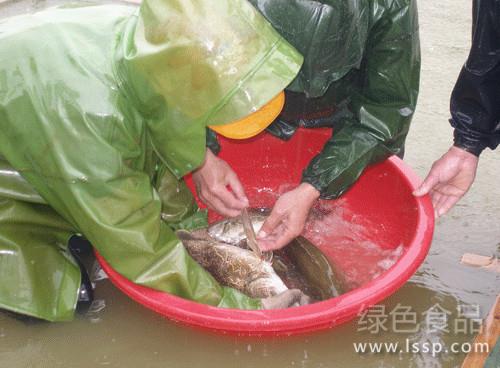
Artificial propagation of mandarin fish
Male fish need 2 years to reach sexual maturity, while females mature at the age of 3 winters; however, under good environmental conditions, 1-winter-old males can also yield sperm when stripped. The number of eggs carried by a female varies with the individual size, environment and age of the mandarin fish, ranging from about tens of thousands to 1.5 million eggs. The spawning season is from May to July. When the water temperature is above 21°C, female mandarin fish prefer to spawn on river shoals less than 1 m deep with gravel bottoms and flowing water in the upper reaches, with a male-to-female ratio of 1:1. Mandarin fish mostly court and chase at night, the female spawning and the male releasing sperm. When the water temperature is 21—24°C, the fertilized eggs hatch after about 73 hours into fry with a total length of 3.8—4.5 mm. At a body length of 5.1 mm, teeth have already appeared on the upper and lower jaws, and the fry can swim horizontally forward in the water. The front half of the body is dark purplish red and the rear half is transparent; in the water only a small purplish red spot is visible, with a large head and a pointed snout.
Artificial propagation and hatching:
1. Collecting and cultivating broodstock. This is done in winter in conjunction with harvesting on large water surfaces. Select and retain mandarin fish that are robust, uninjured, of sufficient age and with well-developed gonads as broodstock, with a sex ratio of 1:1. They can be kept in dedicated ponds or polycultured in grass carp broodstock ponds, using the mandarin fish to clear small wild miscellaneous fish from the original pond, so that each finds its proper place and reaches sexual maturity for later use.
2. Induced spawning: late May to mid-June, when the water temperature is 25—30°C, is the most suitable period. The conditions of the spawning pond are the same as for Chinese carps, and stimulation by flowing water is required. For induced spawning, drugs such as luteinizing hormone-releasing hormone analogs can be used, injected at about 30 micrograms per kilogram of body weight, with the dose for male fish halved. Spawning and courtship occur after about 16—22 hours, and artificial insemination is then carried out.
3. Hatching: Hatching rings and hatching jars used for Chinese carps are both suitable, but the water quality must be fresh and clear, with sufficient oxygen, and large plankton must be prevented from entering, along with damage from Trichodina and similar parasites. When the water temperature is constant at 25—26°C, the fertilized eggs need only 30 hours to hatch into fry.
Fry rearing: Rear them in small ponds with slight water flow. The mandarin fish feeds mainly on live fish and shrimp throughout its life. When carrying out artificial induced spawning, fry of blunt snout bream or fine-scaled xenocypris must be bred in advance or simultaneously, so that the mandarin fish has prey to take when it starts feeding; otherwise it will starve to death. Within 1 month it can be reared to 2.6—3 cm (commonly called summer fry), generally requiring 200—300 forage fish fry.
Adult fish farming techniques:
1. Monoculture: A dedicated pond area of 0.5—1 mu is suitable, with fresh water quality and slight flow. Use small wild miscellaneous fish of low economic value such as topmouth gudgeon, or surplus tilapia fry and small shrimp, as feed. Stocking 1000 mandarin fish summer fry per mu can produce about 100—150 kg of commercial mandarin fish. The feed conversion ratio is 2.
2. Polyculture: Polyculture in adult Chinese carp ponds with abundant wild miscellaneous fish, which serve as a food source for the mandarin fish. Stocking 20—40 summer fry per mu will not harm large-sized Chinese carps. However, the water should not be too fertile. When preventing and treating diseases of Chinese carps, drugs must be applied with caution because mandarin fish are sensitive to chemicals such as copper sulfate.
3. Add-in culture: Add-in culture in Chinese carp broodstock rearing ponds can both eliminate small wild miscellaneous fish in the pond, ensuring the growth and development of the broodstock, and obtain high-quality commercial mandarin fish. Stocking 30—50 summer fry per mu yields 5—8 kg per mu, and they can be marketed in the same year.