Beef cattle fattening results are tied to farming profitability; how to improve fattening results
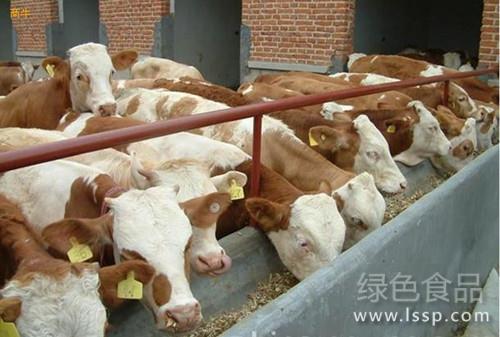
Beef cattle fattening
Breed selection:The nutrient requirements of non-beef breeds are 10-20% higher than those of beef breeds. Purebred beef cattle do not grow as fast as crossbreds; three-way crossbred beef cattle grow faster than two-way crossbreds, and bulls grow faster than cows.
Age selection:One-year-old cattle grow the fastest; 2-year-old cattle grow at 75% the rate of 1-year-olds; 3-year-old cattle grow at 50% the rate of 2-year-olds. To reach the required slaughter weight, although buying young calves costs less, the rearing time is relatively long, total feed consumption is higher, barns and equipment are tied up for longer, and capital turnover is slow. In view of the above, except when producing high-grade tender "white veal" for which calves should be selected, it is generally best to choose 2-3-year-old beef cattle. If older culled cattle are chosen for fattening, select those that are large-bodied, healthy and disease-free, and carry out short-term fattening; never choose sick cattle.
Barn temperature:Temperature affects feed consumption and weight gain in fattening cattle. The suitable temperature for a cattle barn is 10-20°C. When the average barn temperature falls below 7°C, the cattle's heat production increases, feed intake rises, and feed efficiency decreases. When the barn temperature exceeds 27°C, the cattle's body temperature rises, breathing rate increases, appetite declines, feed intake decreases, and weight gain is affected. Therefore, pay attention to ventilation in summer and cold protection in winter, so that the barn meets the requirement of warm in winter and cool in summer.
Fattening days:Tests show that for beef cattle fattening, 95 days gives the best results, with a daily gain of 964 grams, the lowest feed cost per 1 kg of weight gain, and the highest feed conversion rate; conversely, the longer the fattening period, the higher the feed cost per 1 kg of gain and the lower the feed conversion rate.
Feed requirements:The protein content in the feed should account for 12%, and for older fattening cattle it should account for more than 10%; if below these levels, the cattle's rate of weight gain will be affected. The proportion of roughage in the cattle's daily ration should account for 30-40%. At present, the roughage fed to cattle in rural areas is of poor quality with extremely low digestibility; methods such as chopping short, ensiling, ammoniation and saccharification should be used to improve palatability, increase nutrient content and raise digestibility. The fineness of feed grinding not only affects the palatability, feed intake and daily gain of fattening cattle, but also affects feed conversion rate and feed cost. Feed should not be ground too fine; if too fine, it affects rumination and digestion in cattle and easily causes feed impaction. Concentrate feed is generally ground to 2-3 mm.
Buy cattle locally as much as possible:When purchasing beef cattle from other places, the transport density in summer must not be too high; provide sufficient drinking water along the way and do a good job of heat prevention and cooling. Due to regional differences (climate, feed, etc.), cattle bought from other places need a period of time to adapt to the new environment, generally 25-45 days, before they recover their original body weight. Therefore, when buying cattle, if the regional price difference is not large, one should not travel far to seek distant sources, so as to avoid more loss than gain.
Adding weight-gain agents:At present, the more widely used ones are "zearalanol" and "rumensin"; they belong neither to steroidal compounds nor to hormone drugs, and the average weight gain rate is above 10-20%. These weight-gain agents are non-toxic, odorless, free of side effects, leave no residue in the meat, and are safe and reliable.
Deworming, appetite stimulation and management:Before beef cattle fattening, deworming and appetite stimulation must be carried out. Daily management should keep the cattle pen sanitary, avoid feeding moldy or spoiled feed, ensure sufficient drinking water, keep the environment quiet, use pen feeding, and reduce exercise, so as to achieve the ideal weight gain effect.
Slaughter at the right time:The fattening period for 2-3-year-old cattle can be divided into two stages. In the earlier stage of growth and development, weight gain is mainly muscle, bone and internal organs, requiring a protein content of about 17% in the feed and energy feed of 2.4 Mcal/kg. Later weight gain is mainly fat, requiring a protein content of 12% in the feed and energy feed of 2.7 Mcal/kg. When fat deposition in fattening beef cattle reaches a certain level, the cattle's appetite declines, feed conversion rate decreases, and daily gain falls. For calf fattening, 8-10 months; for adult cattle, 3 months. Slaughter begins when body weight reaches 400-600 kg, giving the best economic benefit.