Fish disease prevention and control key points in early spring when organisms are scarce and water temperature fluctuates greatly
Although spring has arrived, the temperature is still relatively low. When the water temperature is between 5°C and 14°C, most fish secrete few neurohormones, have low digestive enzyme activity, are disinclined to move and feed, and biological feed is scarce; at the same time, water temperature rises and falls sharply, which not only greatly affects fish growth and development but also leads to fish diseases and even death. Therefore, the key to spring aquaculture lies in preventing and treating fish diseases, mainly preventing the following diseases:
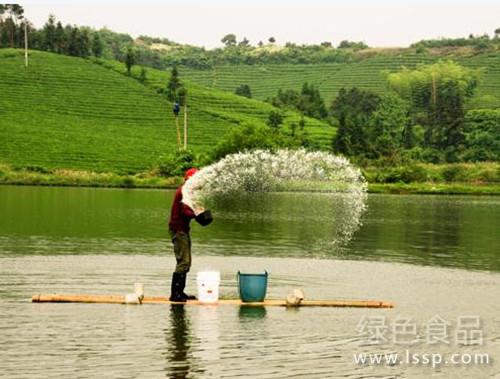
Early spring fish disease prevention and control
First, pond fish anorexia. When the water temperature is below 15°C, most fish reduce feeding and growth slows; when the water temperature drops to 15°C, for silver carp, bighead carp, grass carp and other fish, do not feed concentrated feed, only feed green fodder; when the water temperature is 10°C, feed little or no green fodder, but appropriate amounts of manure can still be applied, though the amount should not be too much, to prevent water quality from deteriorating.
Second, pond water turning black. In spring, low temperatures and rainy weather, with sudden cold and hot changes, will cause massive death of algae in fish ponds, deterioration of water quality, and blackening of water color. In severe cases, the pond water becomes foul-smelling, causing oxygen deficiency in the pond water and fish surfacing for air. When continuous low temperature and rainy weather lead to deteriorated water quality, the water must be changed in time (change 15 cm to 30 cm of water) to improve water quality. In addition, quicklime should be applied (7 kg to 10 kg per mu), which serves to sterilize and disinfect, coagulate suspended matter and neutralize acidic water, thereby reducing harm to fish.
Third, pond water becoming clear and transparent. In late spring, continuous rainy days often occur, and some pond water changes from greenish-brown to clear and transparent. This is mainly because the water is too fertile and there are too many zooplankton; secondly, because the number of bighead carp is small. Bighead carp feed on zooplankton, and zooplankton feed on phytoplankton. When a large number of reproducing zooplankton eat the phytoplankton, the pond water becomes clear, which is unfavorable for the growth and development of pond fish. At this time, new water should be injected in time to increase dissolved oxygen in the water. Keep the pond water at 1 m per mu, and splash with 2 liang to 3 liang of crystal trichlorfon dissolved in water to kill zooplankton; appropriately increase the stocking density of bighead carp and appropriately apply organic fertilizer to promote phytoplankton reproduction.
Fourth, fish pond diseases and pests. During continuous rainy days, in some "old water" fish ponds, bighead carp and silver carp are prone to anchor worm disease. In severe infections, the fish body looks as if covered with a straw rain cape, which is unfavorable for fish growth and development. Prevention and control measures: apply 350 kg to 400 kg of pig or cow manure per mu, or 100 kg to 150 kg of human feces and urea; per mu with a water depth of 1 m, feed 100 kg of distillers' grains, and splash with 100 g to 150 g of crystal trichlorfon dissolved in water, once a day, for 2 to 3 consecutive times.