How to Judge Chicken Diseases from Laying Hen Egg Production and Egg Changes
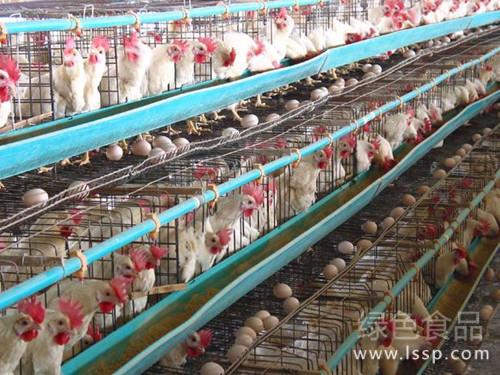
Laying hens
1. Observe laying time: under normal circumstances, 70%-80% of healthy laying hens lay eggs before 12 o'clock, and the remaining 20%-30% lay eggs between 2 and 4 in the afternoon. If the flock's laying time is irregular, or even lays eggs at night, these are signs of disease.
2. Observe egg production: during the peak laying period, a slight difference in the number of eggs laid is normal, but if it rises and falls with large fluctuations, it indicates that the flock has a potential illness: a sudden drop of 20% may be caused by fright, a high-temperature environment, or lack of water; if it drops by 40%-50%, then consider whether the laying hens have egg drop syndrome or feed poisoning, etc.
3. Observe the eggshell: a normal eggshell has a uniform surface, slightly rough, and is brown or brownish-white. If soft-shelled eggs or thin-shelled eggs appear, it is mostly due to vitamin D3 deficiency or a lack of calcium and phosphorus in the feed or an improper ratio; if the eggshell has pockmarks, pale green spots, or the eggshell is rough, or there are deformed eggs, all are oviduct inflammation.
4. Observe the albumen: if the albumen turns pink, then the cottonseed cake content in the feed is too high, or the iron ion level in the drinking water is on the high side. If the albumen is thin, it may be due to the use of sulfonamide drugs or certain deworming drugs. If the albumen has an off odor, it is poor absorption of fish meal. If the albumen has blood spots or meat spots, it is mostly oviduct inflammation, a mixture of excessive mucus secreted and a small amount of hemoglobin. If there are sesame-sized round dots or larger flakes within the albumen, the laying hens have prosthogonimiasis.
5. Observe the yolk: an orange-yellow yolk is caused by a relatively high amount of cottonseed cake or a certain pigment in the feed. A grayish-white yolk is due to a lack of yellow pigment, vitamin A, and B vitamins in the diet, etc. A green yolk is due to too much sodium chlorophyllin in the feed. A thin yolk is due to poor nutrition and vitamin deficiency in the laying hens.