Practical tips to improve chick survival rate for more reliable farming profits
Chick survival rate is closely tied to profits. Only by learning and mastering chick-raising techniques can you ensure a high chick survival rate and fast growth.
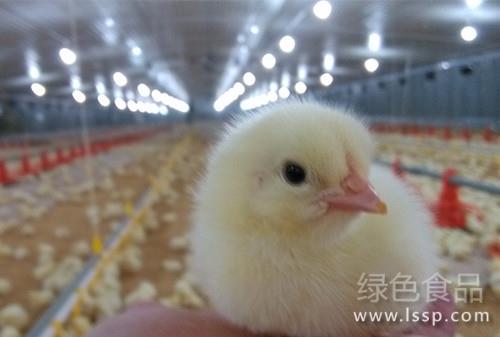
Chicks
1. Strict disinfection:Before receiving the chicks, prepare the brooding room. Thoroughly wash feeders, drinkers and other equipment with clean water, then scrub with hot alkaline water, rinse with clean water, and dry for later use. Rinse and sweep the brooding room clean with water; once dry, spread the bedding, place the brooding equipment inside, and fumigate and disinfect in a sealed room at 28 ml formalin, 14 g potassium permanganate and 14 ml water per cubic meter. Close doors and windows tightly for 12~24 hours, then open them, ventilate, and preheat the room temperature to above 30°C before bringing the chicks in.
2. Select healthy chicks:Healthy chicks are lively and active, with sturdy legs, free movement, bright eyes, and a well-healed navel. Weak chicks have dirty feathers, are listless, close their eyes and doze, and cannot stand steadily. When buying chicks, select healthy ones.
3. Provide water promptly:Within 24 hours of hatching, chicks can lose 8% of their water; within 48 hours, 15%. When water loss exceeds 15%, chicks quickly show symptoms of dehydration. Therefore, 12 hours after hatching, chicks should be given plenty of clean drinking water in a timely manner. For the first few days, give water with 0.01% potassium permanganate and added multivitamins to cleanse the digestive tract and promote the passing of meconium.
4. Feed carefully:The feed should be palatable, easy to digest, fresh and high quality, with a moderate particle size. Start feeding chicks within 12~24 hours of hatching. For starter feed, use crushed corn, millet, broken rice, crushed wheat, etc., cooked until eight-tenths done to aid digestion. From 1~3 days of age, feed 6~8 times per day and night; after 4 days of age, feed 4~5 times a day, with 1 feeding at night. Gradually switch to chick mixed feed.
5. Adjust temperature and humidity:Suitable temperature: 30°C~32°C at 1 week of age, 28°C~30°C at 2 weeks, 25°C~28°C at 3 weeks, 22°C~25°C at 4 weeks, then lower by 1.5°C~2°C each week until room temperature. Humidity should be kept at 60%~65% within the first week, and 50%~60% after 1 week. If the coop is too damp, use cloth bags filled with quicklime to absorb moisture; if too dry, place a basin of water on the stove so evaporation increases indoor humidity.
6. Reasonable density:Density should be adjusted according to chick age, breed, rearing method, and coop structure. Generally, the reasonable density is: 0~4 weeks of age, 20—25 birds per square meter; 5~7 weeks of age, 10—20 birds. For brooding on wire floors, the reasonable density is: 0~4 weeks of age, 24—28 birds per square meter; 5~7 weeks of age, 15—20 birds.
7. Scientific lighting:Reasonable lighting duration: 24 hours at 0~3 days of age, 16~19 hours at 4~14 days of age, and natural lighting after 15 days of age. For light intensity, in the first week hang one 40W bulb at a height of 2 m per 15 sq m of coop; from the second week, use a 25W bulb.
Chick disease prevention
8. Sanitation and disease prevention:Disinfect the coop regularly, keep it dry and clean, change bedding frequently, keep drinking water clean and feed fresh. For the first immunization of chicks, inject 0.2 ml of Marek's disease turkey herpesvirus freeze-dried vaccine. Add 5% glucose, 0.1% vitamins, penicillin and streptomycin to the drinking water. From 2~7 days of age, add 0.02% furazolidone to the drinking water and mix 0.1% chloramphenicol into the feed. At 5~7 days of age, administer Newcastle disease vaccine strain II or IV by eye and nose drops at the specified dose. At 14 days of age, inject Marek's vaccine subcutaneously. At 18 days of age, inject infectious bursal disease vaccine. At 30 days of age, use Newcastle disease vaccine strain II or IV again. If sick chickens are found, isolate and treat them promptly; take dead chickens out of the coop and burn or bury them deeply.
9. Fresh air:Strengthen ventilation in the brooding room to keep the air inside fresh. Indoor ventilation can be done at midday when sunlight is plentiful; open doors and windows gradually from a small opening to finally half-open. Never suddenly open doors and windows wide, letting cold wind blow directly and causing the room temperature to drop abruptly.
10. Careful management:Observe the flock often and keep track of its condition. Reduce stress factors and strictly prevent cats, rats and others from entering the coop; check the coop temperature at all times, as too low a temperature causes chicks to huddle and crush each other to death; if chicks with vent pecking are found, apply gentian violet to the pecked area; from 7~11 days of age, debeak promptly, removing 1/2 of the upper beak and 1/3 of the lower beak with a debeaker. Two days before debeaking, add an appropriate amount of vitamin K3 (20~30 ml/kg body weight) and antibiotics to the feed to prevent bleeding and reduce the stress response to debeaking.