Meat pigeon breeding tips: focus on weight gain to improve profitability
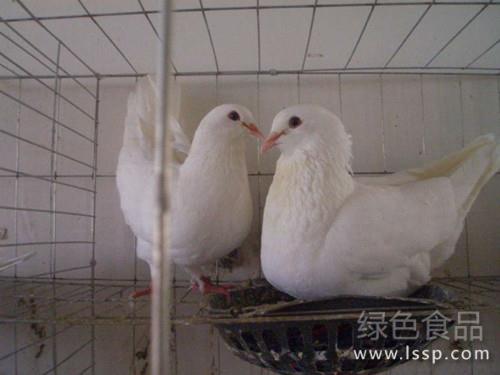
Meat pigeon
1. Select good breeds. Choose excellent meat pigeon breeds such as the Carrier pigeon, Thai Silver King pigeon, Hong Kong King pigeon, Shenzhen King pigeon, Mondain pigeon, Homer pigeon, Carneau pigeon, and American White King pigeon to increase breeding efficiency.
2. Build the pigeon house well. Build the pigeon house on high, dry ground with good drainage, a quiet environment, and few stress factors, striving for wind protection, rain shelter, shade, and moisture protection, and favoring ventilation, lighting, and protection from predators.
3. Reasonable density. For cage-raised meat pigeons, 3 pairs per sq m is suitable; for floor-raised meat pigeons, 2 pairs per sq m is suitable. Too high a density is not good for the growth, reproduction, and chick rearing of meat pigeons; too low a density means the cage and house space cannot be fully used, causing waste of equipment.
4. Mix feed skillfully. Ideal meat pigeon feed formulas: 45% paddy rice, 25% peas, 20% corn, 10% wheat, or 45% corn, 25% peas, 15% wheat, 15% sorghum. Where conditions permit, an appropriate amount of hempseed and mung beans may be added. Strive to make it clean, pollution-free, and free of mold.
5. Feed at fixed times. One meat pigeon needs 45-50 grams of feed per day, and it is best to leave a small amount each time; feeding too much causes waste and increases breeding costs. At the same time, according to the different growth stages of meat pigeons, the energy feed and protein feed should be appropriately adjusted to meet the needs of meat pigeon growth and development.
6. Feed health grit. One meat pigeon needs to eat about 6 grams of health grit per day, mixed from 30% red clay, 15% shell powder, 10% bone meal, 25% medium sand, and 5% each of gypsum, charcoal, lime, and salt.
7. Prevent heatstroke. Protect the pigeon house from direct sun, and keep the interior ventilated and cool; in the feed, add heat-clearing and heat-relieving ingredients such as mung beans, and regularly administer heat-clearing and heat-relieving Chinese herbal medicines, such as rhubarb soda tablets, 1 tablet each time; for laying pigeon nest bowls, use an appropriate amount of bedding, preferably pine needles; in the hot midsummer, stop incubating eggs and let the laying pigeons rest.
8. Bathe at the right time. Keep the pigeon body clean; in spring, give a water bath 2-3 times a month, choosing a warm sunny noon, and bathe with a 0.1% potassium permanganate solution.
9. Do a good job in breeding. For young pigeons kept for breeding, in addition to careful feeding, appropriately increase lighting and provide a relatively spacious activity area to promote their development as quickly as possible; after they reach sexual maturity, promptly cull the inferior and keep the superior, and carry out natural or artificial pairing, so as to continuously expand the flock and enhance production capacity.
10. Strengthen disease prevention. Keep the pigeon house clean, disinfect regularly, and also clean and disinfect all kinds of equipment frequently. During the growth and development period of meat pigeons, in addition to vaccinating according to schedule, observe the behavior and appearance of the meat pigeons at ordinary times, and promptly carry out inspection, prevention, and control of common diseases and parasitic diseases.
11. Strictly prevent predators. Mainly prevent harm from predators such as cats, dogs, rats, and snakes, as well as toxic substances.
12. Sell in time. The best time for meat pigeons to go on the market is four weeks of age (28 days); at this time, the pigeon body is beautiful in appearance, moderate in weight, fine and tender in meat, delicious in taste, and rich in nutrition, and is very popular. They should be sold on the market in time.