Cage-raising techniques for Silkie chickens make management easier and profits higher
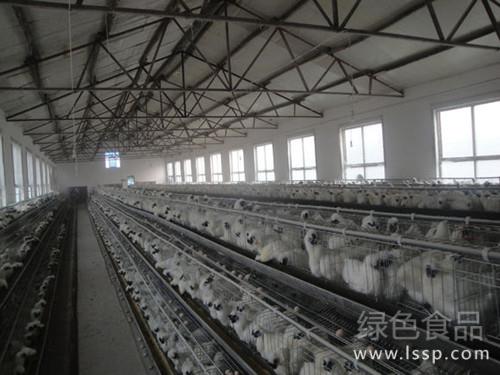
Cage-raised Silkie chickens
1. Lighting:
From 20 weeks of age, natural light alone cannot raise the egg production rate of caged Silkie chickens, so 0.5 to 1 hour of artificial light must be added daily. Starting from 21 weeks of age, increase it by half an hour each week until the peak of egg production, that is, 30 to 32 weeks of age, when natural plus artificial light reaches 15 to 16 hours per day, with a light intensity of 5 to 10 watts; 2 months before culling, this can be changed to 17 hours.
During artificial lighting, the distribution ratio of light bulbs in the chicken house is 1:1.5, that is, the distance between bulbs in each row is 1.5 times the distance between the bulbs and the chickens' bodies. If the chicken house is large, two or more rows of bulbs can be used for lighting, and adjacent rows of bulbs should be arranged in a staggered distribution. If it is a multi-tier cage system, the bulbs along each aisle should be arranged at uneven heights in a zigzag pattern.
2. Beak trimming:
Some people believe that caged Silkie chickens do not need beak trimming, but this is not the case. Even in individual cages, some chickens peck at the cloaca and feathers through the gaps in the cage mesh. Feather-pecking and cannibalism in the flock can reduce the egg production rate and, in severe cases, can cause death. Therefore, Silkie chickens must be beak-trimmed 1 to 2 times. The earliest can be done at 5 to 9 days of age or 12 to 13 weeks before being placed in cages; use a beak-trimming machine to cut off the upper beak 0.5 cm in front of the nostrils, and when cutting the lower beak, leave it a little longer than the upper beak. Before beak trimming, add vitamin K to the water to prevent continuous bleeding; after beak trimming, increase the amount of feed and the water depth in the troughs, feeders and drinkers.
3. Create a suitable environment:
The suitable temperature in the chicken house should be 18 to 20°C, and the relative humidity should be 60% to 75%. If it is lower or higher than this range, corresponding measures must be taken. Because caged Silkie chickens are kept at a relatively high density, the temperature and humidity in the chicken house differ across seasons, so farmers are required to always do the work in advance according to changing conditions. For example, to prevent summer heat, install heat-insulating devices on the roof of the chicken house, install ventilation and cooling facilities in the chicken house, remove manure in time to reduce ammonia, and during ventilation, the wind speed near the chickens should not exceed 17 m per second. In cold winters, do a good job of keeping warm; to avoid drafts and cold wind, hang warm door curtains at the entrance. In short, achieve heat prevention in summer and cold prevention and warmth preservation in winter.
4. Minimize stress reactions as much as possible:
Silkie chickens are gentle in temperament, timid and easily frightened. Once frightened, ovulation will be affected, especially during the laying period, so it is very necessary to maintain a quiet environment for the flock. Two weeks before the start of laying, move them into laying cages so they have time to adapt to the new environment. Keepers should try to eliminate all disturbing factors; vaccination, repair of the chicken house, cleaning of the cages and disinfection should be completed before the chickens are placed in cages. In daily work, such as feeding, removing manure and cleaning the chicken house, keep movements gentle and voices low, frighten the flock as little as possible, refuse entry to strangers, and prevent animals such as cats, dogs and birds from intruding.
5. Reasonable stocking density:
This point is very important; if the stocking density is high, the egg production rate will decline. The ideal stocking density is that the cage floor area occupied by each Silkie chicken is no less than 400 sq cm. To make it convenient for the chickens to eat, the length of feeder and water trough required per chicken should be no less than 13 cm.