Supplementary feeding for laying ducks must be done according to the symptoms; master the four observation techniques
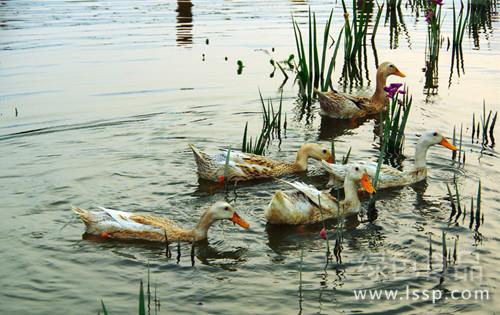
Laying ducks
1. Feed according to body weight.Determine feed quality and feeding amount based on the body weight and egg-laying rate of laying ducks: 1. When the flock's egg-laying rate is above 80% and the body weight of the laying ducks shows a slight downward trend, appropriately add animal-based feed to the feed (fresh river snails are even better); 2. When the ducks' body weight increases and shows a tendency to become fat, but the egg-laying rate is at 80%, appropriately increase the feeding of coarse feed and green feed, or control feed intake (150 grams per duck per day), reducing free feeding by 50%, and do not let the laying ducks eat too much concentrated feed, but animal protein feed should still be maintained at the original level or slightly increased; 3. When body weight is normal and the egg-laying rate is also relatively high, the protein level in the feed can be slightly increased compared with the previous stage; 4. When the egg-laying rate drops to 60% and is difficult to raise further, there is no need to add feed.
2. Feed according to droppings.If the droppings are thick, loose, strip-shaped, with a glossy surface, and when lightly prodded with the foot can be broken into several sections, it indicates that the proportions of concentrated, coarse, and green feed are reasonable. If the droppings are small, hard, and black, and after prodding the cross-section appears granular, it indicates that too much concentrated feed has been fed and the amount of green feed is small, and digestion and absorption are abnormal; the amount of concentrated feed should be reduced and more green feed should be added. If the droppings are light in color and unformed, scattering as soon as they are excreted, it indicates that concentrated feed is insufficient and nutrition is low, so concentrated feed should be added. If the droppings are yellow-white or gray-green with a foul odor, it indicates that the ducks are sick and should be isolated for treatment.
3. Feed according to egg production.If the eggs are abnormal in shape and small, it indicates insufficient nutrition, and high-protein feeds such as soybean cake, peanut cake, and fish meal must be added so that the crude protein content of the daily ration is raised to 20%, and the total amount of the daily ration should be appropriately increased. If the eggshells become thin, translucent, have sand holes, are rough, or even soft-shelled eggs are laid, it indicates that the feed is of poor quality, especially insufficient calcium, or a vitamin deficiency; mineral supplements such as bone meal, shell meal, and lime powder and feeds rich in vitamin D should be added. If egg weight decreases, cod liver oil and inorganic salt additives can be added. If egg laying is concentrated at 2 a.m., it indicates that feeding is done properly. If egg laying is delayed each day and the eggs laid become smaller, then more feed should be given.
4. Feed according to spirit and vitality.Healthy laying ducks with a high egg-laying rate are full of energy and dive for long periods; after coming ashore, their feathers are smooth and not wet, and water splashes all around. If the laying ducks are listless and move weakly, and after being released are afraid to enter the water, and after entering the water their feathers become sticky and wet, or they even sink, it indicates insufficient nutrition. Animal-based fresh live feed should be added in good time, and cod liver oil should also be supplemented (clear cod liver oil is better for feeding), mixed into powdered feed and fed at 1 milliliter per duck per day for 3 days, then stopped for 7 days as one treatment course, or fed at 0.5 milliliters per duck per day continuously for 10 days.