Fertilizing fish ponds in spring can increase natural food for fish, but the precautions must be kept in mind
Fertilizing fish ponds helps reproduce natural fish food such as plankton, epiphytic algae, and benthic animals. After fertilization, microorganisms multiply in large numbers and organic debris increases, providing abundant food resources for farmed fish such as silver carp and bighead carp; part of the decaying organic fertilizer can be directly eaten by fish such as common carp and crucian carp. When fertilizing fish ponds in spring, the following precautions should be noted:
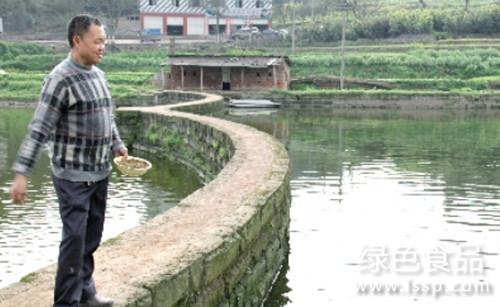
Spring fertilizing of fish ponds
1. Organic fertilizer must be fully fermented:
In spring, fish pond water temperature is low and the water is rich in oxygen. Reasonable application of organic fertilizer not only costs little but also gives good farming results. Organic fertilizers such as night soil and livestock and poultry manure applied to fish ponds should be fully fermented. Fertilizer that has been fermented, decomposed, and thoroughly broken down is applied to the fish pond; it can reduce oxygen consumption in the water, be quickly absorbed and used by phytoplankton, and also kill pathogens in the organic fertilizer.
2. Apply less, evenly, and frequently:
The so-called "apply less" means applying several dozen kg to 100 kg of organic fertilizer per mu each time; the so-called "apply evenly" means splashing it evenly with water and manure liquid so that the pond water color is yellow-brown or oily green, with no oil film on the surface and transparency kept at 20—30cm; the so-called "apply frequently" means that as fish feed, when the pond water fertility drops and transparency is greater than 30cm, fertilize again immediately.
3. Determine the fertilization amount according to the fish:
For fish ponds that are not mainly raising silver carp and bighead carp, because feed is supplied, the spring fertilization amount should be reduced so that transparency remains at 30—40cm; as air temperature rises, pond water fertility becomes greater and greater. For intensively farmed high-yield common carp and grass carp ponds, although some silver carp and bighead carp are polycultured, fertilization is not suitable in spring.
4. The best time to fertilize is on a sunny morning:
Pay attention to listening to (or watching) the weather forecast, and do not fertilize on cloudy or rainy days. Phytoplankton reproduce and grow through photosynthesis. Fertilizing on the morning of 2—3 consecutive sunny days can promote microbial proliferation fastest and best, reduce organic fertilizer pollution of water quality to the greatest extent, and ensure a virtuous material cycle in the fish pond.
5. Change the water regularly to keep water quality fresh:
If organic matter and various biological metabolic wastes accumulate too much in the fish pond, oxygen content in the water drops, and the composition of plankton is poor, fish growth will be affected. Therefore, new water should be regularly exchanged to prevent the pond water from becoming too fertile, and always keep the water quality "fertile, lively, tender, and refreshing."