Fish Pond Leakage Increases Fish Farming Costs, Seven Methods to Prevent Leakage
Fish pond leakage directly affects fish survival. It not only increases the feed conversion ratio, water and electricity costs and farming costs, but also causes slow fish growth, more fish diseases and a high mortality rate. Fish farmers can take advantage of the pond resting period to find the causes and carry out repairs according to different leakage conditions. The following introduces seven methods to prevent fish pond leakage:
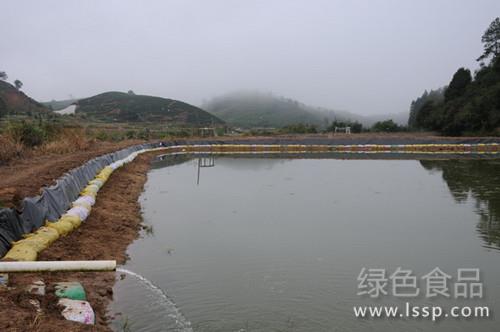
Fish Pond Leakage Prevention
Desilting and Deep Digging Method:Some fish ponds, long neglected and in disrepair, have deep accumulated silt at the bottom, and the pond slopes have collapsed and leak. Once there is a drought and the pond water evaporates, it easily causes fish to gasp for air at the surface due to oxygen deficiency. For such fish ponds, after fishing, reasonable planning should be carried out, and silt should be cleared and the pond dug deeper so that the water depth is kept above 2 m.
Mud Seepage Plugging Method:For fish ponds with ordinary leakage, after clearing the pond, first spread a layer of finely crushed clay on the pond bottom, then add water so that the clay is evenly spread over the pond bottom by the water flow, serving to protect the bottom and plug leaks; or add an appropriate amount of water, stir the clay into mud, and let it seep by itself into the gaps between the soil particles at the pond bottom to reduce water permeability.
Clay Lining Method:For fish ponds with a high sand content, first drain the pond water, dig out the silt and debris, and after drying for 15—20 days, evenly spread a 15—20 cm thick layer of clay on the pond bottom and side slopes, then compact or tamp it with machinery. In addition, some grass seed can be sown on the side slopes to implement turf slope protection.
Rolling the Slope Bottom Method:For large old fish ponds or newly dug fish ponds, mechanical rolling can be used according to the seepage area and degree, or the soil at the bottom of the leaking part can be loosened, an appropriate amount of clay or quicklime added, stirred evenly, and then rolled.
Brick and Lime Lining Method:For fish ponds with severe leakage, the pond water should first be drained, the silt cleared and the pond dried for a few days, and then the pond bottom and side slopes should be leveled and tamped. The side slopes should be lined with bricks using lime mortar, and the surface smoothed with cement so that it is smooth and free of gaps. Where conditions permit, prefabricated square cement slabs can be used to pave the pond slopes. The gaps between the slope slabs should be filled and smoothed with cement; the pond bottom should be rolled after being spread with a 20 cm thick layer of clay and quicklime, or evenly spread with a 30 cm thick layer of clay, added with an appropriate amount of water, mixed with machinery, and allowed to dry by itself, forming a protective layer after hardening.
Plastic Film Laying Method:For small intensive fish ponds, the four side slopes can be shoveled flat and tamped. First apply a 2—3 cm thick layer of thin mud, then lay a layer of plastic film, with the lower end of the film buried about 15 cm into the pond bottom and the upper end compacted with soil; the pond bottom should be rolled after being lined with clay and quicklime, or evenly spread with a 20—30 cm thick layer of clay, added with water or human excrement and urine, stirred into a muddy state, and allowed to seep and dry naturally, so that it is best if no water leaks.
Silt Trapping with Water Method:For fish ponds that have already been filled with water and stocked with fish, woven bags or fine-mesh net bags can be filled with loam or clay, one end tied with a rope, and the bag dragged along the bottom, repeatedly pulled back and forth in the fish pond, including the pond bottom and pond embankment. When the bag feels light, clay should be added again. For fish ponds already stocked with fish, first pull across 1/2 of the pond, then the other half.