Spring goose raising requires strict prevention of gosling plague, colds, indigestion and other goose diseases
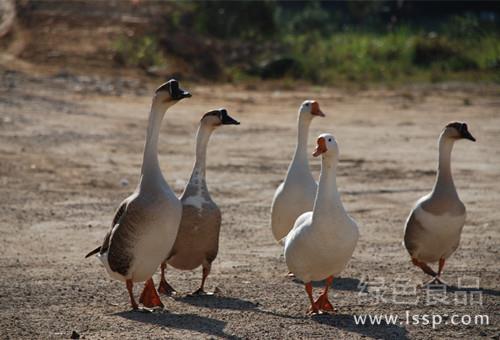
Goose
I. Indigestion in goslings:
The digestive organs of goslings younger than 2 weeks old are not fully developed and their digestive function is weak, so improper feeding can easily cause indigestion. For example, feeding goslings high-crude-fiber feed shortly after hatching; suddenly changing the feed and feeding amount; and the absence of fine sand grains in the feed, which weakens the digestive function of the gizzard. In addition, factors such as sudden weather changes can also easily lead to indigestion in goslings.
1. General symptoms. Sick goslings are listless, with heads lowered and eyes closed, dull feathers, and drooping wings, and they have a poor appetite or stop eating entirely. The droppings are thin, with increased frequency of defecation, appearing pale green or white, sometimes with foam or mucus, and having a sour odor. The area around the vent is soiled and stuck together, and the sick geese are stunted.
2. Prevention and control methods. First improve feeding management. Gosling feed should be nutritionally complete, easy to digest, and free of spoilage; it is best to mix it fresh each time and feed it right away, and not to feed leftover feed from the previous day. Feed at fixed times and in fixed amounts. For the first 7 days of the brooding period, mix the feed with an appropriate amount of warm water. The drinking water for young goslings should be warm boiled water. After 5 days of age, add an appropriate amount of fine sand to the feed. For goslings that have already become ill, yeast tablets or lactasin can be fed, 0.2 grams per goose each time, mixed into the feed, for 2 consecutive days; for goslings with diarrhea symptoms, 0.04% furazolidone or 2% charcoal crumbs can be added to the feed for 2 consecutive days.
II. Gosling plague:
Gosling plague is a septicemic, acute infectious disease of goslings. Sick geese are listless, stop eating, have diarrhea, and lose control of the vent, among other signs. It generally occurs 3 to 5 days after hatching and can spread through the entire flock; geese older than 1 month of age generally do not develop it. The typical pathological change is the formation of plugs in the small intestine, which in severe cases can block the intestinal tract.
1. General symptoms. The disease can be divided into 3 types: peracute, acute, and subacute. Peracute type: sudden death for unknown reasons. It occurs mostly in goslings within 1 week of age. Acute type: occurs mostly in goslings 1 to 2 weeks of age, with listlessness, cessation of eating, severe diarrhea, and passage of yellow-white or yellow-green watery droppings; the course of disease is 1 to 2 days, and before death, neurological symptoms appear. Subacute type: occurs mostly in flocks of geese over 2 weeks of age, with poor spirits, not eating, and diarrhea with watery droppings. Some geese will recover on their own.
2. Prevention and control measures:
About 1 month before the breeding geese lay eggs, vaccinate them twice in succession with gosling plague vaccine, so that the eggs contain maternal antibodies, thereby giving the goslings passive immunity. If the breeding geese have not been injected with gosling plague vaccine, the newly hatched goslings must be injected with attenuated gosling plague vaccine. For breeding geese that have already been vaccinated, injection may also be given as appropriate according to the local epidemic situation. For sick geese and geese in the same flock, use hyperimmune serum against gosling plague for prevention and treatment.
III. Goose influenza:
Goose influenza, abbreviated as goose flu, occurs mainly in goslings. It is mostly caused by sudden climate changes, poor feeding management, and goslings catching cold and becoming infected. The mortality rate of this disease is high.
1. General symptoms. Sick geese are listless and have poor appetite; goslings huddle together, have runny noses, difficulty breathing, and shake their heads; when they shake their heads, the nasal discharge sticks to the feathers, making the feathers soiled, damp, and ruffled. The course of disease is about 3 to 5 days, and before death, severe diarrhea occurs.
2. Prevention and control measures. Keep goslings within 1 month of age warm and provide scientific feeding management. In areas where the disease occurs frequently, an inactivated vaccine can be injected for prevention. For sick goose flocks, intramuscular injection of penicillin and oral administration of sulfadiazine tablets have relatively good results; at the same time, pay attention to cold protection and warmth, and improve feeding management conditions.