What soil improvement options are there? A full analysis of common methods
What soil improvement options are there? How is acidic soil improved? How is alkaline soil improved? We also ask knowledgeable readers to help explain. With the rapid development of agriculture, the abuse of fertilizers and pesticides has caused the land farmers rely on to gradually move toward alkalinity and alkaline soil. Therefore, Zhongdiwang has compiled the dangers of acidic and alkaline...
 What soil improvement options are there? How is acidic soil improved? How is alkaline soil improved? We also ask knowledgeable readers to help explain
With the rapid development of agriculture, the abuse of fertilizers and pesticides has caused the land farmers rely on to gradually move toward alkalinity and alkaline soil. Therefore, Zhongdiwang has compiled the dangers of acidic and alkaline soil and soil improvement options, listed in detail below for readers' reference.
The dangers of acidic soil to agriculture:
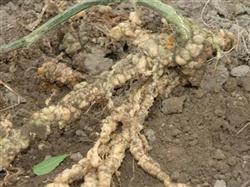
First, after soil acidification, the number of beneficial microorganisms in the soil decreases, inhibiting the growth and activity of beneficial microorganisms, thereby affecting the decomposition of soil organic matter and the cycling of elements such as nitrogen, phosphorus, potassium and sulfur in the soil. It also causes pathogens to breed and root diseases to increase; for example, soil acidification will worsen the breeding and spread of crop root-knot nematode disease.
Second, soil acidification causes the fixation of nutrient elements. For example, when the soil pH value is lower than 6, the phosphorus fixation rate in red soil rises in a straight line as pH decreases. Because phosphorus is fixed, the effective utilization rate of phosphorus is greatly reduced, becoming one of the serious problems affecting agricultural development.
Third, soil acidification will promote the release, activation and dissolution of certain toxic elements (such as aluminum ions). For example, aluminum ions in the soil are toxic to wheat seedling growth; they also have a great impact on the relative yield of barley. As the exchangeable aluminum content in the soil increases, the relative yield of barley declines in a straight line. Moreover, when crops are planted on acidic soil, it is not easy to achieve a full stand, and stiff seedlings and old seedlings often form, resulting in low yield and poor quality.
Improvement options for acidic soil:
Option one: Improve with lime:
Before cultivating crops, lime-based fertilizers can be applied, but where crops have already been planted, slaked lime liquid can be used instead. Common lime-based fertilizers include slaked lime, quicklime, lime magnesia, calcium carbonate, shell fossil and so on. It is recommended to use slaked lime or quicklime. When applying, it is not advisable to use slaked lime fertilizer mixed with other components. Lime can be applied year by year, with about 10 to 40 kg per mu per year; large amounts of lime should not be applied. Click to view >>The role of lime nitrogen
Option two: Improve with farmyard manure:
Before planting crops, apply enough base fertilizer, mainly farmyard manure, to increase the organic matter in the soil, improve soil permeability, promote microbial activity in the rhizosphere, and prompt difficult-to-dissolve mineral elements in the soil to become soluble nutrients, achieving the effect of building soil fertility.
Option three: Improve with humic acid fertilizer:
The humic acid contained in the fertilizer can regulate the soil, improve soil acidity and alkalinity, and adjust the soil state to the most suitable state for crop and microbial growth. Humic acid can activate nutrients in the soil that are difficult for crops to absorb, regulate plant metabolism, improve nutrient utilization, and naturally improve crop quality and stress resistance by improving the internal and external environment for crop growth; long-term application of humic acid can effectively improve soil compaction and saline-alkali conditions; it can also improve crop stress resistance and resistance to pests and diseases. Click to view >>Detailed introduction to humic acid
Option four: Carry out paddy-upland rotation:
Carry out paddy-upland rotation on acidic soil (with a rotation cycle of changing once every 2 to 3 years). Paddy-upland rotation can both improve soil tilth and physical and chemical properties, and effectively eliminate weeds, pests and diseases, while also favoring the accumulation of organic matter. At the same time, combined with scientific fertilization, the improvement effect is more obvious, such as choosing alkaline fertilizers (such as ammonium bicarbonate and ammonia water).
The dangers of alkaline soil to agriculture:
Alkaline soil generally refers to soil in which the concentration of hydroxide ions in the soil solution is greater than the concentration of hydrogen ions; practically, it refers to soil with a pH value above 7.3. It generally includes three types: calcareous soil, saline soil and alkaline soil.
First, the high salt content and ion toxicity of alkaline land make it difficult for plant roots to absorb water and nutrients, causing "physiological drought" and nutrient deficiency symptoms. Even if alkaline soil contains abundant nutrients, their absorbability is very low.
Second, alkaline soil will lead to secondary alkali-loving underground pests harming crops, such as scarab beetles.
Moreover, some diseases occur only within a certain pH value range; for example, damping-off often occurs on alkaline and neutral soils.
Improvement options for alkaline soil:
Option one: Apply large amounts of organic fertilizer for improvement:
Organic fertilizer is the most effective method for improving sandy soil, that is, turning various barnyard manures and composts into the soil during spring or autumn ploughing. Due to the buffering effect of organic matter, soluble chemical fertilizers can be applied appropriately in larger amounts, especially ammonium nitrogen fertilizer and phosphorus fertilizer, which can be preserved in the soil without being lost.
Option two: Improve with green manure and pine needle leaf soil:
Green manure and pine needle leaf soil are made by composting weeds, rotten pine and cypress needles, residual branches and other litter, and are strongly acidic. Generally, mixing 1/5-1/6 green manure or pine needle soil into alkaline soil can improve the physical and chemical properties of the soil.
Option three: Improve through fertilizer use:
When applying phosphorus fertilizer to alkaline soil, switch to diammonium phosphate or superphosphate. Applying diammonium phosphate and superphosphate to alkaline soil has very good results. During topdressing, apply physiologically acidic fertilizers as much as possible, such as ammonium sulfate and potassium sulfate; these fertilizers can neutralize the soil.
Methods for measuring soil pH
Why apply organic fertilizer?