What is water-flush fertilizer, and how should it be used correctly?
What is water-flush fertilizer? What types of water-flush fertilizer are there? What are the characteristics of water-flush fertilizer? What should be noted when applying water-flush fertilizer? We ask knowledgeable readers to help explain. With the progress of agriculture in our country, farming has gradually developed in the direction of saving labor, saving effort, high efficiency and energy saving, so many varieties of water-flush fertilizer have appeared on the market, but...
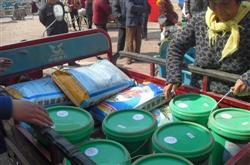 What is water-flush fertilizer? What types of water-flush fertilizer are there? What are the characteristics of water-flush fertilizer? What should be noted when applying water-flush fertilizer? We ask knowledgeable readers to help explain.
With the progress of agriculture in our country, farming has gradually developed in the direction of saving labor, saving effort, high efficiency and energy saving, so many varieties of water-flush fertilizer have appeared on the market, but farmer friends do not know much about water-flush fertilizer, so Zhongdi Network has compiled the principles, types, benefits, application methods and key points for attention of water-flush fertilizer, listed in detail below for readers to refer to.
What is water-flush fertilizer:
Generally speaking, water-flush fertilizer is a kind of fertilizer applied along with irrigation. Water-flush fertilizer can be a large and medium element fertilizer (such as nitrogen, phosphorus, potassium, calcium, magnesium, etc.), or a trace element fertilizer (such as zinc, manganese, iron, molybdenum, copper, boron, etc.). Water-flush fertilizer has outstanding advantages such as being simple to use, easily absorbed by crops and having good fertilizer efficiency, and is therefore welcomed by farmers.
Types of water-flush fertilizer:In terms of physical properties, the varieties of water-flush fertilizer can be divided into two types: liquid in barrels and solid powder in bags. In terms of chemical properties and nutrient composition, they can be divided into 3 types: Type one, inorganic types, such as potassium dihydrogen phosphate, urea, high-calcium type, high-potassium type, etc.;
Type two, organic types, such as amino acid type, humic acid marine organism type, etc.;
Type three, microbial types, such as enzyme bacteria type, etc.
New compound water-flush fertilizers can be divided into two categories. One is a compound preparation produced by scientifically processing and blending organic, inorganic, biological and other raw materials together.
The other is an organic-inorganic liquid compound water-flush fertilizer made by scientifically blending organic and inorganic materials. The outstanding advantage of these new compound water-flush fertilizers is that they combine the long-lasting effect of organic fertilizer, the quick effect of inorganic (chemical) fertilizer, the stable effect of biological fertilizer and the synergistic effect of microbial fertilizer into one high-efficiency compound fertilizer. Using this kind of fertilizer alone can meet the crop's demand for multiple nutrient elements.
Benefits of using water-flush fertilizer:
Benefit one,After using water-flush fertilizer there is generally no negative effect, so when selecting raw materials for water-flush fertilizer, fertilizers with good water solubility, nutrients that are easy to absorb, are not easily fixed by the soil, do not harden the soil and have no toxic residues are generally chosen.
Benefit two,Using water-flush fertilizer is convenient, saves labor and effort, and water-flush fertilizer is not limited by soil conditions or the crop growing season. It is easy to apply and not likely to damage crops.
Benefit three,Water-flush fertilizer has a rapid fertilizer effect and helps increase crop yield. For example, in the season of vigorous crop growth, when topdressing by ordinary methods, the slow release and transformation of fertilizer nutrients and the delayed fertilizer effect often affect yield and quality. Especially when cultivating crops in greenhouses in winter, due to low temperature, insufficient sunlight and other conditions, conventional soil topdressing methods often give unsatisfactory results. Therefore, selecting a high-quality water-flush fertilizer variety in good time and applying it with water gives very good results.
Benefit four,Water-flush fertilizer has many nutritional components. Generally, water-flush fertilizer used is a compound fertilizer containing multiple nutritional components, which can both meet the crop's demand for multiple nutrients and conform to the future direction of fertilizer development and the needs of modern agricultural intensive development.
Application techniques for water-flush fertilizer:
Step one,Choose a legitimate fertilizer variety. For example, when soil nitrogen supply is insufficient and the crop being grown is a leafy vegetable with a high nitrogen requirement, urea or ammonium nitrate can be chosen; if nitrogen, phosphorus and potassium are lacking, a three-element compound fertilizer or fertilizers such as potassium dihydrogen phosphate and diammonium phosphate can be chosen.
Step two,Before using water-flush fertilizer, solid chemical fertilizer should first be dissolved in water to make a mother liquid, and then water should be added for flushing application. If solid organic fertilizer is used, it needs to be soaked for about 10 days in advance, and after it is decomposed, the liquid should be taken and applied with water. For some shallow-rooted vegetables and other crops, or when soil topdressing is inconvenient, the prepared fertilizer can be applied with water; during the flushing application process, the amount of water should be well controlled to ensure even distribution of nutrients. For some deep-rooted crops, such as fruit trees, cucumbers, tomatoes, etc., before use, the fertilizer should first be diluted to an appropriate multiple, then applied into holes or furrows, and an appropriate amount of water poured in; after the water seeps down, cover with soil.
If solid chemical fertilizer is directly scattered into the field and then watered for flushing application, it will cause uneven distribution of fertilizer in the field, damage crops where the fertilizer concentration is too high, fail to meet crop needs where the fertilizer concentration is too low, and also cause great waste of fertilizer.
Step three,The dosage and application concentration of water-flush fertilizer should be reasonable. If the dosage is too large and the concentration too high, toxic gases such as ammonia, nitrogen oxides and hydrogen sulfide are easily produced, causing crop poisoning; if the dosage is too small and the concentration too low, it cannot meet crop needs and the goal of increasing yield cannot be achieved.
During normal watering and flushing application, the amount of solid chemical fertilizer used per unit area can be 120% of the conventional soil topdressing amount. For special water-flush fertilizers sold on the market, use them according to the attached instructions. Do not use them arbitrarily on your own initiative, so as not to affect the effect and cause unnecessary losses.
Key points for applying water-flush fertilizer:
Key point one,Because water-flush fertilizer is generally applied in winter in greenhouses, and during this period, due to weak sunlight, low temperature, low activity of active bacteria in the soil, and underdeveloped plant root systems, fertilizer absorption is poor.
Therefore, improving crop root vitality and increasing plant root growth are essential functions of water-flush fertilizer. So a water-flush fertilizer with a good rooting effect should be chosen, as it can promote root vitality, promote root growth, increase fertilizer absorption, and make the fertilizer effect fast, highly effective and long-lasting.
Key point two,When using water-flush fertilizer, fertilizer should be applied in small amounts many times. For greenhouse crops, since they mainly rely on irrigation, watering should be frequent, so fertilizer can be applied in small amounts many times, for example, for cucumbers, eggplants and other solanaceous fruits, it can be applied once after each picking.
Key point three,Some fertilizers must not be mixed for flushing application, otherwise the effect will be reduced or there will be no effect. For example, ammonium bicarbonate must not be mixed with strongly acidic fertilizers for flushing application, and when phosphate fertilizers are mixed with zinc, manganese, iron, copper, etc. for flushing application, they should be fully chelated, etc.
What is macronutrient water-soluble fertilizer
How to choose water-soluble fertilizer