What are the functions and common types of boron fertilizer?
What are the functions of boron fertilizer? What types of boron fertilizer are there? We ask knowledgeable readers to help explain. Boron is one of the essential nutrient elements for plants, but the results of the Second National Soil Survey show that 90% of China's soil is boron-deficient, and the area of severe boron deficiency has reached more than 70%. But what exactly does boron do for crops? And what types are there...
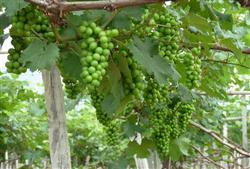 What are the functions of boron fertilizer? What types of boron fertilizer are there? We ask knowledgeable readers to help explain.
Boron is one of the essential nutrient elements for plants, but the results of the Second National Soil Survey show that 90% of China's soil is boron-deficient, and the area of severe boron deficiency has reached more than 70%. But what exactly does boron do for crops? And what types of boron fertilizer can be applied to crops? Many readers still do not know. Therefore, Zhongdi Network has compiled the functions and types of boron fertilizer for crops, listed in detail below for readers' reference.
Functions of boron fertilizer on crops:
Function one: Boron can participate in the transport and metabolism of carbohydrates within the crop plant, increasing the sugar content of crop fruits, thereby increasing the seed-setting rate of crops and the fruit-setting rate of fruit trees.
Function two: The boron element can promote crop cell elongation and cell division, which is beneficial to the growth and elongation of crop root systems.
Function three: Boron can make crop pollen germinate quickly and make the pollen tube elongate rapidly into the ovary, which is beneficial to fertilization and seed formation.
Function four: Boron can improve the nitrogen-fixing capacity of rhizobia in leguminous vegetables and increase the amount of nitrogen fixed. It can also enhance the crop's ability to resist cold, drought and disease.
Common symptoms of boron deficiency in crops:
Generally, severe boron deficiency affects the normal growth of crop leaves, flowers, fruits, roots and stems, causing abnormal external morphology. Based on these abnormalities, the boron deficiency status of crops can be directly judged.
When crops are boron-deficient, the young parts often show deformed and shrunken new leaves, irregular chlorosis between the veins, and often scorch-like spots. Crop leaves often become thicker and more brittle, deformed, and turn dark yellow-green or develop purplish-red spots; the internodes of branches become short and corkification appears. The root system becomes thick and short, brown, and underdeveloped, and the growing points often die.
Common examples include heart rot of sugar beet, canker of radish, cracked stem of celery, fruit shrinkage of cherry, flower and fruit drop of grape, leaf deformity of banana, and flower and fruit drop of kiwifruit.
Symptoms of excessive boron fertilizer in crops:
If too much boron is applied, it may cause boron toxicity in crops. Boron toxicity often appears at the tips and edges of mature leaves, with yellowing leaf tips, chlorosis between the veins, and finally necrosis. For example, seedlings containing excessive boron often excrete part of the boron by guttation through the leaves. Crops sensitive to boron toxicity include grape, peach, fig, common bean and cucumber, so boron fertilizer must not be applied in excess.
Common types of boron fertilizer:
1. Borax: generally a white powder, with a boron content of 11.3%, mainly used for soil application, with low solubility in cold water.
2. Boric acid: generally white fine crystals or powder, with a boron content of 17.5%, soluble in water, commonly used mainly for foliar spraying.
3. Boron mud: generally the residue left after making borax and boric acid, with a boron content of 0.5%~2.0% and a magnesium oxide content of 20%~30%. Because of its low boron content, it is often used as a base fertilizer.
4. Boron-containing superphosphate: generally a grayish-yellow powder, with a boron content of 0.6%, soluble in water. Using it for spraying would waste other elements, so it is commonly used as a base fertilizer.
5. Boron-magnesium phosphate fertilizer: a compound fertilizer containing major and secondary elements (phosphorus, magnesium) and a trace element (boron), with about 0.6% boron, 10%~15% magnesium and about 6% phosphorus.
6. Solubor, polyboron, and Granubor: water-soluble solid boron fertilizers with the advantages of fast dissolution and good mixability, so they are often used for foliar spraying.
What is water-flush fertilizer?
Methods for measuring soil pH