What is nitrophosphate fertilizer? A detailed guide to correct usage
What is nitrophosphate fertilizer? How do you use it well? Please give an introduction. Nitrophosphate fertilizer is processed from natural phosphate rock; the trace elements and rare-earth nitrate elements in the phosphate rock are activated during production, forming nitrates that crops can absorb. Using nitrophosphate fertilizer can replenish the trace elements in the soil to a certain extent. It also...
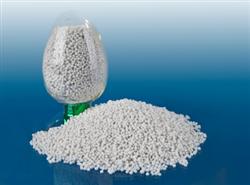 What is nitrophosphate fertilizer? How do you use it well? Please give an introduction
Nitrophosphate fertilizer is processed from natural phosphate rock; the trace elements and rare-earth nitrate elements in the phosphate rock are activated during production, forming nitrates that crops can absorb. Using nitrophosphate fertilizer can replenish the trace elements in the soil to a certain extent. It can also noticeably improve the quality of agricultural products. After nitrophosphate fertilizer is applied, its nutrients spread horizontally 10-30 cm and leach vertically no more than 60 cm, so nutrients are not lost.
Features of nitrophosphate fertilizer:
1. Nitrophosphate fertilizer works fast as a top dressing:Crops mainly absorb nitrate nitrogen (NO3). Urea [(NH2)2CO], however, is applied to the soil in the form of amide nitrogen; to be absorbed and used by crops, it can only be converted into ammonium nitrogen under the action of urease, then nitrified by soil microorganisms to form nitrite, and finally oxidized into nitrate nitrogen for crops to absorb. For top dressing, where every day in spring and every hour in summer counts, this obviously cannot compare.
2. Nitrophosphate fertilizer has a high fertilizer-use efficiency:In the process of ammonium nitrogen being converted into the nitrate nitrogen that crops can absorb (nitrification), it may turn into ammonia gas, causing part of the nitrogen to disappear into the air.
3. Nitrophosphate fertilizer has no antagonism:The demand for calcium during the growth of many crops is second only to nitrogen and potassium, while ammonium nitrogen (NH4) has an antagonistic effect on calcium absorption.
Nitrophosphate fertilizer is suitable not only for grain crops such as wheat, corn and rice, but also for cash crops such as rapeseed, tea, cotton, garlic, banana, lychee, apple, watermelon, grape, citrus, tobacco, potato, sweet potato, sugarcane, tea, Chinese cabbage, chili pepper, lettuce and fruit trees.
Application methods for nitrophosphate fertilizer:
Wheat: in low-yield fields in hilly areas, use a single basal application, with 30-35 kg per mu; in high-fertility areas of plains and plateaus, the technique of moving nitrogen from the early stage to the later stage should be promoted, with a basal-to-top-dressing ratio of 6:4, a basal fertilizer rate of 25-30 kg per mu, and a top dressing of 15-25 kg per mu at the wheat jointing stage.
Corn: focus on applying the seedling-promoting fertilizer, the stalk-promoting fertilizer and the ear-promoting fertilizer. Use the "light early, heavy late" method. After the corn emerges, at the 5-6 leaf stage, apply about 5 kg of nitrophosphate fertilizer per mu as a seedling-promoting fertilizer; at the jointing stage, apply 20 kg along with earthing up; at the large trumpet stage, apply 25 kg; and before tasseling, apply 10 kg per mu.
Fruit tree fertilization:
1. For apples, on the basis of applying sufficient organic fertilizer, in September apply 1.5 kg of nitrophosphate-potassium fertilizer per mature tree, and at the flower bud differentiation stage apply 1 kg of nitrophosphate fertilizer per tree, using radial trench application; for densely planted orchards with small canopies, use strip application; where roots are spread throughout the orchard, use broadcast application over the whole orchard, applied in a single dose before flower bud differentiation.
2. Pear trees are similar to apples.
3. Grapes: each mu requires 2-3 top dressings per year, totaling 60-80 kg of nitrophosphate-potassium fertilizer. The first top dressing is in early spring, when the flower buds begin to swell, at 20 kg per mu; the second is after petal fall, in the early stage of young fruit swelling, at 20-30 kg per mu; and the third is in the early stage of fruit coloring, at 20-30 kg per mu.
Fertilization recommendations for nitrophosphate fertilizer:
1. Suitable for various soils and crops; mainly used as a top dressing, and can also be used as a basal fertilizer.
2. For ordinary field crops it is generally used as a basal fertilizer; for cash crops it is used as a top dressing, and during each growth period it is best applied in small amounts several times to improve fertilizer-use efficiency.
3. When applying, it should be placed deep and covered with soil: basal fertilizer applied deep, top dressing applied in furrows or holes, avoiding direct contact with seeds or roots.
4. Do not irrigate immediately after application, to avoid nutrients being leached to deeper layers and reducing fertilizer efficiency.
5. Application rates: 30-50 kg per mu for field crops, 40-70 kg per mu for cash crops. When used as a seed fertilizer, generally apply 5-8 kg per mu, and avoid direct contact with seeds, generally keeping about 5 cm away from the seeds.
How to measure soil pH
What is calcium-magnesium phosphate fertilizer?