What types of potassium fertilizer are there, and what are their characteristics?
What potassium fertilizers are there? What are their characteristics, and how do you identify genuine from fake? We also ask experienced netizens to help explain. The potassium fertilizer varieties commonly seen on the market are mainly single-element potassium fertilizer, potassium sulfate, potassium silicate, and so on. Below, Zhongdiwang lists their characteristics and identification methods in detail for netizens' reference. 1. Common types of potassium fertilizer: ...
 What potassium fertilizers are there? What are their characteristics, and how do you identify genuine from fake? We also ask experienced netizens to help explain
The potassium fertilizer varieties commonly seen on the market are mainly single-element potassium fertilizer, potassium sulfate, potassium silicate, and so on. Below, Zhongdiwang lists their characteristics and identification methods in detail for netizens' reference.
1. Common types of potassium fertilizer:
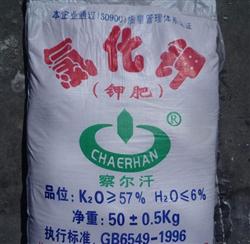
1. Potassium chloride:Divided by place of origin, there are two types, red and white; in shape there are lump, powder and irregular granular forms; the potassium oxide content (expressed as K2O%) is generally 60% for imported and 57% or 60% for domestically produced.
2. Potassium sulfate:Generally white crystalline granules or powder. Some products are slightly off-color due to incomplete removal of impurities. Domestic potassium sulfate includes Lop Nur-produced or Taiwan, China-produced, generally containing 50% K2O, while the German-produced type is 54%.
3. Potassium silicate:Mainly in the form of dark gray powder, it is an industrial by-product, and its content can only be confirmed through testing; generally K2O is 10%-14%, and it is alkaline. 2. Potassium-containing compound fertilizer. On the market it is mainly three-element compound fertilizer.
2. Identification methods for potassium fertilizer:
Method 1: Iron plate burning method:
Place a small amount of fertilizer granules (large or small) on a red-hot iron plate and burn them. Any that do not melt, have no odor, and jump when heated can generally be identified as potassium fertilizer. If the iron plate is tilted so that the fertilizer granules are directly exposed to high-temperature burning, a colored flame will appear; a golden, shining flame is sodium, and a pale yellow flame tinged with light purple is potassium.
There is also a type of potassium fertilizer in powder form, which can be brick red, light red or white. Its identification method is also burning it on an iron plate. Potassium fertilizer shows no melting and no decomposition, with no foul odor; phosphate fertilizer, on the other hand, appears light gray and, although it also does not melt or decompose, it has an odor.
Supplementary note: if the fertilizer granules on the iron plate melt after high temperature and produce thick smoke, any that give off an ammonia odor are ammonium nitrogen fertilizer, while those that only melt without ammonia odor may be nitrate; if the fertilizer granules on the iron plate do not melt and do not jump, but have a sour odor or a bone-like stench, they may be phosphate fertilizer.
Method 2: Potassium fertilizer solution burning method:
Dip a saturated potassium fertilizer solution onto an iron wire loop and burn it in a high-temperature flame, observing the flame color. It is very difficult to distinguish only by the flame color of potassium and sodium. However, if inferior potassium fertilizer outside the usual types is encountered on the market, for example small lumps or powder of unrefined potassium feldspar, then the soluble potassium content can only be determined by testing methods. The burning method alone can only be qualitative, not quantitative; that is, it can only distinguish genuine from fake, not judge good from poor quality.
What is nitrogen fertilizer?
How to make potassium fertilizer at home with plant ash