Key points for spring rearing of broodstock during the gonadal development period in March-April
After the beginning of spring, water temperature gradually rises, especially in March-April, fish activity increases, development is rapid, and food intake also increases. This stage is an important period for broodstock gonadal development. Practice has proven that the quality of spring rearing of broodstock determines the success or failure of artificial propagation of Chinese carps, so several points must be handled well:
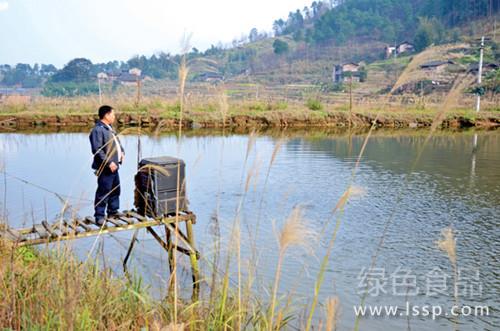
Broodstock pond
1. Feeding: Grass carp broodstock are mainly fed grass and concentrated feed. Depending on the availability of grass, generally feed grass in the morning and concentrated feed in the afternoon, both of which should be fed at fixed feeding platforms. In early spring when green feed is scarce, grass carp can be fed wheat, sprouted grains, lettuce or leafy green vegetable leaves, and later fed ryegrass, aquatic plants, etc. The feeding amount is 2%-4% of fish body weight, with the criterion that it is finished within 2-3 hours. Black carp must be fed an appropriate amount of animal feed, with live snails and clams fed once every 2-3 days. Silver carp and bighead carp are fed daily with powdered concentrated feed at 1%-2% of fish body weight. One month before induced spawning, if the water quality is relatively fertile, feeding can be stopped.
2. Fertilization: For silver carp and bighead carp broodstock ponds, apply organic fertilizer once every 7-10 days, 100-150 kg per mu each time, by the splashing method. If organic fertilizer is insufficient, an appropriate amount of chemical fertilizer can be applied once every 5-7 days, about 5 kg each time. Fertilization should be moderate to prevent excess. When fertilizing, flexibly adjust according to the degree of fertility or leanness of the pond water quality. The water of silver carp broodstock ponds is best when oily green or yellow-green, while that of bighead carp broodstock ponds is best when tea-brown. Maintain transparency at 35-40 cm. Fertilization can be stopped half a month before induced spawning.
3. Regulating water quality: After the beginning of spring, because the pond has gone through a winter, the physical and chemical factors in the water and the plankton situation are not conducive to energy conversion. Therefore, before starting feeding and fertilization, replace half of the broodstock pond water and maintain a water depth of 1 m. For silver carp and bighead carp broodstock ponds, flush with water once every 20 days, adding 3-5 cm each time; for grass carp broodstock ponds, flush with water once every 10-15 days, adding 5-10 cm each time. One month before induced spawning, flush with water once every 2-3 days. When flushing, the flow rate should not be too fast, to prevent broodstock from excessively consuming physical strength by swimming against the current.
4. Pond inspection and disease prevention: Inspect the pond once at dawn and once at dusk every day, checking whether fish are gasping at the surface, whether feeding has increased or decreased, and the fertility or leanness of the water. If problems are found, solve them promptly. When water temperature rises, disinfect the feeding area of the broodstock pond once every 10-15 days, using about 1 jin of bleaching powder per pond, dissolved in water and splashed on the feeding area of the broodstock pond and its surroundings.