Newborn calves: true death and false death are hard to tell apart; here's how to identify and resuscitate
There are many causes of false death in calves, but ultimately it comes down to asphyxia caused by the calf temporarily losing the ability to breathe at birth. As long as you accurately determine whether a calf is in false death and take correct resuscitation measures, in most cases the calf can regain its breathing function.
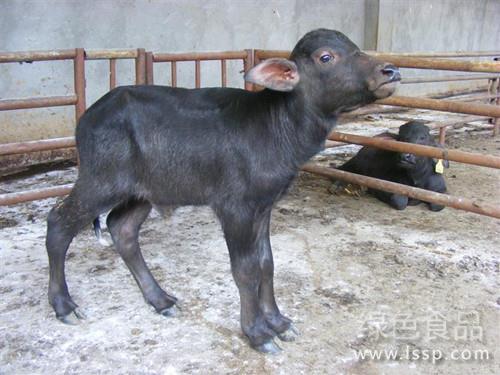
Calf
I. Identification of false-death calves:
After a calf dies, breathing stops and blood flow stops; this is the simplest way to judge that a calf has died. False death and normal death look the same on the surface, so many people cannot intuitively judge from surface signs whether a calf is really dead.
In the breeding process, accurately judging whether a calf is in false death is very important. Generally, you can judge whether a calf is in false death by observing the umbilical cord blood. In any false-death calf, the umbilical blood vessels are very full, with blood filling the vessels; if you squeeze the umbilical cord, blood will flow outward from the abdomen, and after you release your hand, the blood will flow back and fill the umbilical cord vessel again. If this happens, it proves the calf is in false death, and you should take corresponding resuscitation measures according to the specific situation, to avoid the calf truly dying because of untimely treatment.
II. Resuscitation of false-death calves
(1) The key to resuscitating a false-death calf is to make the calf able to breathe on its own again and show signs of life. First, use clean gauze or a towel to wipe the mouth and nose of the false-death calf clean, and clear the mucus and fetal membranes from the mouth and nose so it can obtain oxygen from the outside. Second, insert a rubber tube into the mouth and nose and suck out the mucus inside to ensure the airway is unobstructed. You can also use straw stalks to stimulate the calf's mouth and nose to induce the breathing reflex and help it gain the ability to breathe on its own.
(2) Lift the calf's hind legs and slap its side abdomen so that the mucus and amniotic fluid in its mouth and nose flow out automatically and no longer block the airway. At the same time, slap out the amniotic fluid at the umbilicus to ensure the false-death calf can breathe normally. Although this method is relatively simple, it cannot guarantee that every false-death calf can normally regain breathing function; comparatively speaking, the first method is safer. It is recommended to use the first method as the resuscitation method for false-death calves.