Newborn Lambs Depend Entirely on Milk: What to Do When a Lamb Is Too Weak to Suckle
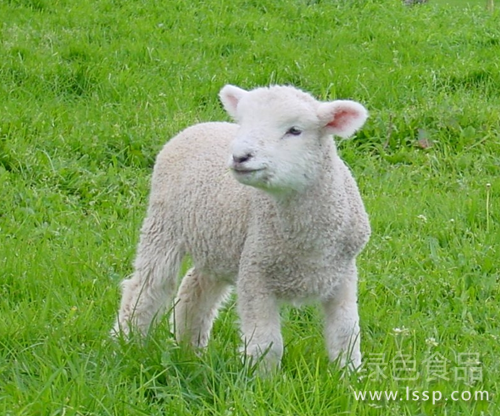
Lamb
Lamb not nursing:
1. Nursing bottle method: Put the milk into a nursing bottle, coat the teat with milk, and place it into the lamb's mouth. After a few training sessions, the lamb will learn to nurse. Alternatively, a lamb that has already learned to feed from the nursing bottle can be used as a model to encourage it, which also achieves the goal.
2. Trough feeding method: Put the milk into a small trough and let the lamb drink on its own. At first, the feeder should cut their nails short, smooth them, and wash their hands, then dip an index or middle finger in the milk and let the lamb suck it, slowly guiding the lamb to the milk to lap it up. After several training sessions, the lamb will drink the milk from the trough on its own.
Lamb too weak to suckle:
First, iron-deficiency anemia, which causes muscle weakness; second, calcium deficiency, which causes rickets; third, selenium and vitamin E deficiency, which causes white muscle disease, etc. In addition, after the lamb is born, if the outside temperature is too low and the lamb does not receive colostrum in time, the lamb's tooth roots become stiff, so it cannot suckle on its own.
For lambs unable to stand or suckle on their own due to rickets, phosphorus should be supplemented in time to promote calcium and phosphorus absorption. In addition, 50 milliliters of calcium gluconate injection and 250 milliliters of sodium chloride solution can be given by intravenous injection once a day; a subcutaneous injection of 20,000 international units of calciferol colloidal calcium injection or 2 milliliters of vitamin A and vitamin D3 injection can also be given once a day.
For muscle weakness caused by white muscle disease in lambs, each affected lamb should be given an intramuscular injection of 2 milliliters of sodium selenite or vitamin E, combined with appropriate amounts of vitamin A, vitamin B, and vitamin C for treatment. For lambs not yet affected, give each an intramuscular injection of 1 milliliter for prevention.
For lambs that cannot suckle on their own because stiff tooth roots result from not receiving colostrum in time, the farmer should assist with nursing, that is, place the ewe's teat into the lamb's mouth and squeeze the teat to stimulate milk secretion, thereby stimulating the lamb to suckle. Generally, after 3 to 5 days of this procedure, the lamb will suckle on its own.
In addition, feeding management should be strengthened at ordinary times. For pregnant and lactating ewes and lambs, increase the feeding of protein feed, bone meal, stone meal, and selenium-rich feed (such as legume forage) to prevent lambs from becoming too weak to suckle.