How to raise rabbits in an orchard in a way that is both economical and maintains ecological balance
By making use of the orchard's ecological conditions, feed and other resources, building rabbit housing within the orchard is both economical and helps maintain ecological balance. However, in the process of rearing, there are advantages as well as problems, and corresponding measures should be taken.
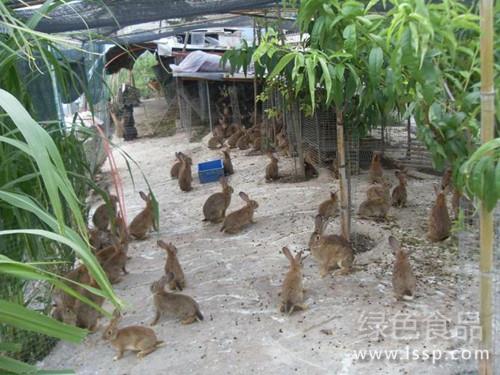
Raising rabbits in an orchard
1. When gathering and cutting fruit leaves, avoid the pesticide spraying period and use high-efficiency, low-toxicity pesticides. The best way to solve the problem of pesticide contamination of fruit leaves is to gather and cut them during the pesticide "safety period," or to use relatively less toxic pesticides.
2. Adopt pollution-free pest control methods, using tools such as insect-attracting lamps, yellow sticky boards and predatory mites to catch pests. This better meets the requirements of ecological agriculture and can effectively prevent pesticide contamination and residues in fruit leaves.
3. Store dried leaf feed and dried grass feed. In seasons when fruit leaves and grass feed are plentiful, choose sunny days to gather and cut some fruit leaves and grass, sun-dry them, and store them for later use. When winter comes and fruit leaves and grass are scarce, or during pesticide spraying periods when fruit leaves cannot be gathered and cut, or during the rainy season when fruit leaves and grass are soaked by rain and inconvenient to gather and cut, then take them out for use. In spare time, chop sweet potato and peanut vines, stems and leaves into small pieces, sun-dry them, store them in woven bags, and keep them as rabbit feed for later use.
4. Plant winter forage grass or crops. Plant winter forage grass and crops suited to local growing conditions and suitable for feeding rabbits, such as ryegrass, Chinese milk vetch, cup plant, bitter lettuce, cabbage, carrot, etc., to make up for the shortage of green feed in winter and early spring.
5. Supplement appropriately with concentrate feed. When raising rabbits using the orchard's ecological conditions, the feed is mainly fruit leaves, supplementary crops and weeds, but rabbits' growth requires comprehensive, balanced nutrition. For this reason, when feeding tree leaves and other supplementary crops and other grass feed, appropriately add some concentrate feed. Especially in winter, when dried grass feed has poor palatability, it is even more necessary to pair it with concentrate feed, such as soybean meal, wheat bran, cornmeal, and rice bran mixed with soybean residue, blended with other mineral elements, to meet the needs of normal rabbit growth.