How to brood, how to fatten, how to do a good job of spring management of geese
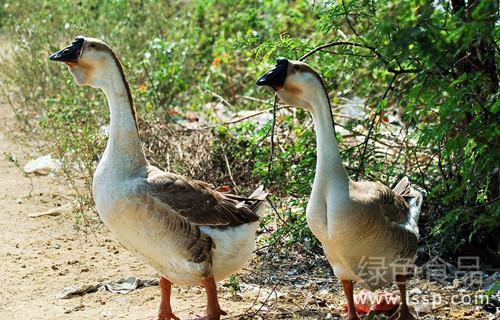
Geese
1. Selection of goslings: Choose goslings that hatch naturally early, have a broad body, a large body, a soft and elastic abdomen, a well-contracted navel that is clean with no blood traces, down that is tender green, clean and glossy, a neck that does not curl up, wings that do not droop, bright and lively eyes, tall and thick toes, undamaged legs, and that can stand and walk and can turn over when lying on their backs. Goslings that are light as a cotton ball, small and light in body, with a large navel, dull eyes, unsteady movement, and a shrunken neck and drooping wings; goslings with feces stuck to the vent and blue veins showing on the feet are harder to raise and grow slowly, and should be culled.
2. Feeding of goslings: Newly hatched goslings have thin down all over and no ability to regulate external temperature, and their digestive organs and digestive functions are also incomplete, so they are weak and delicate in constitution with poor resistance. However, goslings have a vigorous metabolism and fast growth, and improper feeding and management often turns goslings into stunted geese or even causes death. Therefore, several points should be mastered:
(1) Temperature: Early spring temperatures are low, so heated brooding should be used. Generally, for the first 7 days, the temperature inside the brooder is 30°C-32°C, and thereafter it is lowered by 2.5°C each week. When goslings grow to 6-8 weeks of age, their feathers have grown well and they can grow at 18°C or lower, but sudden weather changes must also be guarded against. Principles for controlling temperature: slightly higher for small flocks, slightly lower for large flocks; slightly higher at night, slightly lower during the day.
(2) First drinking water: The first drink of water comes before the first feed, called "moistening the mouth" in some places, and it is very important. After goslings arrive at their destination, they should rest properly. About 24 hours after hatching, give the goslings water first and then feed, which not only stimulates appetite but also satisfies the goslings' need for water and helps them put on fat.
(3) First feed: The first feed comes after drinking water, generally 24-36 hours after hatching, or when the goslings show pecking behavior. Gosling feed should be nutritious, of good quality, soft in texture and easy to digest, such as cornmeal, broken rice, wheat flour, fine rice flour, etc., and green feed such as cabbage, lettuce leaves, young ryegrass, etc. For raising geese, cooked rice or broken rice and green vegetables are the main feed; as the days of age increase, the cooked rice is reduced, and they are first fed bran and soybean cake, then changed from cooked rice to "opening grain," or switched to feeding wet grain, gradually transitioning to feeding dry grain.
(4) Feeding frequency: Feed 8-10 times a day, then gradually reduce to 3-4 times.
3. Fattening of meat-type young geese:
(1) Preparation before fattening: Divide the goose flock into strong, medium-strong and weak groups. According to the actual condition of the flock, adopt corresponding technical measures. Make growth uniform between groups and between individuals, and strive to achieve a single marketing. Before fattening, deworm the geese to improve the fattening effect and improve meat quality. Choose broad-spectrum, highly effective and low-toxicity anthelmintics.
(2) Fattening methods: Meat-type young geese are fattened by grazing. Depending on the season, some are fattened on grass seeds, some are fattened on leftover wheat grains, and geese can also be fattened by letting them eat leftover grain in rice fields.
4. How to make female geese lay more eggs:
(1) Scientific feeding. During the laying period of female geese, the daily ration must not be sometimes small and sometimes large; concentrate, coarse and green feed should be reasonably matched. Each goose should be fed no less than 160 g of concentrate per day, 300 g of bran, and minerals such as calcium and phosphorus in appropriate proportions. Mix the concentrate and bran into a semi-dry and semi-wet state for feeding, feed 2-3 times a day, with one additional feeding at night, and the daily amount of green feed should be no less than 1.5-2 kg.
(2) Raising males and females together: During the laying period of female geese, the male-to-female ratio is 1:6-8.
(3) Extending laying: When female geese have laid eggs until the Grain Rain solar term, and the laying rate has dropped to about 40%, increase protein in the daily ration, keep green feed available continuously, control the body weight of the female geese, keep them robust in constitution, and extend grazing time.