The pheasant egg market is large and the returns are good, so how can the egg-laying rate of pheasants be increased?
Pheasant, also known as wild pheasant or common pheasant, combines meat, medicinal and ornamental uses in one, grows and develops quickly, and has strong disease resistance. How to increase the egg-laying rate of pheasants is the issue that concerns the most farmers. The Xindian Pheasant Farm in Xinye County, Henan, through several years of practical experience, has worked out a set of successful methods for increasing the egg-laying rate of pheasants, which are introduced as follows:
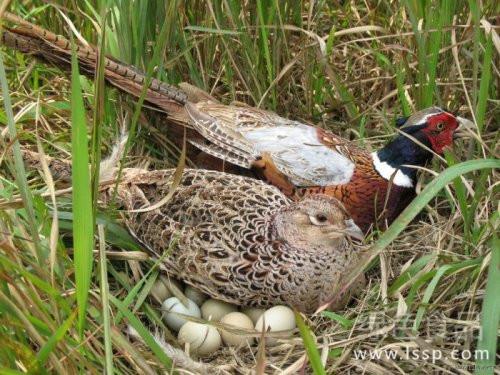
Pheasant laying period
1. Do a good job of disease prevention. During the rearing process, keeping pheasants in a healthy state can increase the egg-laying rate. Therefore the coop must be kept clean; besides regular daily cleaning, spray and disinfect twice a week with 0.1% Baidusha or Miejunling. The disinfectant solution can be sprayed onto the pheasants' bodies. Every day, scrub the feed troughs and water troughs once with slightly red potassium permanganate water. The main diseases during the pheasant laying period include pullorum and colibacillosis; for prevention and treatment, penicillin can be used, as it is cheap, safe and convenient to use. One vial of 800,000 units of penicillin can be used for one preventive treatment of 80 chickens. Mix the penicillin into the drinking water and let the pheasants drink it; generally once a week. It can also prevent colds.
2. Select and breed good stock. The egg-laying rate of pheasants is closely related to the quality of the breeding birds. Female pheasants are required to be strong and healthy, weigh 1-1.5 kg, be well-proportioned, well developed, docile in temperament, lively and active, with bright red wattles and combs, and large, spirited eyes. Male pheasants should be well-proportioned in all parts, well developed, with full chest muscles, bright red combs, a long and loud crow, full plumage, a majestic posture, and strong mating ability.
3. Male-to-female ratio. A reasonable pairing of males and females is an important measure for reducing feeding costs and prolonging the laying period. Too many males: first, it wastes feed; second, males often fight and get injured over mates, and the females are also affected in laying because it is hard for them to accept frequent mating. Too few males will lower the fertilization rate of breeding eggs. Generally a male-to-female ratio of 1:3-1:4 is suitable.
4. Scientific feed formulation. During the laying period, pheasants should have comprehensive nutrition: metabolizable energy 2700-2750 kcal, crude protein above 23%, and complete essential amino acids. The feed formula for this period is: corn 50%, soybean cake 15%, wheat bran 17%, sorghum 6.5%, fish meal 8%, shell powder 2%, bone meal 1%, salt 0.5%, plus 0.5% additives and 50 grams of methionine added to every 100 jin of feed. Inject the "egg production comprehensive decline vaccine" once every two months during laying.
5. Suitable temperature. Although pheasants will not freeze to death at -20°C, when the temperature is below 5°C it affects laying and normal growth. To make pheasants lay more eggs and increase returns, when the temperature is below 5°C, heating measures should be taken, such as plastic tunnels and coal fires, and the relationship between insulation and ventilation should be handled well.
6. Feeding management. Provide water and feed at fixed times, keep clean and sufficient drinking water available, and observe carefully; when disease is found, isolate promptly and give medication for treatment. Clean the coop every day and try to keep the chicken house dry and clean. Generally, do not raise more than 5 pheasants per square meter, and supplement light on time, 3-4 hours a day; generally a 3-4 watt bulb per square meter is enough.