2015 Climate Anomalies Caused Heavy Sea Cucumber Losses; Key Points for Sea Cucumber Farming in Spring 2016
The abnormal climate in 2015 caused large numbers of sea cucumbers to pile up in the sea cucumber ponds. The sudden drop in temperature in November meant that most farmers did not carry out thorough disinfection before the freeze, and this year's freeze period was about 20 days longer than usual. After the ice melted this year, floating sea cucumbers, skin rot and swollen mouths became more serious. The reasons are as follows:
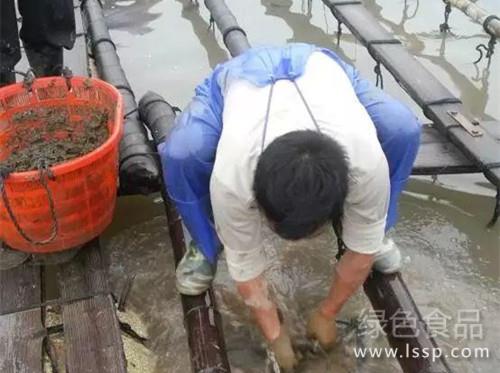
Feeding Sea Cucumbers
(1) In 2015 the temperature was unstable, and the sea cucumbers were under constant stress, which weakened their constitution and made recovery difficult; drought led to high salinity, and the high salinity caused an imbalance in the osmotic pressure of the sea cucumber's body cells. In addition, last year the freeze period started early and was rather long, with low temperatures and heavy snow, and the ice melted late (compared with previous years). The ice evaporated quickly and water leaked quickly, the sea cucumbers entered the reefs early and ate relatively little, yet their winter consumption was greater, and so on.
(2) Because of last year's sudden temperature drop, most farmers did not carry out bottom improvement and disinfection before the freeze, which led to an increase in harmful bacteria in the water and serious deterioration of the bottom sediment.
(3) In autumn the sea cucumbers moved down to the reefs late and ate little, so nutrient conversion was insufficient, causing a lack of nutrients, which weakened their constitution. The sudden weather change in November caused stress, and the sea cucumbers suffered another “trauma”, making it hard for their constitution to recover under the ice.
(4) The blind use of drugs led to the formation of a toxic layer on the pond bottom, causing chronic poisoning of the sea cucumbers, weakening their constitution and lowering their immunity.
Key points for sea cucumber management in spring:
(1) Sea cucumbers are benthic animals, so the bottom sediment is of the utmost importance to them. After the ice melts, not only does the bottom sediment deteriorate, but harmful bacteria also multiply in large numbers. It is recommended to first use a bottom sediment improver (such as Dijiexiao), and then use an iodine preparation for three-dimensional disinfection, sterilising and disinfecting both the water body and the bottom sediment.
(2) It is recommended to use “polysaccharide VC granules” together with “polypeptide anti-stress ling” to strengthen the sea cucumber's constitution, speed up its recovery, increase feeding, improve immunity, prevent the sea cucumber from being attacked by bacteria, and improve its anti-stress ability.
(3) If the water body is turbid due to excessive organic matter, it is recommended to treat it with a bottom improver (for example Shendian). If the temperature is suitable, a biological preparation (Junba) can be used. Deal with turbid water in a targeted way and avoid the blind use of drugs, which can irritate the sea cucumbers.
(4) If there is grass in the sea cucumber pond, it is recommended to remove it promptly or use Shenquan Kongcaoling to inhibit the growth of aquatic plants (when the water temperature is above 10°C), and to avoid using herbicides, which irritate the sea cucumbers and weaken their constitution a second time.
(5) Before the sea cucumbers move down to the reefs, scatter “benthic algae power” to cultivate natural, high-quality, palatable feed for the sea cucumbers — benthic diatoms, which are more suitable for the sea cucumbers to utilise and absorb.
(6) If the sea cucumber faeces are thin, the intestine has not opened up for a long time, and the amount eaten is small, it is recommended to mix “sea cucumber xiatan bao” with “oyster shell powder” and splash it over the whole pond, to expand the sea cucumber's intestine and increase the amount it eats.
(7) Sea cucumbers moving down to the reefs early and eating a lot does not mean they grow quickly. The growth rate of sea cucumbers mainly depends on the feed conversion efficiency and the absorptive capacity of the sea cucumber's intestine. It is recommended to mix “active lactic acid bacteria” or “Junyuan” with sea mud or feed and administer it orally, to regulate the intestinal flora of the sea cucumbers, promote the growth of intestinal villi, and enhance the sea cucumbers' absorption and conversion rate of feed.
(8) Before Qingming, if there are aquatic plants in the pond, they should be removed promptly to prevent a sudden rise in temperature at Qingming from causing the aquatic plants in the pond to rot in large quantities and spoil the bottom sediment. Large water changes in the sea cucumber pond should also be carried out around Qingming, because at this time the temperature difference between the open sea water and the pond water is not great, so the stress on the sea cucumbers is small.
(9) When the water temperature reaches 15°C, according to the water quality conditions, use biological preparations reasonably to regulate the water quality, balance the bacterial phase and the algal phase, and use the biological bottom improver Wang “Yangdi” to supplement beneficial bacteria in the bottom layer, forming a protective film of beneficial bacteria in the bottom layer, inhibiting pathogenic bacteria in the bottom mud, decomposing organic matter in the bottom layer, and converting large-molecule nutrients in the bottom that are hard to absorb into nutrients that are easier for sea cucumbers and algae to absorb.