Difficult standing in laying hens, increased egg breakage rate: how to prevent and treat cage layer fatigue?
Cage layer fatigue, also called cage layer osteoporosis, often occurs during the peak laying period.
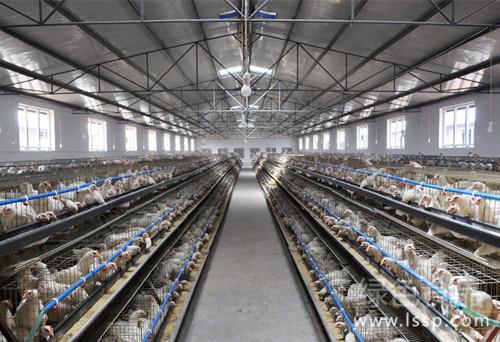
Laying hens
1. Symptoms: In the early stage of the disease, laying hens lay soft-shelled eggs and thin-shelled eggs, and the egg breakage rate increases, but appetite, spirit, and feathers show no obvious changes. Afterward, difficult standing, curved claws, and incoordination appear. If detected in time and appropriate treatment measures are taken, most can recover within three to five days. Otherwise, the symptoms gradually worsen, causing lameness, inability to stand, sunken breastbone, ribs that break easily, and paralysis; necropsy may reveal brittle wing bones and leg bones.
2. Causes: 1. Insufficient calcium content in the diet, and an imbalance between calcium and phosphorus. 2. Overly pulverized limestone powder and bone meal are absorbed quickly in the gastrointestinal tract of laying hens and excreted quickly as well, resulting in low calcium utilization. 3. Laying hens have low activity levels. 4. During the rearing period, parasite infestation and management-related factors may both cause this disease.
3. Prevention:
1. Ensure complete nutrition and scientific management so that rearing laying hens reach optimal body weight and body condition at sexual maturity.
2. From 2 to 4 weeks before the start of laying, feed a special pre-lay feed containing 2% to 3% calcium, and when the laying rate reaches 1%, promptly switch to laying hen feed.
3. The calcium content in the feed should not be lower than 3.5%, and an appropriate calcium-to-phosphorus ratio should be ensured, with more than 2000 IU of vitamin D3 added per kilogram of feed.
4. Provide coarse-particle limestone powder or shell powder, with the coarse-particle calcium source accounting for 1/3 to 2/3 of total calcium. The calcium source particles should be larger than 0.75 mm, which can both improve calcium utilization and avoid calcium stratification and settling. In hot seasons, spread coarse-particle calcium evenly in the trough each afternoon at about 1% of feed consumption; this can both provide a sufficient calcium source and stimulate the flock's appetite, increasing feed intake.
5. Perform blood calcium monitoring well; when soft-shelled eggs are found, a blood calcium test should be carried out.
4. Treatment
When diseased hens are found, promptly pick them out and raise them separately, supplement bone granules or coarse-particle calcium carbonate, and let the laying hens feed freely; they can recover within one week. For diseased hens that have stopped laying, raise them separately, and as long as normal drinking water and feed intake are ensured, they can recover on their own within no more than one week. For flocks with low blood calcium, add 2% to 3% coarse-particle calcium carbonate to the feed and add 2000 IU of vitamin D3 per kilogram of feed. After 2 to 3 weeks, the flock's blood calcium rises to normal levels and the incidence rate decreases. However, supplementation of coarse-particle calcium carbonate and vitamin D3 needs to continue for about one month. If the disease is discovered relatively late, recovery may take about 20 days, and individual severely affected laying hens may die.