New method for crisping grass carp farming, raising firm, crisp and crunchy quality flesh
Crisping grass carp farming mainly works by changing the grass carp's food structure so that its flesh becomes firm and crisp, not easily broken apart when cooked, and even when cut into fillets or shreds it does not easily break or crumble, while the meat flavor becomes more savory and unique. Grass carp farmed this way sells easily on the market and commands a high price, on average 0.2 to 0.5 times higher, giving high economic returns. The experience of crisping grass carp farming is described below:
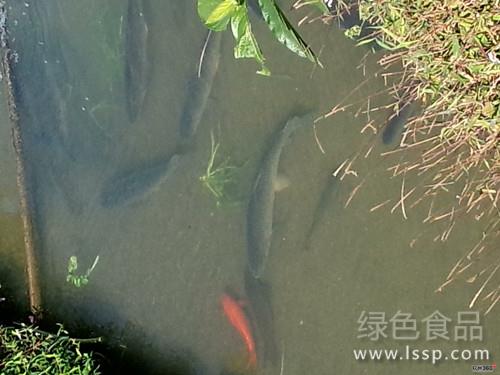
Grass carp farming
1. Farming conditions: Crisping grass carp farming can be carried out in ponds or net cages. Pond requirements: little sludge on the pond bottom, abundant water source, good and unpolluted water quality, convenient water inlet and drainage, an area of 1330 to 2000 sq m, and a water depth of about 2 m. Before stocking the grass carp, thoroughly clear the pond according to conventional requirements. Net cages can be placed in lakes, reservoirs, and rivers in wind-sheltered, sunny spots. Water body requirements: no pollution, rich in dissolved oxygen, water depth of 4 to 7 m, flat bottom, and no aquatic plants growing on it. Use fully enclosed net cages, with specifications of 5 m × 4 m × 2.5 m, a mesh size of 5 cm, and a piece of 30-mesh gauze cloth laid on the bottom of the net cage as a feeding tray to prevent feed loss. New net cages should be put into the water 7 to 10 days in advance, so that the cage panels soften and some phytoplankton attaches, to prevent injuring the fish bodies; net cages already used should be cleaned and soaked in a 5% quicklime water solution for 30 minutes.
2. Fingerling stocking: Select grass carp with a strong physique, free of disease and injury, and an average individual weight of 0.5 kg as fingerlings. Pond stocking rate, 150 to 250 kg/mu; net cage stocking rate, 15 to 20 kg/sq m. To regulate water quality, stock 50 to 60 silver carp and bighead carp fingerlings of 13 to 15 cm body length per mu of pond as a polyculture, and stock 1 to 2 silver carp and bighead carp fingerlings of 13 to 15 cm body length per sq m of net cage as a polyculture. Before stocking, give the grass carp immunization injections, or soak the grass carp in a 4% table salt water solution for 5 to 10 minutes.
3. Crisping season: Crisping farming can be carried out from spring, when the water temperature is above 15°C and the grass carp begin feeding, until before they stop feeding in winter. If a farming model of partial harvesting and partial stocking or farming in stages and batches is adopted, the crisping farming time for each round or batch should be no less than 60 to 70 days.
4. Farming management: The feed is mainly high-protein broad beans, plus a small amount of green grass, and no other feed may be added. At the beginning, stop feeding for 2 to 3 days, then feed a small amount of soaked broad beans (soak the broad beans in 1% table salt water for 12 to 24 hours); only after the grass carp can feed normally should you feed on a fixed schedule and in fixed amounts. Generally, feed once at 8 a.m. and once at 5 p.m. each day, and the specific feeding amount should be adjusted according to the grass carp's feeding situation and the water temperature. At a water temperature of 16 to 19°C, the daily feeding amount is 1.5% to 2.0% of the grass carp's body weight; at a water temperature of 19 to 22°C, it is 2.0% to 3.0% of the grass carp's body weight; at a water temperature of 22 to 25°C, it is 3.0% to 4.0% of the grass carp's body weight; at a water temperature of 25 to 28°C, it is 4.0% to 5.0% of the grass carp's body weight; at a water temperature of 28 to 30°C, it is 5.0% to 6.0% of the grass carp's body weight.