Broilers eating little, drinking much, passing white droppings, and kidney lesions: prevention and treatment methods
In recent years, commercial broilers (white-feathered broilers, yellow-feathered broilers, broiler crossbred chickens, male layer chickens, native crossbred chickens, etc.) have developed rapidly. In pursuit of growth speed and lower mortality, chicken farmers commonly use large amounts of antibiotic drugs, and the protein ratio in feed is too high, leading to kidney disease in commercial broilers. Affected chickens show decreased feed intake, increased water intake, and white watery droppings.
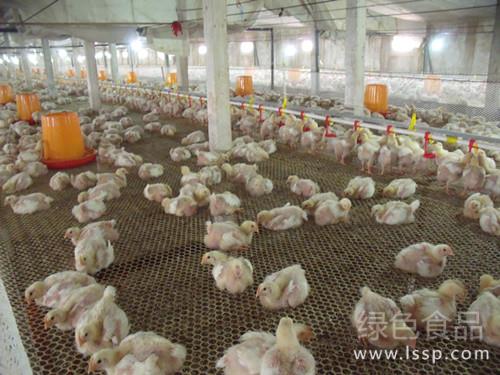
Broilers
I. Causes of the disease:
1. Long-term excessively high protein content in feed causes gout. If the protein content is too high during the growth of commercial broilers (especially male layer chickens and native crossbred chickens), it causes an increase in uric acid in metabolism and increased production of urates, which cannot be excreted in time and deposit in the kidneys, urinary tract, and ureters, leading to death of the broilers. Affected chickens are about 14 days old, and the mortality rate accounts for 20%-30% of chickens dying from kidney disease.
2. Improper mineral ratios, mainly improper calcium-to-phosphorus ratio, and too much sodium and potassium salts, cause the disease. Most affected chickens show decreased appetite, increased water intake, white loose droppings, poor bone development, inability to stand, and emaciation due to digestive disorders, until death. This accounts for 2%-5% of sick chickens.
3. Caused by insufficient vitamin A. The kidneys of sick chickens are pale and enlarged, with large amounts of urates deposited in the renal tubules, the comb and wattles turn grayish-white, caseous material accumulates inside the eyelids, growth stagnates, and there is ataxia; even the liver, spleen, pericardium, and heart may have urate deposits. Most chickens show symptoms after 7 days of age, accounting for 5%-10% of sick chickens.
4. Long-term use of sulfonamide drugs or drug abuse. This damages glomerular filtration and causes increased uric acid in the body, manifested as enlarged kidneys and a certain degree of ascites, with grayish-white urates visible in the ureters, pericardium, and mesentery. The time of onset is related to the dosage or duration of medication. This accounts for 20%-35% of the total incidence.
5. Caused by other diseases. Mainly pullorum disease, paratyphoid, typhoid, infectious bursal disease of chickens, etc. Kidney disease caused by the above diseases is mainly related to the epidemic situation of the diseases in the region, and the age of onset and incidence also differ. Kidney lesions are only one symptom and are not the main cause of death. Diagnosis should be based on microbiological and epidemiological conditions, etc., accounting for 30%-50% of sick chickens.
II. Prevention and treatment measures:
In view of the above possible causes of kidney disease in broilers, the following prevention and treatment measures can be taken:
1. Control the protein content well and keep it within the feeding standard range for that broiler breed; replace the feed in a timely manner. The feeding time for high-protein feed should not be too long; generally, it can be fed according to growth speed until 18-24 days of age.
2. Adjust the salt and calcium-phosphorus content in the feed properly. Especially the salt content, which must not be too high; at a salt content of 0.55%, broilers show obvious kidney disease. Generally, it is about 0.3%.
3. During the brooding period, the amount of vitamin A added should be increased, and especially the feed storage time should not be too long, otherwise it will cause vitamin loss.
4. When using drugs to prevent and treat other diseases, attention should be paid to their side effects, especially drugs that greatly damage the kidneys, which should be used with even more caution. When using drugs, note that one drug should not be used for too long, generally 3-5 days is enough, or diuretics should be used together when using such drugs. When kidney disease is found, kidney-swelling detoxifying drugs should be administered in time.
5. Strengthen feeding management, frequently disinfect the internal and external environment of broiler houses, strictly control epidemic prevention and disinfection, and try to reduce the probability of disease occurrence.