Reddening of Part of the Body Surface in Shrimp: Prevention and Treatment of Red Body Disease in Pacific White Shrimp
Pacific white shrimp (Litopenaeus vannamei) can develop a "red body" after contracting certain diseases. Some shrimp farmers mistakenly assume that red body syndrome in Pacific white shrimp is Taura syndrome, and as a result, medication fails to produce results. However, investigations have found that Pacific white shrimp can show red body phenomena under conditions such as sudden environmental changes, infection with Taura syndrome, and vibriosis. Therefore, the cause of the red body symptoms in Pacific white shrimp must be accurately identified so that the right treatment can be applied.
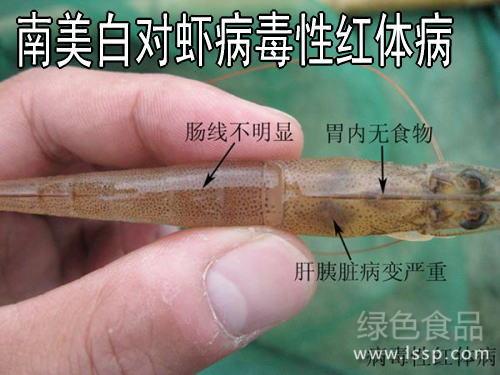
Viral Red Body Disease in Pacific White Shrimp
I. Stress-induced red body:
When various physical and chemical factors in the aquatic environment such as water temperature, salinity, pH, ammonia nitrogen, and nitrite nitrogen change abruptly, the antennae of Pacific white shrimp turn red and the tips of the tail fan turn red. Sometimes harvesting and drug application can also cause the antennae, tail fan, and even the appendages of the shrimp to turn red. This phenomenon disappears within a short time as water temperature, salinity, and other physical and chemical factors stabilize. However, during the stress period, the shrimp's anti-stress capacity drops sharply, making it susceptible to infection by bacteria, viruses, and other pathogens, leading to secondary bacterial and viral diseases. Stress-induced red body in Pacific white shrimp commonly occurs in summer.
Control measures: (1) Use microbial preparations such as Qingshuisu (Bacillus subtilis) and photosynthetic bacteria in the water body over the long term to reduce ammonia nitrogen in the water, regulate water quality, supplement various trace elements that the shrimp lacks, and improve disease resistance; add 0.1-0.2% biologically active enzyme additives and 0.2-0.3% bioactive additives such as immune polysaccharides to the feed to improve the shrimp's immunity and enhance its ability to adapt to the environment. (2) After heavy rain, immediately turn on the aerators, pay attention to water stratification, and apply quicklime, etc. (3) The volume of water discharged and exchanged must not be too large; each discharge and exchange should not exceed 10% of the total volume, and when discharging and exchanging water, prevent excessive changes in water temperature, salinity, pH, etc. (4) After changes in various physical and chemical factors, appropriate medication should be used to prevent disease, and non-irritating drugs should be selected, such as Qiangke 101 or dibromohydantoin dissolved in water and splashed over the entire pond.
II. Vibrio parahaemolyticus red body:
Investigations have found that more than 75% of red body phenomena in Pacific white shrimp are Vibrio parahaemolyticus red body disease. The appendages of diseased shrimp turn red, especially the swimming legs, which is most obvious, and it is also customarily called "red leg disease," often with the whole body appearing red. Diseased shrimp show reduced activity, swimming slowly or remaining motionless at the water surface near the pond edge, sometimes rotating or swimming vertically, with slow responses and reduced or complete loss of appetite. The gills of diseased shrimp are pale yellow, and the shell becomes hard. Degeneration of the hepatopancreas is not obvious, and there are no black spots on the shrimp body. This disease has a high incidence rate and mortality rate, and occurs mostly in hot and rainy seasons.
Control measures: (1) Before stocking, thoroughly clear the pond. In hot and rainy seasons, regularly apply photosynthetic bacteria (5 grams per cubic meter) or Qingshuisu (0.25 grams per cubic meter), and every 10 days apply 0.2 grams of dibromohydantoin per cubic meter of water dissolved in water and splashed over the entire pond. (2) After heavy rain, when temperature and water quality change greatly, appropriately use quicklime or dibromohydantoin, etc. to maintain water body stability and reduce stress responses in the shrimp. (3) After the disease occurs, use 0.2 grams of Qiangke 101 per cubic meter dissolved in water and splashed over the entire pond. After splashing, run the aerators for 1-2 hours, and use it again the next day; after 3-5 days, apply 0.3 grams of Qingshuisu per cubic meter mixed with water and splashed over the entire pond once. At the same time, add 0.5 grams of florfenicol, 1 gram of vitamin C, and 1.5 grams of biologically active enzyme additives per kilogram of feed, and feed continuously for 3-5 days.
III. Viral red body:
Viral red body disease in Pacific white shrimp, also known as Taura syndrome, presents in diseased shrimp as red antennae and red tail, especially a red tail fan, so it is also called "red tail disease." The body color of diseased shrimp is tea-red, with little or no feeding, swimming slowly at the water surface, and dying quickly after leaving the water; the carapace of diseased shrimp becomes soft and easily separates from the muscle, and chronically diseased shrimp have irregular black spots on the shell, basically no red leg phenomenon, degeneration or erosion of the hepatopancreas, and redness and swelling of the intestines. Taura syndrome usually occurs 1-2 days after sudden changes in the aquatic environment, and shrimp of 6-9 cm size are most severely affected at a water temperature of 26-28°C. In affected shrimp ponds, the water is relatively dense, with transparency usually within 20 cm, pH above 9, and ammonia nitrogen content per cubic meter of water exceeding 0.5 grams.
Control measures: (1) Stock healthy seedlings. (2) Before stocking, thoroughly clear the pond; throughout the entire stage, especially 1 month after stocking the shrimp seedlings, apply 2-5 grams of photosynthetic bacteria or 0.25 grams of Qingshuisu per cubic meter of water mixed with water and splashed over the entire pond once a week. At the same time, add 2 grams of immune polysaccharides, 1 gram of biologically active enzyme additives, and 5 grams of Baixia Hongtixiao (plant antiviral protein) per kilogram of feed, feeding for 2-4 days every half month, twice a day; during the disease epidemic season, about every 10 days apply 0.2 grams of dibromohydantoin per cubic meter of water dissolved in water and splashed over the entire pond once. (3) After the disease occurs, use 0.2 grams of Qiangke 101 per cubic meter of water dissolved in water and splashed over the entire pond; after splashing, run the aerators for 1-2 hours, and use it again the next day; after 3 days, apply 0.4 grams of Qingshuisu and 5 grams of activated zeolite per cubic meter of water mixed with water and splashed over the entire pond once. At the same time, add 15-20 grams of Baixia Hongtixiao, 1-2 grams of biologically active enzyme additives, 2-3 grams of stabilized vitamin C, and 10-20 grams of fish oil per kilogram of feed, and feed continuously for 5-7 days, twice a day.