How to prevent and treat grass carp fingerlings with rotten gills, black head and black back, floating at the surface without sinking, and swimming along the edges?
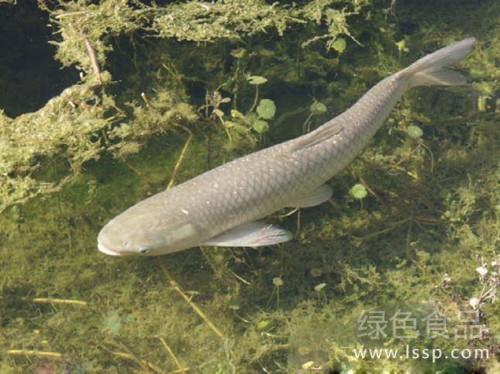
Grass carp farming
I. Characteristics of the onset of black head and black back in grass carp: 1. It occurs mainly from April to June each year, and mainly affects grass carp fingerlings of 150-400 g/fish. 2. Symptoms: the fingerlings often float at the surface without sinking, swim along the edges, have black head and black back, and erosive rotten gills. Dissection reveals liver and gallbladder lesions in the grass carp, and some intestines are reddened.
II. Causes of the disease and reasons why it is difficult to treat:
(1) Causes: 1. The quality of grass carp fingerlings needs to be improved. 2. The unreasonable distribution of feeding machines, long-term oxygen deficiency in the feeding area, and high-density farming make grass carp fingerlings more prone to oxygen deficiency. 3. Feeding various green forages in the early stage causes excessively high organic matter content in the water body, the water quality is prone to deterioration, and some grass carp fingerlings develop branchiomycosis and then secondary severe rotten gills. 4. In the early stage, parasites such as Trichodina, Dactylogyrus, and Cryptobia are not thoroughly killed, and the parasites remain parasitic for a long time, causing an outbreak of erosive rotten gills in the later stage.
(2) Reasons why it is difficult to treat: 1. The treatment method is not targeted. 2. Blindly selecting highly irritating drugs accelerates the death of grass carp fingerlings. 3. In a rush to seek treatment, many, chaotic, and miscellaneous drugs are used, which hinders subsequent treatment work.
III. Recommended preventive measures: 1. For ponds fed large amounts of green forage, do a good job of bottom improvement and water quality regulation in March-April. It is recommended to use oxidizing bottom-improvement products to prevent branchiomycosis. 2. Reasonably arrange feeding machines, and pay attention to oxygen supplementation and bottom improvement in the feeding area. 3. After the beginning of spring, promptly mix multivitamins and immune-type products into the feed to enhance the physique and immunity of grass carp. 4. In April-May, do a good job of killing Trichodina and Dactylogyrus, and the deworming must be thorough. 5. Do a good job of routine disinfection and prevention. It is recommended to choose: compound iodine, or Shiqile (main components 20% glutaraldehyde + 5% hydrocarbyl amine salt) used in combination with thioether sarfloxacin.
IV. Recommended treatment measures. 1. Select insecticides according to the symptoms. If no obvious parasites are found, it is recommended to use Yike (main component ivermectin, each bottle for 6 mu, referring to 1 m water depth, the same below) + complexed copper (each bottle for 3 mu) and splash evenly over the whole pond. 2. Disinfection: when the water body pH is above 8, choose Shiqile and Baoxueding (main component 45% benzalkonium bromide), one set for 3 mu; when the pH is below 8, choose one bottle of compound iodine solution for 3 mu and splash evenly over the whole pond. 3. At the feeding platform, splash Ensaning (main component enrofloxacin) + Sanhuang San once a day. Dosage: one to two packs each of Ensaning and Sanhuang San. Soaking Sanhuang San in boiling water before use gives better results. 4. Oral administration: for every 500 kg of grass carp, use 1 pack of Ensaning + 2 packs of Sanhuang San + 1 pack of Weixian, continuously for 5-7 days. 5. After the condition stabilizes, do a good job of subsequent bottom improvement and water quality regulation. Oxidizing bottom-improvement products such as Chidian can be used for bottom sediment improvement and water quality improvement.