Key points for spring seedling rearing after juvenile red swamp crayfish leave the mother and live independently
Spring has arrived, temperatures are rising, water temperatures are climbing, and all things are reviving. Red swamp crayfish that overwintered in pond burrows begin to emerge to forage. After the parent crayfish feed, their nutrition improves, and the juveniles begin to detach from the mother and live independently, increasing the density in the pond. At this time, work on red swamp crayfish seedling rearing should be strengthened to lay the foundation for a bumper harvest of adult crayfish.
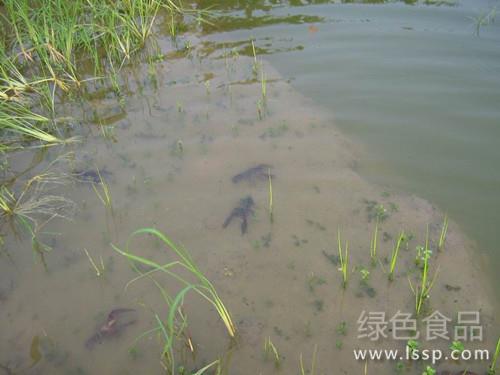
Red swamp crayfish farming
I. Fertilizing to cultivate feed:
In early spring the water is relatively clear and lean, and biological feed in the pond is insufficient, so organic fertilizer should be applied early to cultivate rotifers, copepods, cladocerans and other organisms, providing sufficient natural biological feed for red swamp crayfish seedlings. Generally, fermented and thoroughly decomposed livestock and poultry manure is applied at a rate of 250-350 kg/667 sq m. The natural biological feed that juvenile crayfish like to eat is plankton. When plankton in the pond is abundant, it can accelerate juvenile crayfish development and growth and increase the survival rate. In addition, applying fertilizer can also promote the growth of aquatic plants and reduce the occurrence of green algae.
II. Replanting aquatic plants:
Maintaining aquatic plants well is an important and indispensable part of the red swamp crayfish seedling rearing process. For some ponds with few aquatic plants, tape grass, Elodea and alligator weed should be replanted in time so that aquatic plant coverage accounts for more than 50% of the total pond area. In aquatic plant planting areas, drugs containing herbicide ingredients are strictly prohibited; when using quicklime, also avoid areas where newly established aquatic plants have just survived. In early spring, feeding should be strengthened to minimize damage by red swamp crayfish to the tender buds of aquatic plants and protect their rapid growth.
III. Water quality regulation:
Add water once every 7—10 d, adding 20-30 cm each time, and keep the water level at about 1 m. Use quicklime once every 15—20 d, at a rate of 10 kg/667 sq m. Using quicklime can not only adjust the pH value, but also increase the calcium ion content in the pond water to meet the calcium needs of juvenile crayfish growth and development. For aeration equipment, install a dissolved oxygen controller, set the minimum and maximum limits for dissolved oxygen in the pond water, and realize automatic start and stop of the aeration equipment to keep the dissolved oxygen in the pond water above 5 mg/l. When the aeration equipment malfunctions and cannot be used, granular oxygen can be scattered to provide emergency oxygenation.
IV. Feed feeding:
Red swamp crayfish have omnivorous feeding habits and can take in both plant-based and animal-based feed. When the pond water temperature reaches above 10°C, red swamp crayfish begin to forage. After enduring the nutrient-poor winter, parent crayfish need to eat large amounts of food to replenish nutrients, and juvenile crayfish also need to eat large amounts of feed for growth and development. If feeding is not carried out in time in early spring, it is easy to cause weakening of parent crayfish physique, triggering mutual attacks and cannibalism, and even causing disease and death. Therefore, in feed feeding, focus on two aspects: on one hand, focus on feed quality. In early spring, overwintered crayfish have weak physiques, so high-protein compound feed should be fed, appropriately paired with some fresh and live small trash fish, river snails, etc., to improve the plumpness and survival rate of parent crayfish while meeting the nutritional needs of red swamp crayfish seedling growth and development; on the other hand, focus on scientific feeding. In early spring, water temperatures are relatively low, and crayfish eat relatively little, so the feeding amount must be reasonable and moderate. Generally, feed 2 times a day, once in the morning and once in the afternoon. In addition, bran, soybean meal, or paste-like feed made from corn and wheat can be added to the pond for juvenile red swamp crayfish to eat.