During the spring bee-release period, herbicides and insecticides are widely used, so be vigilant against pesticide poisoning of honeybees
Symptoms of bee poisoning: the colony suddenly dies in large numbers; the stronger the colony, the more bees die, and the dead bees are mostly foragers, often with pollen loads on their legs. The colony is restless and disorderly, and often stings people. When lifting frames for inspection, many bees, too weak to cling to the comb, fall to the bottom of the hive. At the hive entrance, poisoned bees can be seen rolling and spinning on the ground, their bodies constantly twitching and convulsing. Dead bees often have their wings spread, abdomen curled, and proboscis extended. In severe cases, the larvae in the hive also die; poisoned larvae often drop out of the cells, showing the "jumping brood" phenomenon. Sometimes worker bees "ball the queen," causing the colony strength to drop sharply, and even leading to the collapse of the entire colony. Pesticide poisoning of bee colonies is best prevented; for those already poisoned, rescue must be carried out immediately. The methods are:
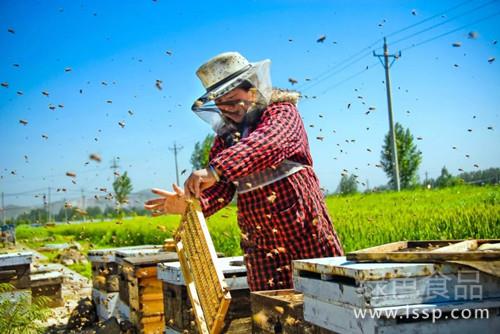
Bee release
1. Whether bees are kept in a fixed location or migratory beekeeping, when placing the colonies they must be kept at a certain distance from nectar source plants, generally 100-200 m. This reduces the chance that bees encounter pesticides as soon as they leave the hive when spraying is done, and that spray liquid drifts into the hives.
2. During bee release, you should understand and grasp the pesticide-use habits and methods of the crop and fruit tree planting units or farmers within the relevant range, and take the initiative to contact them. The benefits are: first, it can avoid spraying during the flowering period; second, for those who must use pesticides during the flowering period, try to persuade them to use low-toxicity and liquid formulations as much as possible, and use highly toxic and powder formulations less; in terms of timing, avoid spraying at noon, and set the time for the morning before bees leave the hive or the evening after bees return to the hive; third, on the premise of not affecting pesticide efficacy and not damaging crops, add an appropriate amount of repellents such as carbolic acid, coal tar (with a small amount of soap) to the pesticide.
3. During the spraying period, according to the residual effect period and toxicity of the pesticide used, temporarily move or confine the bees (the time should not be too long); and do not extract honey before spraying, keeping sufficient honey stores in the hive. During the spraying period, often spray water into the hive to reduce bees leaving the hive and lessen toxicity.
4. When a colony has already been affected by pesticides, first remove all feed contaminated with toxic substances from the colony, at the same time widen the bee lanes for ventilation, and feed 1:1 thin syrup. Then, according to the toxicity and classification of the pesticide, appropriately feed detoxifying drugs. For colonies poisoned by organophosphorus pesticides such as 1605, 1059, trichlorfon, and dimethoate, a 0.05-0.1% atropine sulfate solution or 0.1-0.2% pralidoxime solution can be used to spray the combs for detoxification; for bees poisoned by organochlorine pesticides such as tetradifon, 100 g each of mung bean and licorice, and 50 g of honeysuckle, can be boiled in 2000 g of water and the liquid sprayed on the combs, which can have a certain effect. At the same time, for those where pesticide poisoning has caused queen balling, warm water or honey water should be sprayed promptly for rescue.