Spring bee breeding methods: how to build strong colonies
Spring is the best time for breeding bees. Only in the changeable spring climate can bees be bred into strong colonies, ensuring beekeeping profits for the whole year. So how do you breed bees in spring? Read on——
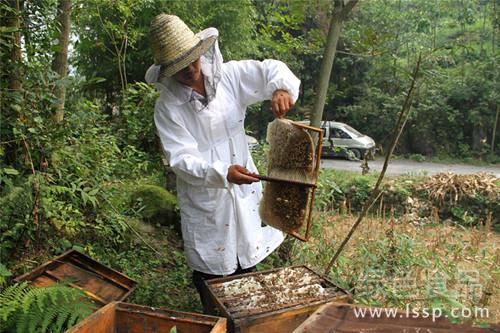
Shaking bees
1. Shaking bees and tightening combs: In early spring, temperatures are low. Because bees are affected by low temperatures or cold winds, the egg-laying circle may freeze and the bees find it hard to rest normally, which is unfavorable for egg laying at this time. During spring reproduction, two hives should be placed side by side. On a windless evening, feed each colony about 275 ml of sugar water with equal proportions of sugar and water, or honey diluted with water. After 2 hours, when the bees are excited and the cluster disperses and the temperature inside the hive has risen somewhat, shake the bees and tighten the combs. Usually, the queen can begin laying eggs about 2 days after the combs are tightened. It is worth noting that when tightening the combs, only 1 comb should be kept, and extra combs should be removed. This can prompt the queen to lay eggs quickly.
2. Supplementary feeding: After tightening the combs, put honey water or sugar water in the feeder at the bottom of the hive, and use it for supplementary feeding every evening. Feeding should be frequent, once every night, without interruption, and the feeding amount should not be too large. At the first feeding, the amount can be slightly larger, generally about 376 ml per colony. Afterward, it can be determined by the number of bees and the size of the egg-laying circle, and finally it is best if there is a small amount of capped honey in the corners of the comb.
3. Adding pollen combs: In the early part of spring, natural pollen is scarce. When many queens begin laying eggs, artificial pollen combs should be added to ensure an adequate supply of pollen in the colony and the expansion of the egg-laying circle.
Method for making artificial pollen combs: Stir-fry soybeans until eight-tenths cooked, remove the skins, grind them into powder, then mix evenly with honey and soybean powder in a 2:3 ratio to form a wet powder. Pass the wet powder through a sieve with a pore diameter of 3 mm so it resembles natural pollen. Then add sucrose powder equal to half the weight of the honey, stir it evenly, pour it into empty brood cells, and use a brush to gently tamp it down. The pollen in the brood cells should be seven-tenths to eight-tenths full. Finally, apply a small amount of honey water on the pollen cells to complete the artificial pollen comb. Each comb added should have pollen cells on one side and empty brood cells on the other side.
The method of adding combs can be determined according to the relationship between bees and combs. For colonies with an average number of bees, face the brood cell side inward; for colonies with more bees, face the pollen side inward. In order to achieve rapid colony development and obtain strong colonies in time, wait until the queen has laid eggs in the empty brood cells of the artificial pollen comb and half of the first artificial pollen comb has been consumed, then add the next one next to the first pollen comb.
4. Sealing the hive and keeping colonies warm by selection: At the beginning of spring reproduction, bee colonies are small and have poor temperature regulation, which is not conducive to heat preservation, so insulation should be strengthened. The measures are: when there are more bees than combs, place the 1 comb after tightening in the center of the hive, which is enough for the bees to protect the comb; fill the gaps in the hive with insulating material, place a divider on the side near the neighboring hive and another divider on the other side, and place insulating material outside the boards. External insulation methods: reduce the entrance, spread straw under the hive, fill weeds between the two hives, wrap the surroundings inside the nest, and use plastic sheeting for warmth and insulation. On rainy days or relatively cold evenings, cover the hive completely with plastic sheeting, but do not block the entrance. In the evening, decide whether to close the entrance according to temperature changes. Under normal conditions, the hive temperature should be maintained at about 35°C. Opening the hive for inspection must be done on a clear, warm, windless day, and only when the weather is warmer can the insulating materials be gradually removed.
5. Disease prevention and control: Bee mites, foulbrood, and other diseases are highly harmful to bees, so they cannot be ignored. The measures are: when the colony begins to reproduce, mites must be thoroughly treated, and acaricides, derris extract, and other drugs can be used; foulbrood can be prevented by feeding sugar syrup with streptomycin, penicillin, and other drugs.