Rising Temperatures and Abundant Forage: Key Technical Points for Spring Breeding of Hares
In spring, as temperatures rise, hares have a high fertilization rate, and it is also the peak season for wild grass and forage production, with abundant feed. Therefore, seizing the spring breeding period for hares well can improve the economic benefits of hare farming.
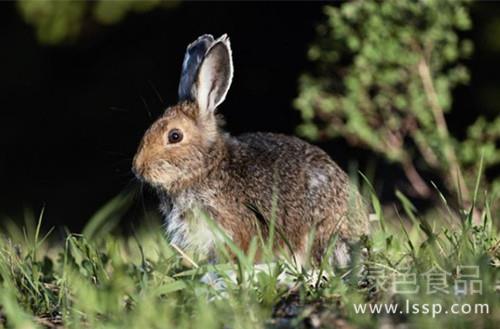
Hares
1. Selecting good breeding rabbits: It is best to choose young adult male hares that are physically strong, well developed, genetically stable, and vigorous in libido. Choose excellent female hares with well-developed reproductive organs, normal estrous cycles, high litter rates, and high milk production.
2. Mating: When the body weight of the breeding rabbit reaches more than 70% of the adult body weight, the first mating can be carried out. Female hares come into estrus once every 15 days, lasting 2 to 3 days. The mating time can be determined according to the color of the female rabbit's vulva, that is, "pink early, dark purple late, bright red is exactly the right time for mating." Mating should take place at night, which makes it easier to watch over them when they give birth during the day. The methods of repeat mating and double mating can be used: one female rabbit mating with one male rabbit twice (generally 4 hours apart) or successively mating with 2 male hares (generally 2 hours apart); after mating, lift the female rabbit's hindquarters and tap them lightly a few times to make the muscles tense, which can prevent semen backflow and improve the fertilization rate. One week after mating, place the female hare in the male hare's cage. If the female hare refuses the male hare's mounting, it indicates that she is pregnant; otherwise, she should be re-mated.
3. Feeding and management of female rabbits during pregnancy and lactation: In the middle and late stages of pregnancy, female rabbits should be carefully managed. To prevent miscarriage, attention should be paid to the nutritional level of the daily ration and feed hygiene. Do not feed moldy feed, do not suddenly change the daily ration, and do not arbitrarily catch or startle them. Five days after giving birth, increase the daily feed amount by 1 to 1.5 times, and feed more fresh green, succulent feed (such as dandelion, bitter lettuce, lettuce leaves, etc.) as well as bone meal, fish meal, soybean cake, minerals, and a small amount of salt, so as to increase the milk production of female hares.
4. Feeding and management of newborn rabbits: It is best to use manual care for the newborn rabbits. Wipe the newborn rabbits dry with a clean towel and remove blood, hair, and other dirt. After the female rabbit gives birth to the placenta, feed the female rabbit some warm boiled water, preferably 5% brown sugar water or 0.9% salt water. Then move the newborn rabbits into an insulated box padded with soft grass and feed them milk once. Every 24 hours, place the female rabbit into the insulated box to feed them milk once more. Spring temperatures are low, so newborn hares should be kept warm, and the rabbit house temperature should be controlled. At 1 to 5 days of age, the most suitable temperature is 30 to 32°C; at 5 to 10 days of age, it is 25 to 30°C; afterward, keep it at 15 to 25°C. Newborn rabbits begin supplemental feeding 16 to 17 days after birth. They can be fed some tender green grass, and gradually more full-price compound feed with high nutritional value, good palatability, and easy digestion should be added. After 35 to 40 days, they can be weaned.
5. Hygiene and epidemic prevention: Spring has more cloudy and rainy days and high humidity, which is a peak period for various diseases. During feeding, attention should be paid to moisture prevention and disease prevention. The health status of hares should be checked every day, and the rabbit house and rabbit cages should be cleaned, disinfected, and sterilized well. It is best to clean the rabbit cages once a day and disinfect them once every 7 days. On cloudy and rainy days, quicklime, plant ash, and the like can be spread on the ground for disinfection, sterilization, and moisture prevention. During the day, let the hares bask in the sun as much as possible, and use artificial lighting in the morning and evening to avoid affecting the growth of hares due to insufficient light. In addition, observe frequently, and sick rabbits should be isolated and treated promptly, and the cages and equipment should be strictly disinfected.