Spring is the peak season for raising goslings, and how to raise them well is crucial
Spring is the peak season for raising goslings. In large-scale rearing, the mortality rate of goslings from 1 to 30 days of age accounts for more than 70% of the total mortality for the whole period. Among these, deaths caused by improper feeding and management account for about 15% of the total gosling deaths. Here is an introduction to how to do a good job of feeding and managing goslings in spring, for reference only:
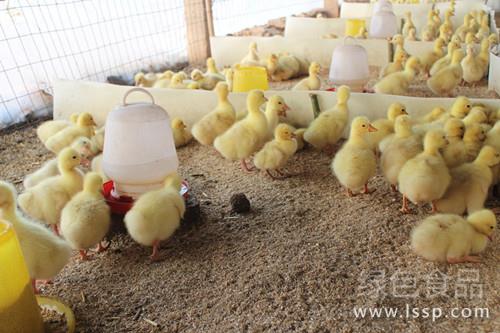
Gosling feeding
1. Emptying the goose house: After the goose house is cleaned and disinfected, it should remain empty for at least 2 weeks before the geese are brought in. Close and seal the goose house to prevent wild birds and rodents from entering.
2. Selection of goslings: Choose healthy goslings that have passed origin quarantine and are provided by large-scale breeding goose farms free of gosling plague, avian influenza, goose paramyxovirus disease, and vertically transmitted bacterial diseases. The rearing group in the same goose house, or all geese on the whole farm, should come from the same breeding goose farm during the same period. Do not introduce goslings from avian disease epidemic areas.
3. Reasonable grouping: Group and raise the goslings according to their strength and size at hatching. Provide reasonable supplementary feed to weak and small goslings. During rearing, continuously adjust according to the geese's growth and development, size, strength, and weakness, so that geese of the same age in each group are as uniform as possible in size and strength, to facilitate feeding and management.
4. Goslings receive their first drink about 24 h after birth. Make sure drinkers do not leak, to prevent litter and feed from becoming moldy. Glucose, electrolytes, and multivitamin additives can be added to the drinking water. After the first drink, feed can be given after 0.5 to 1.0 h. A complete feed can be fed according to the recommended feeding standard for the meat goose breed being raised. Determine each addition of feed according to need, try to keep the feed fresh, and prevent the feed from becoming moldy. Store feed in a ventilated, dry place, and do not feed feed that is past its shelf life or moldy, spoiled, or infested with insects.
5. Temperature: Goslings have an imperfect thermoregulatory function and are weak in adapting to low temperatures and sudden temperature changes. When goslings huddle together in a low-temperature environment, it can lead to suffocation. If the goose house temperature exceeds 32 degC, goslings become listless, eat little, drink a lot, and their body heat dissipation is hindered, thus affecting growth and development and inducing disease. Long-term high temperature can also cause gosling death. The temperature for brooding goslings should be appropriate and balanced: the house temperature for goslings from 0 to 7 days of age is about 28-30 degC, then as their age increases and in combination with weather changes, it should decrease by 2-4 degC each week. By 30 days of age, goslings have a certain ability to adapt to temperature changes, and the temperature can be kept constant at 15-25 degC.
6. Humidity: When the environmental humidity exceeds 80%, accompanied by unsuitable temperature, goslings become listless, have reduced appetite, huddle, have difficulty breathing, diarrhea, and loose down, with the prominent sign being feather-pecking. In severe cases, the down on the head, neck, and back of the goslings is completely pecked off, causing poor development and resulting in stunted geese. Under high-temperature and high-humidity conditions, pathogenic microorganisms and parasites are prone to breeding, feed and litter are prone to mold, and the goose flock is prone to aspergillosis. Too low humidity can cause serious consequences for gosling growth and development, and can easily lead to excessive dust in the environment and trigger respiratory diseases. The suitable humidity for goslings is 50-75%.
7. Guard against starvation or lack of water in goslings: Goslings have increasingly vigorous metabolism, but their gastrointestinal capacity is small, so the feed must be sufficient in quantity, good in quality, and easy to digest. During rearing, group them reasonably, and the size and height of the troughs or feed trays should be suitable, with proper placement, to ensure that every gosling can eat well and eat a moderate amount (70% to 80% full). Newly hatched goslings contain about 75% water in their bodies. If goslings are not given water within 24 hours, they will show dehydration symptoms due to severe water loss. Therefore, for young goslings, providing clean water at a suitable temperature early is more important than feeding, and drinking water must not be interrupted.
8. Guard against the harm of harmful gases to goslings: The main causes of carbon dioxide poisoning in goslings are relatively high room temperature, poor ventilation in the brooding house, and excessive stocking density of goslings. The main causes of ammonia and hydrogen sulfide poisoning in goslings are dampness in the brooding house, poor ventilation, and organic matter such as filthy litter and feces not being removed in time and fermenting to produce gas.
9. Guard against crushing and rodent damage: Focus on plugging rat holes in the brooding room, and make sure doors and windows are tight to strictly prevent rats from entering. On the farm grounds and in the goose house, bait is often placed to kill rats and flies. In the goose house, bait should be strictly controlled, or placed when the house is empty, so that the goose flock cannot come into contact with it.
10. Timely immunization: Goose farms should carry out gosling disease vaccination work selectively according to local conditions, and pay attention to choosing suitable vaccines, immunization procedures, and immunization methods.