Key Points of Daily Management and Disease Prevention and Control Techniques for Pigeon Greenhouse Farming
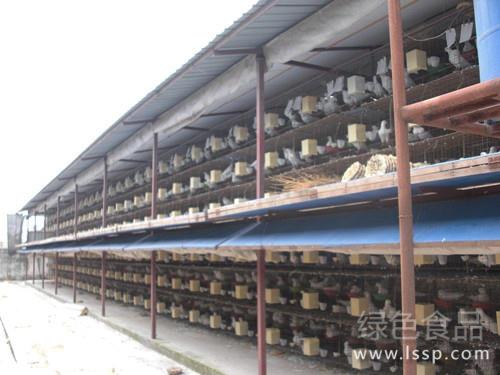
Pigeon Greenhouse Farming
1. Feed formulation: Pigeons are picky eaters. When given a daily ration made of a mixture of various feeds, they eat them in this order: mung beans → peas → wheat → corn → soybeans → rice → sorghum, etc. Therefore, it is best to make the feed into pellets to avoid malnutrition caused by picky eating. At the same time, certain feed ingredients should be increased or decreased according to the production cycle and seasonal changes. In hot summer, add mung beans to clear heat and reduce internal fire. In cold winter, add hemp seed to raise the energy value of the feed. During the molting period, add rapeseed to shorten the molting time. When formulating feed, attention should be paid to the balance of animal protein, especially essential amino acids. Animal protein is very important for the egg production, fertilization rate, hatchability of pigeons and for 28-day-old squabs.
2. Feeding method: Feed 3 times a day, at fixed times and in fixed amounts. Feeding times are 7:30 in the morning, 2:00 in the afternoon, and 6:00 in the evening. The feeding amount is: about 40 grams per pair of pigeons during the non-breeding period. During the brooding period, it is best to keep feed available at all times. If pellet feed is not used, before feeding, first soak the feed in warm water (about 40°C) for half an hour, then let it dry slightly before feeding, which helps the squabs digest.
3. Preparation and provision of health grit: The quality of health grit and the amount consumed directly affect the growth, development and reproduction of pigeons. During the breeding period, the health grit formula (%): river sand 35, yellow mud 20, shell powder 15, salt 5, lime 2, poultry multivitamins 2, gentian 0.5, gypsum powder 2, eggshell powder 2, bone meal 2, charcoal powder 6, fish meal 5, licorice 1, auxin 1.5, oxytetracycline calcium salt 0.6, yeast tablets 0.4. Pigeons like to eat fresh, dry health grit, so it is best to provide health grit once a day.
Daily management and disease prevention and control of pigeons:
1. Daily management requires four observations: Observe mental state; healthy pigeons are lively, excited and sensitive. Observe eating and drinking; healthy pigeons eat quickly and generally drink water after eating. Observe the color and shape of droppings; normal pigeon droppings are gray, yellowish-brown or grayish-black, in strip or spiral shape, with white urate material attached at the end. Observe the care of squabs; check whether the squabs are stepped on, crushed, lost, harmed by rats, etc., to ensure the squabs grow safely and healthily.
2. Management during the incubation period. When breeding pigeons are incubating, some male and female pigeons often fight over incubation, thereby stepping on and breaking the eggs, while some breeding pigeons linger outside after coming out to eat, thus affecting embryonic development and causing embryo death. In the former case, they should be re-paired, and the eggs in that nest should be incubated by foster pigeons. In the latter case, the pigeons should be promptly driven back into the nest, and the light should be shaded dark; after 3 to 5 days, this phenomenon can be avoided. Breeding eggs are easily soiled by droppings during incubation, so they should be checked frequently. If contaminated by droppings, gently wipe it off with a towel soaked in warm water. This can significantly increase the hatchability. Never wash them with water, otherwise it is harmful to embryonic development and may even cause embryo death. The incubation period of King pigeons is 18 days. Throughout the incubation period, eggs should be candled 2 times. The first is on the 5th day of incubation, mainly to remove infertile eggs. Hold the pigeon egg up to the light for inspection; if the inside of the egg is yellow and translucent, the same as an unincubated egg, then it is an infertile egg. The second candling is on the 12th day of incubation, to check embryonic development and pick out dead embryos. Some embryos are not strong enough; at hatching, although they have broken the shell, they are unable to hatch on their own. At this time, manual assistance is needed, that is, use a needle to enlarge the opening along the pecking hole parallel to the egg's transverse diameter, and after it matures, it will emerge from the shell by itself. If the blood vessels have not completely contracted, the blood vessels must not be forcibly broken, otherwise the chick will die from excessive bleeding. Through manual assistance, squabs can generally hatch safely, and this can increase the hatching rate.
3. Management during the brooding period: For the few first-time breeding pigeons that do not know how to brood squabs, they should be trained, that is, carefully insert the squab's beak into the parent pigeon's mouth. After repeated attempts, the parent pigeon will generally brood them, or use foster pigeons to brood them, so as to ensure the squabs survive. Change the position of the squabs: Some parent pigeons always feed the one near the outside of the nest first during brooding, causing the two squabs to develop unevenly, and causing the one that is overfed to develop crop impaction and indigestion. Therefore, the positions of the two squabs should be changed frequently so that they grow evenly and the quality of the squabs is improved. For nests with only 1 egg or 1 squab, according to their similar age in days, combine two single nests or combine three into one. This reduces the burden on the breeding pigeons and allows them to lay eggs earlier, thereby improving the production efficiency of the breeding pigeons.