Loach Cage Aquaculture Technology: High-Yield and Easy-to-Harvest Management Methods
Cage aquaculture of loach features simple equipment, high yield per unit area, convenient management, easy harvesting and remarkable economic benefits, making it a loach farming technique worth promoting. The key technical points of cage aquaculture of loach are introduced as follows:
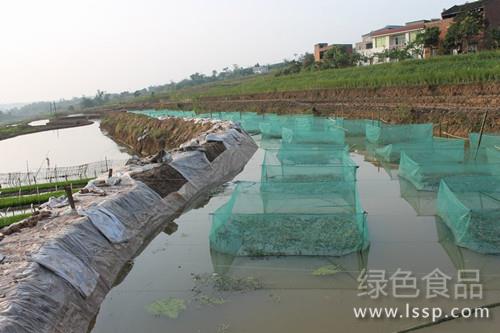
Cage Aquaculture of Loach
1. Site selection: The loach farming site should be chosen in wind-sheltered, sun-facing shallow waters at the edges of lakes and reservoirs, or in ponds with flowing water, with good water quality and no industrial pollution.
2. Cage setup: Cage specifications can vary in size, from small ones of 1-2 m2 to large ones of 20-40 m2, with 10-20 m2 being generally preferable. The cage body is made of polyethylene machine-woven mesh, with a mesh size of 0.5-1.0 cm. The cage height depends on the aquaculture water body, but the upper part of the cage must stand more than 40 cm above the water surface to prevent loach from escaping. The cage bottom should rest on the mud, with a 20 cm thick layer of manure and soil spread on the bottom layer, and soil as the topmost layer. Aquatic plants should be transplanted inside the cage, preferably emergent plants (such as water peanut), with the plant volume accounting for about 1/2 of the cage area.
3. Loach fry stocking: The stocking density of loach fry in cages depends on water conditions. More can be stocked when the water is fertile and flowing; otherwise, less should be stocked. Generally, 900-1200 fry of 5-6 cm per square meter are stocked.
4. Feeding management: Cage aquaculture of loach relies mainly on artificial feeding. A feeding platform of about 2 m2 should be set up inside the cage, 20-25 cm above the pond bottom. When feeding, the bait is placed on the feeding platform. For artificial feeding, synthetic dough-type feed or complete compound pellet feed can be given. In complete feed, animal protein accounts for more than 50%. The daily feeding amount is 3%-5% of the loach's body weight, fed three times a day in the morning, at noon and in the evening.
5. Daily management: The cage netting should be cleaned frequently to maintain water permeability inside and outside the cage, and to allow sufficient bait organisms to enter the cage. At the same time, the netting should be checked regularly, and any holes should be repaired immediately. In addition, pollution from pesticides, chemical fertilizers and other sources, as well as attacks by natural enemies, should be prevented.
6. Disease prevention and control: Routine prevention and control of loach diseases should be carried out. When feeding, the "four fixed" principle should be adhered to, residual bait on the feeding platform should be removed promptly, and quicklime should be splashed regularly, or bleaching powder hanging bags, oral multivitamins and enteritis medicine should be used. Bleaching powder hanging bag method: Wrap bleaching powder in two layers of gauze and hang 2-3 bags at a time around the feeding platform, which can effectively prevent disease outbreaks.