Rice in the fields, shrimp in the water, shrimp waste fertilizes the fields: a new model of rice-shrimp co-cropping
The rice-shrimp co-cropping model refers to making certain field modifications to paddy fields and reasonably stocking an appropriate amount of red swamp crayfish (Procambarus clarkii) as a secondary crop, leveraging the crayfish's weed control and waste fertilization benefits to achieve rice-shrimp symbiosis, realizing the effect of "rice grown on the field surface, red swamp crayfish raised in the water body, shrimp waste fertilizing the fields, rice and shrimp living together" - an ecological agriculture that organically combines crop farming with aquaculture.
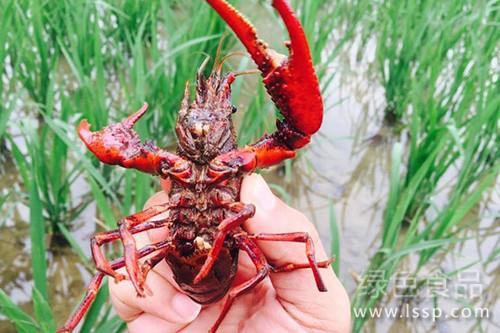
Rice-shrimp co-cropping
Technical key points:
Rice-shrimp co-cropping requires convenient water intake and drainage and water sources that meet standards. After the rice harvest, use a small excavator to dig a ring ditch around the paddy field at a distance of 2.5-3.0 m from the inner side of the field ridge, with a ditch surface width of 1.2-1.5 m, a ditch bottom width of 0.6-1 m, and a ditch depth of 0.8-1.2 m. The ring ditch is not closed; leave 10-20 m uncut at one end of the paddy field to facilitate machinery passage during transplanting and harvesting. Use the excavated soil to reinforce, raise, widen and compact the field ridge to prevent red swamp crayfish from burrowing holes in the ridge. The field ridge for rice-shrimp co-cropping is 0.3-0.4 m higher than the ridge for rice monoculture, to avoid ridge collapse and soil erosion. Install escape-prevention facilities: use rectangular mesh bags made of 25-mesh polyethylene netting at the water inlet, and 25-mesh metal mesh at the water outlet, and install them to the eaves to prevent red swamp crayfish from escaping. The water inlet and outlet are set at diagonally opposite corners.
Red swamp crayfish are raised from the end of September or early October after the rice harvest of that year to early June of the following year; from May to early June, dedicated fields are used for seedling cultivation; from mid-June to the end of September, rice is planted, with rice as the main crop; from May to early June, ground cages are used to catch red swamp crayfish, leaving some large-sized red swamp crayfish seedlings to co-crop with rice as reserve broodstock. From mid-August to early September, stock 15 kg of parent shrimp per mu. The co-cropping period of supplementary broodstock shrimp with rice is 30-40 days. During the growth period of red swamp crayfish, feed plant-based feed and supplement vitamins and trace elements. From March to June of the following year, add aquatic plants once every 15 days, using 80-120 kg per mu. Before stocking broodstock shrimp, place some beneficial live bait organisms such as water earthworms, river snails and freshwater mussels among the aquatic plants in the deep-water area of the ditch, to increase red swamp crayfish yield, quality and size, reduce inputs and lower costs.
Select rice varieties with thick, sturdy and dwarfed stems and a growth period of about 150 days. In mid-June, after the red swamp crayfish harvest in the main field is basically finished, begin transplanting the seedlings. Transplanting density: 13,000-14,000 hills per mu. March to June is the growing season for red swamp crayfish; patrol the field once in the morning and once in the evening, and adjust the water level according to the feeding and activity conditions of the red swamp crayfish so that the water temperature is always suitable for their survival and growth. The water level variation range is 0.3-0.6 m. Generally, the water level in the main field is 0.3-0.5 m and the water level in the ring ditch is 0.8-1.2 m; before rice transplanting, the water level in the main field is 0.4-0.6 m and the water level in the ring ditch is 1.2-1.5 m; avoid reducing the number of molts of the red swamp crayfish. During the rice-shrimp co-cropping period, adopt shallow irrigation with immediate drainage to induce the red swamp crayfish to gather in the ring ditch, with the ring ditch water level at 0.8-1.0 m. When fertilizing, to ensure rice yield and the safety of the red swamp crayfish, choose biological compound fertilizer. Slowly drain the main field water until nearly dry, and after the red swamp crayfish have actively migrated to the ring ditch, adopt a small-amount, multiple-application, plot-by-plot fertilization method to promote the fertilizer to settle quickly into the bottom mud, then add water to the normal depth. Before stocking broodstock shrimp, disinfect the shrimp ditch with quicklime water; regularly splash EM bacterial liquid to regulate water quality. The red swamp crayfish harvest time is concentrated from early April to mid-June. Use shrimp cages for trapping, harvest the large ones (over 30 g) and keep the small ones, and harvest at the right time. From late April, continuously harvest the red swamp crayfish that meet the standard for market to reduce the density of red swamp crayfish in the field and increase growth speed, and finish harvesting by mid-June. After the second field drying, the harvester enters the main field from the closed part of the ring ditch to harvest the rice.