High-bed housing technology for dairy goats: not limited by pasture, high fresh milk quality
The goat high bed refers to a raised goat house built with construction materials at a certain height above the ground, fitted with slatted mesh boards. Housing dairy goats on high beds means they are not limited by pasture, milk yield can be increased, the hygiene quality of fresh milk is ensured, and the occurrence of disease can also be reduced.
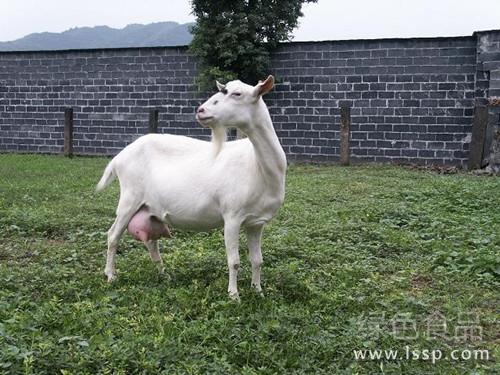
Dairy goat
1. High bed construction: Goats like dryness and dislike dampness, so the site should be chosen on high, dry ground with good drainage, and the orientation and construction should follow the principles of summer ventilation, winter warmth and good lighting. The high bed should be 1-1.5 m above the ground to reduce the harm to goats from harmful gases such as ammonia, hydrogen sulfide and carbon dioxide. The high-bed mesh boards can be nailed from wooden strips of 3cm×4cm or 4cm×5cm. Leave a gap of 1-1.5cm between the wooden strips, and enclose with railings into pens of 4—6 sq m for grouped feeding and management. The house should have a 1° slope, and the ground beneath the mesh boards should have a slope of 10°—15° to facilitate cleaning of manure and urine. Windows should be left in the walls on both sides of the goat house, or the south-facing side should be open, to facilitate ventilation and air exchange. Different goats require different high-bed mesh board areas: adult female goats 1-1.2 sq m, adult male goats 1.5-2 sq m (if rams are kept in individual pens, 4-6 sq m is needed), young female goats 0.6-0.8 sq m, replacement goats 1-1.5 sq m, and lambs 0.3-0.5 sq m. The exercise area should be 2-3 times the area of the goat house.
2. Breeding goat management: Breeding rams should be healthy, in good body condition, with strong libido and good semen quality, and inbreeding must be prohibited; if their number is small, rams can be exchanged from a distant place. During the mating period, the daily ration of breeding rams should be nutritionally complete, palatable and easy to digest, with high-quality legume hay as the main roughage, and in winter supplementing with carrots and protein-rich concentrate, which should account for 20% of the mixed feed. During the non-mating period, they should both recover their strength and not be overfed, so as to prevent the breeding rams from becoming too fat.
3. Female goat management: The 20 days after kidding are the recovery period for does, also called the early lactation stage. After kidding, does consume a great deal of energy, have weak constitution and poor digestive capacity. From 5-6 days after kidding, feed easy-to-digest high-quality hay and a small amount of mixed concentrate; after 6 days, gradually increase the feeding of silage or succulent green grass; after 14 days, increase the concentrate to the normal feeding amount. Generally, a doe weighing 50 kg is fed 0.6 kg of concentrate per day. Although succulent feed has a milk-promoting effect, it must not be fed too early or too much, so as to prevent indigestion in the doe or causing diarrhea that affects milk yield.
From 20-120 days after kidding is the peak lactation period, especially from 30-70 days after kidding, when milk yield is highest; feeding must be especially careful and nutrition must be complete. On the basis of the original feeding amount, feed an additional 50-80 g of concentrate per day, that is, 650-680 g per day. As long as milk yield rises, continue increasing, until milk yield stabilizes; maintain the final daily feeding amount for 5-7 days, then feed according to the early-stage feeding standard. When promoting milk production, use the "three looks", that is, look at whether the doe's appetite is strong, whether milk yield continues to rise, and whether the feces are normal, and determine the increase or decrease of concentrate based on these. To prevent nutritional loss during peak lactation, feeding management should achieve rich feed before kidding, bold feeding after kidding, and careful nursing.
From 120-210 days after kidding is the stable lactation period for does. Although milk yield has already declined during this period, the decline is relatively slow; in feeding, try to avoid changing feed, feeding methods and work schedules, so as to prolong the peak lactation period. Provide more green and succulent feed and ensure the supply of clean drinking water.
From 210 days after kidding to the dry period is the late lactation period. Milk yield declines markedly, and efforts should be made to slow the rate of decline in milk yield; concentrate should be reduced only after milk yield has fallen. Late lactation is also early pregnancy; although fetal weight gain is not great, full-value nutrition is required, so concentrate should not be reduced too quickly, otherwise fetal development will be affected.
After 10 months of lactation and 3 months of pregnancy, female goats consume a great deal of nutrition. To help the doe recover her constitution as quickly as possible, she should be made to stop producing milk and enter the dry period. During the dry period, the fetus grows quickly, so feed with high dry matter content and rich protein should be supplied. Attention should be paid to the supply of calcium, phosphorus and vitamins; 40 days before drying off, a goat weighing 50 kg should be given 1 kg of excellent legume hay (such as alfalfa, vetch) per day, 2.5 kg of corn stalk silage, and 0.5 kg of mixed concentrate. Twenty days before kidding, increase the concentrate feeding amount and appropriately reduce the roughage amount. Generally, a doe weighing 60 kg is given 0.6-0.8 kg of mixed concentrate to meet the nutritional needs of the fetus and promote mammary gland proliferation; at the same time, reduce feed volume to avoid pressing the uterus, affecting fetal development or causing miscarriage.