Pigeon with an enlarged, hard crop and poor appetite: how to prevent and treat hard crop disease
Hard crop disease, also known as crop impaction or crop food stagnation, is one of the common crop diseases in pigeons.
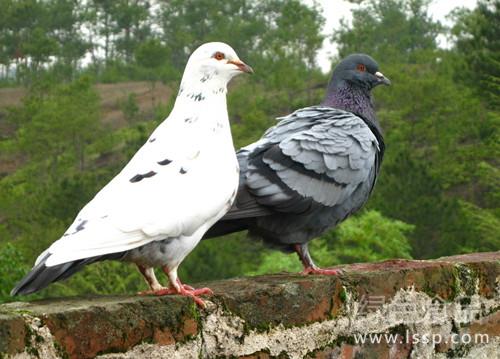
Pigeons
1. Causes: When pigeons are starving, they overeat coarse, hard feed or moldy feed, such as spoiled bean cake and beans; lack of drinking water, lack of health grit or sand grains; swallowing indigestible foreign objects that block the crop; suffering from certain diseases, such as gastroenteritis and acute infectious diseases, can also cause hard crop disease.
2. Symptoms: This disease occurs mostly in squabs and young pigeons. Sick pigeons have reduced appetite, an enlarged crop that is hard and firm, sticky saliva in the mouth, and sour, foul breath. Sick pigeons are restless whether standing or lying down, breathe with the mouth open, shake their heads, and pass unformed stool or are constipated. Sick pigeons are restless with pain, gradually lose weight, and eventually die from crop ulceration or suffocation.
3. Prevention and treatment: For prevention, pay attention to feed formulation, do not let pigeons overeat after being hungry, and in feeding management feed parent pigeons at least multiple times; do not feed plant seeds with awns or prickles, and eliminate moldy feed.
If a pigeon has a pendulous crop, you can pour in oil, such as vegetable oil, and gently massage. Then lift the pigeon with the tail up and the head down, gently press the crop, and gradually expel the contents. Sick pigeons can be given 2% saline or soda water to induce vomiting, or the crop can be repeatedly flushed with 0.2% potassium permanganate solution to expel the contents. Then confine the bird, fast it for 1 day, and give antibiotics and digestion-aiding medicines such as yeast tablets or 1-2 tablets of lactasin and multivitamins.
(1) Traditional Chinese medicine treatment. The following formula can be used: 10 grams of bitter orange, 8 grams of white atractylodes rhizome, 4 grams of atractylodes rhizome, 3 grams of green tangerine peel, 8 grams of poria, 4 grams of malt, 4 grams of rice sprout, and 3 grams of licorice. Decoct in water for 10 pigeons to drink.
(2) Surgical treatment. If a foreign object is blocking the crop, a crop incision can be made to remove the foreign object. Pluck the feathers on the crop, disinfect with 5% iodine tincture, then deiodinate with 75% alcohol. At the upper 1/3 of the crop, avoiding blood vessels, cut the crop skin 0.5-1 cm. Remove the contents, repeatedly clean the crop, instill 80,000-100,000 international units of gentamicin or 10,000-100,000 international units of kanamycin, then suture the crop. Disinfect the incision with 5% iodine tincture or iodine copper solution, or apply sulfonamide ointment externally. After surgery, withhold food for 1-2 days, then feed easily digestible feed, but do not overfeed. Remove sutures after 5 days, and the pigeon returns to normal food intake after 7 days. To prevent bacterial infection, give 120,000 international units of oxytetracycline orally twice a day after surgery.