The more lazy crabs there are, the lower the yield; diligent people can prevent crabs from becoming lazy
So-called lazy crabs refer to river crabs that live for a long time in caves, mud, sand, and rock crevices far from the water surface, do not come out to move about or forage, and cannot molt and grow. Lazy crabs are waste products with no economic value. The more lazy crabs there are, the lower the yield, and the smaller the chance of success in river crab farming. But as long as farmers can manage according to scientific management methods and achieve "diligent people prevent lazy crabs," the chance of success in river crab farming is still very high.
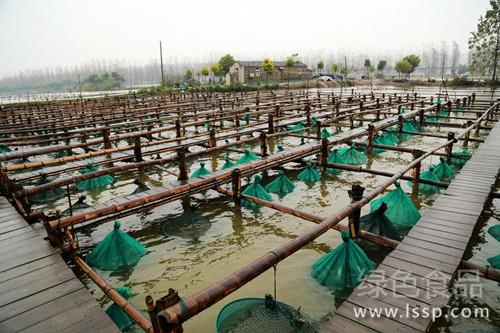
River crab farming
1. Do a good job at the temporary rearing stage: Whether due to lack of farming experience or simply taking the easy way out, some farmers directly put megalopa into adult crab culture ponds. In the process of megalopa becoming stage I, II, and III juvenile crabs, because their swimming ability and predation ability are weak, they have no choice but to gather at the shore for long periods, especially when there are wind waves. The growth of river crabs is completed through periodic molting. River crabs themselves cannot synthesize molting hormone and must obtain it from the outside. If the intake of molting hormone is insufficient, they cannot molt and grow normally. For crab seedlings directly put into ponds, due to poor management and other reasons, some crab seedlings that cannot get bait have no choice but to dig holes at the shore and take in humus from nearby soil to maintain life, but they cannot complete molting. Over time, they become lazy crabs. Before crab seedlings are put into culture ponds, they must be temporarily reared. There are many temporary rearing methods; net cages are best, and soil ponds, cement ponds, and other water bodies can also be used. If there is no temporary rearing pond, a small water body can be enclosed with fine mesh at one corner of the culture pond for temporary rearing. During temporary rearing, the water quality should be fresh and rich in dissolved oxygen, and some attachment objects should also be arranged manually. Feeding should be mainly animal-based bait, supplemented by plant-based bait. Feeding should be uniform so that all juvenile crabs eat enough bait. When megalopa become stage III juvenile crabs, they are then put into adult crab ponds for culture.
2. Pond conditions should be good: If the bottom material of the crab pond is uneven, especially if the bottom soil or sand and stone crevices near the water surface and shore are large, river crabs can easily use the crevices to hide and dig holes. In northern regions, there is a lot of wind in spring. The waves, evaporation, seepage, and other factors caused by wind will erode the shore into a section 10-20cm long with almost no slope ratio. River crabs living in holes on this section easily become lazy crabs. Therefore, the pond water surface slope ratio is best at 1:2.5-1:3 or above, the bottom material should be flat with no crevices, and the pond's water retention performance should be good.
3. Feeding should be uniform and sufficient: Feeding in the early stage after juvenile crabs enter the pond is very important. Feeding should follow the four-fixed principle, especially during these two peak feeding periods: first, in April-May shortly after entering the pond and starting to feed; second, in the later stage of farming before molting, when river crabs eat relatively large amounts, sufficient bait should be fed.
4. Transplant aquatic plants and attachment objects: For ponds without aquatic plants or with few aquatic plants, some aquatic plants or emergent plants can be planted manually, with the aquatic plant area accounting for about 1/3 of the pond water area. Some net pieces or dead tree branches can also be arranged manually as attachment objects. This can not only create a good habitat environment for river crabs, but also provide hidden places for river crabs to molt, and has multiple functions such as providing bait, purifying water quality, and providing shade and cooling.
5. Keep the water level stable: River crabs often dig holes on the pond slope between high water level and low water level. After crab seedlings are temporarily reared and put into adult crab ponds, the water level should be raised to the required position in one go, and afterward this water level should be kept relatively stable. If water needs to be changed or added during later farming, it must be added to the original water level. This point is very important.
6. Maintain good water quality: River crabs like to inhabit water bodies with clear water quality, rich dissolved oxygen, and lush aquatic plants. Therefore, in addition to not using polluted water sources and promptly replacing deteriorated pond water, new water should also be regularly added to crab ponds until adult crabs are harvested. The pond water quality should always be kept fresh, lively, tender, and refreshing, and water bodies should be disinfected regularly. When necessary, aerators should also be equipped.
7. After lazy crabs are found, remedial measures should be taken, with careful feeding and bait supplemented with molting hormone. When necessary, lazy crabs can be concentrated for intensive feeding and placed into water bodies with climbing attachments.