Free-range chicken flocks are greatly affected by the external environment. What are the key management points?
Compared with the traditional cage-rearing model, the free-range model exposes the flock to greater influence from the external environment. Therefore, it also differs greatly from the traditional cage-rearing model in terms of breed, housing, and rearing techniques.
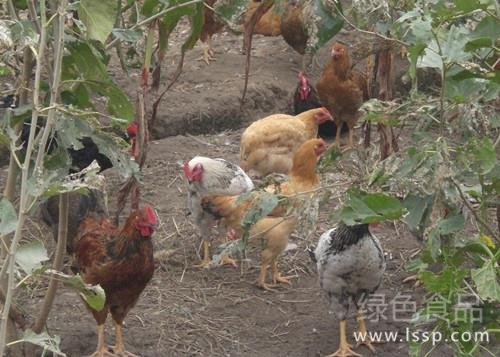
Free-range chicken flock
1. Breed selection: Under the free-range model, chickens spend a lot of time active outdoors, so they must be able to adapt to external changes, including temperature differences, rain and snow, and changes in external conditions, all of which may cause stress to the chickens. In addition, the free-range model is more likely to produce eggs and meat of excellent quality, and production costs are higher. If high-egg-yield or high-meat-yield breeds are chosen, their egg and meat quality is poor due to the genetic factors of the breed itself, so this is not conducive to raising product grade and makes it difficult to achieve high returns on high investment.
Therefore, the editor suggests choosing breeds that are as adaptable, tolerant of coarse feed, easy to raise, and excellent in quality as possible. Many local breeds are the best choices, such as Beijing You chicken, Hainan Wenchang chicken, Shandong Laiwu black chicken, green-shell laying hens, and Guangxi Sanhuang chicken.
2. Housing requirements: Modern free-range rearing is different from the early courtyard free-range rearing and requires providing chicken houses for the flock.
The chicken house must have good insulation, heat insulation, ventilation, and lighting conditions. The brooding house should have good insulation performance and be equipped with heating devices, such as hot-air furnaces, coal stoves, or underfloor heating. The area of growing houses and laying hen houses should be controlled below 500-600 sq m. For growing chickens, each house should hold no more than 5,000 birds, and the stocking density should not exceed 10 birds per sq m; for laying hens, each house should hold no more than 3,000 birds, and the stocking density should not exceed 6 birds per sq m. Laying hen houses should be equipped with automatic light controllers to facilitate light control.
The chicken house needs a sufficiently large exit for the chickens to move in and out freely, and for every 100 sq m of chicken house, the exit should be at least 4 m long. Outside the chicken house is the free-range area, which should be large enough, about 4 sq m per chicken. The area can be planted with fruit trees and forest trees for shade in summer, and can also be planted with forage grass for the chickens to peck at. A fence should be set up around the perimeter to prevent attacks by wild animals.
A disinfection pool should be set up at the entrance and exit of the farm, with quicklime or 2% caustic soda sprinkled in it, and personnel and vehicles should be disinfected when entering and leaving. Disinfection basins should also be placed at the entrance of each chicken house for disinfection of personnel entering and leaving.
3. Feeding management: Management is divided into the brooding period, growing period, and laying period.
Brooding period: Chicks have poor resistance and are sensitive to external temperature changes, so temperature is the primary and key condition for brooding. If brooding in spring and summer, when the external temperature reaches above 18°C, they can gradually be transferred to outdoor free-range rearing after 5 weeks; if brooding in autumn and winter, they generally transition gradually to outdoor free-range rearing only after 7-8 weeks. Free-range chickens are active outside the house during the day and return to the house to rest at night. In severe and extreme weather, such as strong winds, rain, and snow, they should not be kept active outdoors.
Growing period: Stocking density affects the survival rate, growth speed, and so on. Males and females should be raised in separate groups, and the feed should gradually transition from chick feed to grower feed. In seasons when green grass is abundant, the amount of supplementary feed can be appropriately reduced. Observe the condition of the flock and provide separate supplementary feeding for weak chickens and chickens with low body weight.
Laying period: Laying hens need 3-4 times more calcium than growing chickens. Before the start of laying, the calcium content in the feed needs to be increased, gradually transitioning to layer feed, and at the same time oyster shells, calcium carbonate granules, and so on can be provided for the chickens to eat freely. During the laying period, light should be controlled at 16 hours, with a light intensity of 2 watts per sq m. Nest boxes should be set up inside the house to train the laying hens to return indoors to lay eggs, which helps reduce the proportion of floor eggs, dirty eggs, and broken eggs. Collect eggs once in the morning and once in the afternoon each day, and in summer the number of egg collections can be increased.
4. Disease prevention and control: Under the free-range model, because chickens are in direct contact with the ground, they are exposed to more pathogenic microorganisms. If daily management is improper, diseases are more likely to occur.
First, daily disinfection must be done well. Disinfectants that can be selected include caustic soda, aldehydes, hypochlorous acid, and so on. Outside the chicken house, disinfection should be carried out once a week, with at least two disinfectant solutions used alternately.
Second, immunization prevention must be done well. Vaccination should be carried out carefully according to the breed being raised and the characteristics of disease prevalence.
In addition, the keeper should observe the chickens' mental state at any time and observe their feed intake and drinking water situation. If there is any abnormality, corresponding measures must be taken immediately for timely treatment.