Pros, Cons and Key Points of Feeding Protected Fat to Dairy Cows
Protected fat is a substance in which oils and fats are coated with materials that are difficult to degrade in the rumen. It avoids rumen fermentation, is not destroyed by the rumen, and can pass smoothly into the small intestine to be fully digested, absorbed and utilized. Feeding protected fat to dairy cows can increase milk production, improve milk quality, reduce the harm of stress, and improve the reproductive performance of dairy cows, etc. Six points must be noted when feeding protected fat to dairy cows in order to achieve the desired results; otherwise, the effect will be the opposite.
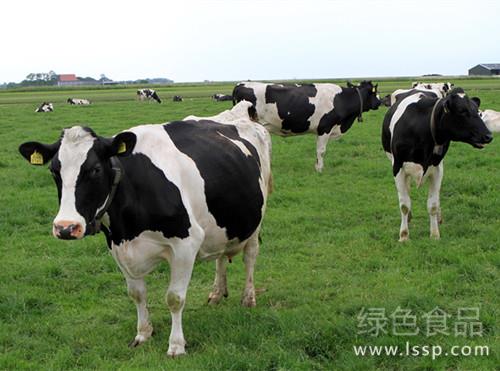
Dairy cows
Pay attention to choosing the type of protected fat:When feeding protected fat to dairy cows, fatty acids with short carbon chains in protected fat products should be selected, as they have a high utilization rate. Also note that unsaturated fatty acids are better absorbed and more effective than saturated fatty acids. If the fat used in production has not been coated, when feeding it to dairy cows, pay attention to controlling the amount used and increase the content of calcium and magnesium in the diet.
Pay attention to controlling the amount added:Excessive fat addition not only causes waste, but also reduces the dry matter intake of dairy cows and lowers their production performance. Generally, when the total fat content in the diet is 5%-6%, the utilization rate is the highest. If it is greater than 6%, it has side effects on dairy cows; conversely, if it is less than 3%, the effect is not obvious.
Pay attention to the timing of addition:After calving, dairy cows consume a great deal of energy, and adding fat is also a kind of stress, so it should not be added in the short period after calving. It should be added 3-5 weeks after calving, when the impact of stress is relatively small. Although milk production may temporarily decline, it will then gradually increase. Adding it during the lactation period is more effective and can prolong the peak milk production period, increasing milk production throughout the entire lactation period. However, the effect of adding it in the late lactation period is not obvious, so there is no need to use protected fat.
The diet composition must be reasonable:While feeding protected fat to dairy cows, high-quality hay should be fed so that the fiber content meets requirements and the rumen produces more acid. Only in this way can the role of fat be fully exerted, and the milk production and milk fat percentage of dairy cows be significantly increased. The crude fiber content of the dry matter in the dairy cow diet should be 17%, and the acid detergent fiber should be 21%. At the same time, the crude protein content in the diet should be increased.
Pay attention to distinguishing the applicable subjects:Protected fat is suitable for dairy cows with high and medium milk production, but not for low-yielding dairy cows. If the average daily milk production of the herd is less than 25.5 kg, it need not be added. Practice has proved that for dairy cows with a milk fat percentage lower than 3.5%, feeding protected fat has a good effect; when the milk fat percentage is higher than 3.5%, the effect is not obvious.
Feeding protected fat should be done step by step:When feeding protected fat to dairy cows, the amount should be gradually increased, not reaching the specified amount in one step, so as to avoid the problem of poor palatability. Generally, it should be divided into 3 stages, reaching the full amount over 3-4 weeks.