Crayfish prices have doubled and the market is large: how should freshwater crayfish be stocked
Freshwater crayfish, also known as crayfish. In recent years, crayfish prices have doubled and market demand is large. After several years of practice, the author believes that the following points should be noted when stocking crayfish:
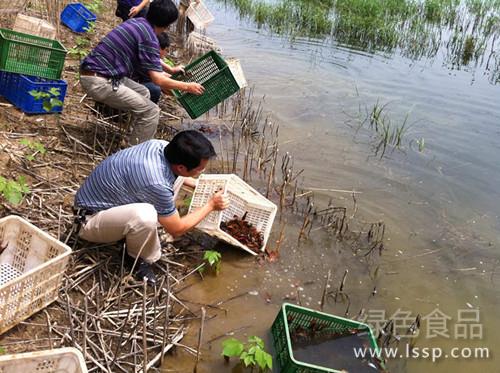
Stocking freshwater crayfish
Pond selection: For ponds used to farm crayfish, the area should be moderate, generally 20—50 mu. The pond embankment slope ratio should be large, at 1:2.5~1:3, to facilitate burrowing and reproduction by crayfish while reducing opportunities for crayfish to escape. The pond should be rich in natural food organisms and aquatic plants.
Thorough pond clearing: 10 days before stocking crayfish, drain the pond water and use 100 kg of quicklime per mu to thoroughly clear the pond. Kill harmful organisms and pathogens. Apply 100—200 kg of organic fertilizer per mu to cultivate food organisms.
Ecological planting: Plant aquatic plants in the shallow water around the pond, with the aquatic plant area accounting for 40%—60% of the pond area. Varieties include vallisneria, Elodea, Hydrilla verticillata, water hyacinth, water lettuce, etc., which can both provide food for crayfish and provide places for crayfish to hide and rest. In addition, bundles of aquatic plants can be placed on the pond bottom, one bundle every 5 m, each bundle 5—10 kg, sunk to the bottom, with 15—20 bundles per mu. The bundles are tied with rope, and the other end of the rope is fixed at the water surface.
Broodstock selection: Because artificial breeding of crayfish is not yet fully mastered, crayfish seedlings are mainly based on natural reproduction, so broodstock selection is particularly important. Selection and stocking of crayfish broodstock is generally from late August to mid-October, and they can be caught from culture ponds or natural waters. Male and female broodstock are required to come from different waters to reduce inbreeding. The time broodstock are out of water should not exceed 2 hours; indoors or in a moist environment, the time can be appropriately longer.
Broodstock stocking: The broodstock stocked should be robust, with intact appendages, uniform in size, and stocked all at once; avoid stocking in batches, which can reduce mutual killing. When stocking broodstock, stock them evenly around the pond, with even distribution points. For those transported over long distances, when stocking, first soak the broodstock in water for 3—5 minutes, then place them at the pond edge for 2—3 minutes, repeating 2—3 times, so that the broodstock absorb enough water, then slowly put the broodstock into the pond, which can increase the survival rate. The male-to-female ratio of broodstock is 2~3:1. Crayfish can mate and spawn in autumn and winter, with the mating season from September—December. In early March of the following year, when the air temperature rises to 12°C and the water temperature rises above 10°C, some crayfish will leave their burrows and come out to feed and move about. At this time, management should be strengthened, and artificial feed should begin to be given. When the water temperature reaches above 18°C, increase feeding. When large numbers of young crayfish have hatched, ground cages can be used to catch broodstock that have already reproduced.
Stocking density: In ponds mainly farming crayfish, stock 30—40 kg of broodstock per mu, with a size of more than 30 g each. After broodstock are stocked, feed artificial feed in a timely manner. From April of the following year, begin catching with ground cages and shrimp cages, catching large ones and leaving small ones, with an annual yield of 200—300 kg per mu. After that, only harvest each year, with no need to stock seed. Note that harvesting must not be excessive; if harvesting is excessive, the yield the following year will inevitably decrease, and at that time supplementary stocking will be needed. In mixed-culture ponds, stock 10—20 kg of broodstock per mu, with a size of about 25 g each, without feeding feed, relying mainly on natural food in the pond and leftover bait in the fish pond. From April of the following year, begin catching with ground cages, catching large ones and leaving small ones, with a yield of 50—100 kg per mu.