Snail farming: small space, high profit - how to farm snails artificially
The meat of the river snail is tender and fresh, with a unique flavor, and is rich in protein, fat, phosphorus, calcium, iron and vitamins, making it highly favored by consumers. Farmers can achieve considerable profits by farming river snails in small water areas or rice paddies. The artificial farming techniques for river snails are introduced as follows:
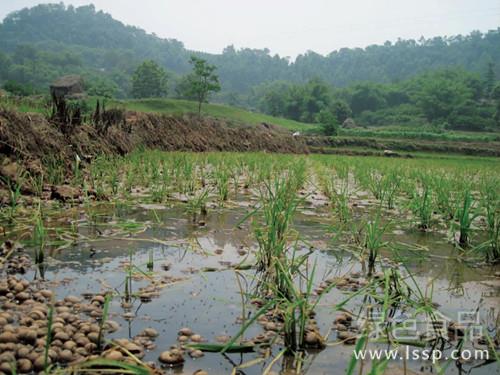
River snail farming
Living habits: River snails prefer to inhabit waters that are warm in winter and cool in summer, with clear water quality, abundant food and soft bottom substrate, and are especially fond of places with slight water flow. River snails are omnivorous, feeding on microorganisms and organic matter in the water or the tender stems and leaves of aquatic plants. River snails are active at night, and their feeding is most vigorous at night.
Site selection: The river snail farm should be chosen in a place with sufficient water source, good water quality, humus soil and convenient transportation. It is best to have flowing water. Pond specifications: width 1.5-1.6 m, length 10-15 m, or based on the terrain. Build ridges around the pond, with a ridge height of about 50 cm, open water inlet and outlet at both ends, and install blocking nets to prevent the river snails from escaping. At the same time, sparsely plant aquatic plants such as wild rice stem in the farming pond, which can not only increase the land output rate, but also create a good ecological environment for the growth of river snails.
Stocking and management:
1. Stocking density of river snails. Generally, 100-120 snails are stocked per sq m, and at the same time, about 5 summer fry of silver carp and bighead carp are polycultured per sq m for main-body farming. River snails are generally stocked in March.
2. Fertilization and feeding. The farming pond is first applied with manure to cultivate plankton as food for river snails. The amount of fertilizer applied depends on the bottom substrate of the pond. After the river snails are put into the pond, feed them with green vegetables, rice bran, fish viscera or rapeseed cake, soybean cake, etc. Green vegetables and fish viscera should be chopped and mixed evenly with feed such as rice bran before feeding. Rapeseed cake, soybean cake, etc. should be soaked until soft so that the river snails can feed on them. The feeding amount depends on the feeding situation of the river snails, generally calculated at 1%-3% of the total amount of river snails, and fed once every 2-3 days. Feed in the morning every day; the feeding position does not need to be fixed, and the feed should be placed separately. When the temperature is lower than 15°C or higher than 30°C, no feeding is needed.
3. Water quality regulation. First, the snail pond should often be injected with new water to regulate water quality, especially in the breeding season, to keep the pond water flowing; especially in high-temperature seasons, adopting flowing-water farming gives better results. In spring and autumn, slight flowing-water farming is better. The water depth of the snail pond should always be maintained at about 30 cm. Second, regulate the water pH. When the pH value of the pond water is low, apply 0.15-0.18 kg of quicklime per sq m, spreading it once every 10-15 days, so that the pH value of the pond water remains 7-8.
4. Overwintering management of river snails. When the water temperature drops to 8-9°C, river snails begin to hibernate. During hibernation, the river snails drill into the soil with the top of their shells, leaving only a small round hole on the soil surface and occasionally releasing bubbles to breathe. River snails do not eat during the overwintering period, but the farming pond still needs to maintain a water depth of 10-15 cm. Generally, exchange the water once every 3-4 days to maintain an appropriate oxygen content.
5. Harvesting for market. After one year of careful rearing, river snails can reach an individual weight of more than 10 g. The harvesting method can be draining the pond for harvesting; when harvesting, select large individual river snails as parent snails for breeding, to prepare for reproduction the following year.