Notes on raising chicks in spring: chick quality determines adult chicken profitability
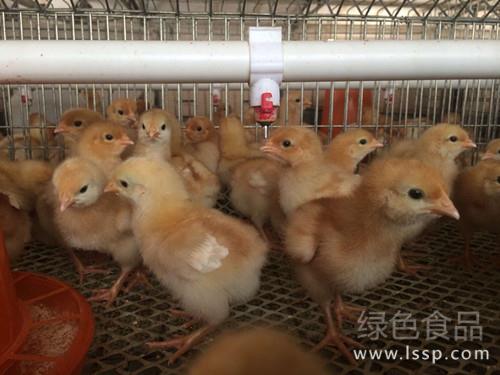
Chicks
1. Strict disinfection. Before receiving the chicks, prepare the brooding room. First soak and wash feed troughs, drinkers and other equipment with hot alkaline water or 0.2% potassium permanganate solution, then rinse clean with fresh water and let them dry for later use. Before the chicks arrive, the brooding room must be thoroughly cleaned, doors and windows closed, bedding laid, and brooding equipment placed inside. For fumigation disinfection, use 14 ml formalin, 7 g potassium permanganate plus 7 ml water per cubic meter. After 24—36 hours, open the doors and windows for ventilation, and preheat the room to above 30°C.
2. Carefully select healthy chicks. Healthy chicks are lively and active, with sturdy legs, move freely, have bright large eyes, and a well-healed navel. Weak chicks have dirty down, blood at the navel, incomplete yolk absorption, are listless, close their eyes and doze, and cannot stand steadily. When buying chicks, you must select them very carefully.
3. Keep warm and adjust humidity. Chicks have sparse down, poor insulation, and low cold resistance; both too high and too low humidity affect development. Suitable temperatures for raising chicks: 32—35°C for day-old chicks, 30—32°C at 1 week of age, 28—30°C at 2 weeks, 25—28°C at 3 weeks, 22—25°C at 4 weeks, and then lower by about 1.5°C each week thereafter. The temperature should remain even and must not fluctuate up and down; hang the thermometer 10 cm above the chicks' activity area. When the temperature is suitable, the chicks spread out evenly; when too low, they huddle together in piles. Humidity should be 60—65% within the first week, and 50—60% after 1 week. If the coop is too damp, place cloth bags filled with quicklime indoors to absorb moisture; if too dry, place a basin of water on the stove so evaporation increases indoor humidity.
4. Plenty of drinking water. After hatching, chicks can lose 8% of their water within 24 hours and 5% within 48 hours; when water loss exceeds 15%, dehydration symptoms appear quickly. Therefore, 12 hours after hatching, chicks should be given plenty of clean water with glucose and vitamin C to clear the digestive tract, expel meconium, and provide nutrition. For chicks within 1 week of age, provide drinking water with potassium permanganate at 2 parts per 10,000 to disinfect and sterilize. Keep drinkers hygienic and wash them once every day.
5. Reasonable feeding. Prepare nutritionally complete feed according to the feed requirements of different chick breeds. Start feeding within 12—24 hours after hatching. Cook rice into "half-cooked" rice, wash the stickiness off the rice with cold water, so that it is "raw but not hard, cooked but not sticky, in granular form, and separates as soon as it is scattered." Scatter the rice on clean plastic film or a cool mat to attract the chicks to peck freely, feeding them until they are six or seven tenths full each time; at the same time, cut fresh tender lettuce into shreds and let the chicks peck freely, with no limit on the amount. Feeding principles: give little but often, and raise strong and weak chicks separately. Generally, at 1—3 days of age, feed 6—8 times per day and night, and turn on lights at night for illumination; at 4—7 days of age, feed 4—5 times during the day and once at night; after 8 days of age, feed 4 times a day, with the last feeding at 7—8 pm.
6. Suitable density. Too high a density is not good for chick growth; too low a density wastes space and is also not good for keeping warm. In production practice, it is suitable to raise 40—50 small chicks, or 20—30 medium chicks, or 15—20 large chicks per square meter.
7. Strengthen ventilation. The contradiction between keeping warm and ventilation must be resolved well. Ventilation of the brooding room should be strengthened to help maintain air convection inside, keeping the air fresh and clean with no odors. On sunny middays, windows can be opened for ventilation, especially for chicks over 10 days of age. Avoid cold wind blowing directly onto the chicks, and always guard against drafts.
8. Environmental hygiene. Unsanitary and damp environments easily induce chick diseases, especially with high incidence of pullorum disease and coccidiosis in chicks. Therefore, the floor of the brooding room should be kept dry, and all kinds of equipment should be disinfected regularly.
Chick beak trimming
9. Careful management. Observe the flock often and keep track of its condition. Reduce stress factors and strictly prevent cats, rats, dogs, birds and others from entering the coop; check the house temperature at all times, because too low a temperature causes chicks to huddle and be crushed to death; if chicks with vent pecking are found, apply gentian violet to the pecked area, but do not apply merbromin, because after applying merbromin the chickens peck even more severely; at 7—11 days of age, trim beaks in time, using a beak trimmer to remove 1/2 of the upper beak and 1/3 of the lower beak. Two days before beak trimming, add an appropriate amount of vitamin K3 (10—20 mg/kg body weight) and antibiotics to the feed to prevent bleeding and reduce the stress response to beak trimming.
10. Pay attention to disease prevention. At 1 day of age, chicks are injected with 0.2 ml of Marek's disease turkey herpesvirus freeze-dried vaccine for the first immunization. Add 5% glucose and 0.1% vitamins, penicillin and streptomycin at 1500 units each to the drinking water. At 2—7 days of age, add 0.02% furazolidone to the drinking water and mix 0.1% chloramphenicol into the feed. At 7 days of age, use Newcastle disease strain II vaccine or strain IV vaccine at the prescribed dose for eye and nose drops for the first immunization. At 14 days of age, inject Marek's disease vaccine subcutaneously for the second immunization. At 18 days of age, use infectious bursal disease vaccine at the prescribed dose for the first immunization. At 30 days of age, use Newcastle disease strain II vaccine or strain IV vaccine at the prescribed dose for eye and nose drops for the second immunization. At 40 days of age, use infectious bursal disease vaccine at the prescribed dose for the second immunization.