Key points for raising suckling piglets in early spring: survival rate determines farming profitability
Do a good job of keeping warm and preventing crushing: newborn piglets need a temperature of 35°C to 29°C at 0—3 days of age, 29°C to 25°C at 4 to 7 days of age, 25°C to 22°C at 8 to 14 days of age, and 22°C to 20°C at 15 to 21 days of age. In early spring, the weather is cold, windy and changeable, which is not conducive to piglet growth, so keeping warm is very important.
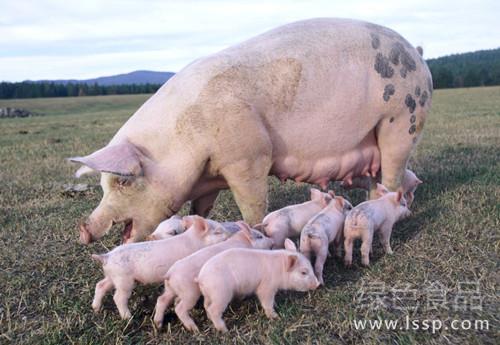
Piglets
If conditions permit, place energy-saving electric heating plates inside the pen and adjust the temperature of the heating plates according to the piglets' temperature requirements, which gives a good warming effect. You can also install far-infrared heating lamps in the piglet warming box or creep feed pen, generally using 100 to 175 watt bulbs. Hang the bulb over the area where the piglets lie down, and control the temperature by adjusting its height above the ground. If conditions do not allow this, you can also wrap a woven bag around a polystyrene board, place it on the floor of the warming box, and then spread a thick layer of straw, generally more than 10cm thick. Piglets should be trained to develop the habit of defecating and urinating at fixed times and in fixed places so that the bedding straw stays dry.
Prevent the sow from stepping on or crushing piglets: after piglets are born, deaths caused by the sow stepping on or crushing them often occur, and can account for 10% to 30% of total deaths, or even as high as 50%, mostly within one week after birth. This is mainly because the sow is weak or obese and reacts slowly, while the piglets are weak and powerless, and the farrowing pen is narrow and small; piglets especially at 1 to 5 days of age are easily stepped on or crushed to death. Specific measures: first, take good care of newborn piglets; within one week after birth, use a piglet protection box to separate the sow from the piglets, and let the sow nurse once every 2 to 3 hours; second, set up piglet protection rails; in the sow pen against the wall, use round logs or iron pipes to set up protection rails 25cm from the wall and 25cm from the ground, so as to prevent the sow from crushing piglets to death when lying down along the wall; third, set up a piglet protection room; inside the sow pen, use wooden boards or bricks to build an expanded piglet room enclosed on all sides with a small door on one side (for piglets to enter and exit), and release the piglets regularly to nurse, which can greatly reduce the chance of piglets being stepped on or crushed.
Supplement iron, selenium and feed in a timely manner: newborn piglets commonly suffer from iron-deficiency anemia. The iron stored in a piglet's body can only last 6 to 7 days. If iron is not supplemented, symptoms of iron deficiency such as reduced appetite, rough coat, pale skin and stunted growth generally appear around 10 days of age. Therefore, iron must be supplemented 2 to 3 days after birth. Generally, 1 to 2 milliliters of iron dextran injection is given intramuscularly, or 1 to 2 milliliters of iron dextran or iron glucan can also be injected intramuscularly.
Selenium and vitamin E have similar antioxidant effects, and selenium is related to the absorption and utilization of vitamin E. When selenium is deficient, piglets develop diarrhea, white muscle disease and so on. Affected pigs are mostly those with above-average nutrition or rapid growth, with normal or slightly low body temperature, hoarse cries, unsteady walking, and then paralysis of the hind limbs. Generally, 3 to 5 days after birth, piglets are injected intramuscularly with 0.5 milliliters of 0.1% sodium selenite or vitamin E injection, and another 1 milliliter is injected before and after weaning. In piglet feed, add 0.1 milligrams of sodium selenite per kilogram of feed.
Training piglets to go from suckling milk to eating feed is the primary task of piglet creep feeding. It can exercise the piglets' digestive tract, improve digestive capacity, prepare them for consuming large amounts of feed, and also reduce white scours. The earlier piglets start eating, the better; generally, inducing them to feed can begin at 5 days of age. Mix the feed with a small amount of water to moisten it, and the keeper uses their hand to smear it into the piglets' mouths, 3 to 4 times a day. At the same time, add piglet feeding attractant preventive medicine (florfenicol, electrolytic multivitamins, etc.) to the feed for 5 consecutive days, which can prevent diarrhea. Afterward, feed can be placed in the piglet creep feeder for them to eat freely. At the same time, ensure clean and sufficient drinking water. Piglets grow quickly and have vigorous metabolism, so they need more water, and the water supply should be guaranteed. If drinking water is insufficient, piglets will grow slowly, or they may drink dirty water or urine and thus develop diarrhea.
Scientific immunization procedures and drug prevention: in early spring, the temperature difference between day and night is large, the weather is changeable, and piglets have weak disease resistance, so they are most susceptible to illness. In addition to strengthening feeding management, scientific immunization procedures must also be formulated. Immediately after birth, piglets are injected with two immunization doses of swine fever vaccine (pre-colostrum immunization), and are nursed 2 hours later; at 16 days of age, 1 milliliter of inactivated swine edema disease vaccine is injected into the neck muscle; at 20 days of age, 2 milliliters of blue ear vaccine is injected intramuscularly; at 25 days of age, 2 milliliters of trivalent piglet diarrhea vaccine is injected into the neck muscle; at 28 days of age, 0.5 milliliters of swine atrophic rhinitis vaccine is injected; at 30 days of age, 0.5 milliliters of swine pseudorabies vaccine is injected.
Diarrhea is one of the most common diseases in suckling piglets, generally with yellow and white scours being more common. There are many causes, mostly caused by factors such as chilling, indigestion and bacterial infection, and comprehensive preventive measures should be taken. Thoroughly disinfect the farrowing house before farrowing; throughout the suckling period, keep the farrowing house dry, warm and well ventilated, and pay special attention to keeping piglets warm. In addition to vaccination, drug prevention should also be used. Before newborn piglets are nursed, each is given 0.1 grams of “piglet opening medicine” orally, for 3 consecutive days. Add “piglet preventive medicine” to the creep feed, mixing it into the feed for 7 consecutive days. Once disease occurs, 10 milligrams of oxytetracycline per kilogram of body weight can be injected intramuscularly, and 20 milligrams of florfenicol per kilogram of body weight can be given orally, twice a day for 3 consecutive days. For severely dehydrated piglets, oral rehydration salts can be given, with the formula: sodium chloride 3.0 grams, sodium bicarbonate 2.5 grams, potassium chloride 1.5 grams, glucose 20 grams, added to water to make 1000 milliliters. This can enhance piglets' disease resistance and reduce mortality. If combined with antibiotic treatment, it can significantly shorten the course of treatment.
Piglet respiratory diseases: long-acting oxytetracycline is injected at 0.5 milliliters each at 3, 7 and 21 days of age after birth. One week before and after the sow farrows, add 125 grams per day of 80% tiamulin + 300 grams per day of 15% chlortetracycline + 150 grams per day of amoxicillin to the feed. You can also add “sow perinatal preventive medicine” to the feed, 10 grams per 100 kilograms of feed, for 7 consecutive days, which can effectively control the occurrence of piglet respiratory diseases.
Do a good job of hygiene and disinfection: keep the pen clean and dry, clean up manure and garbage in a timely manner, and change bedding straw frequently. Train the sow to defecate and urinate at fixed times and in fixed places, do not wash the pig pen with water, remove manure from the pen in a timely manner, keep the pen dry, warm and free of odor.
Do a good job of disinfection conscientiously. Pens, feed troughs and so on should be disinfected regularly, generally once every 2 to 3 days in winter and spring. Disinfectants such as 2% to 3% caustic soda, Baidusha, peracetic acid and Weikang can be used alternately, which can effectively kill various viruses, bacteria, mycoplasmas, fungi and spores.
In addition, let newborn piglets receive colostrum as early as possible, and do a good job of fixing them to teats. The feed for creep feeding should be reasonably matched, and it is best to feed high-quality commercial piglet feed, not inferior or moldy feed, to prevent piglets from becoming ill. Only by adopting the above comprehensive measures can early-spring suckling pigs be raised well.