Fast-growing beef cattle: quality, high-yield feeding technology is the key
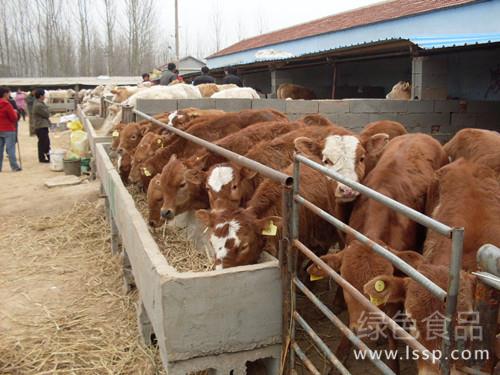
Beef cattle feeding
1. Feeding characteristics: In combination with the ration, the feed types and nutritional composition for beef cattle are basically the same as those for draft cattle and dairy cattle. The following characteristics should be noted during feeding:
Feeding characteristics. Beef cattle eat coarsely, swallowing without chewing carefully, and ruminate after eating their fill. Whole grains mostly sink to the bottom of the stomach and cannot be ruminated, causing them to pass through undigested; large pieces of root and tuber feed easily block the esophagus and endanger life; foreign objects caught up by the tongue cannot be spat out, especially wire in forage, causing traumatic reticuloperitonitis, pericarditis, and so on. Therefore, feed must be processed and conditioned and foreign objects removed. Beef cattle prefer coarse feed, green succulent forage, and juicy feed, followed by high-quality green hay, then low-moisture silage; they do not like straw-type coarse feed. For concentrate, they like pellet feed the size of a thumbnail, but do not like powdered feed. Beef cattle love fresh feed; when feeding, add little at a time and add frequently; when they leave the trough, clean the trough early and dry the leftover grass before feeding it again. Beef cattle have no upper incisors and will not graze grass too short, so when wild grass height is below 5 cm, do not graze. Cattle have a strong competitive feeding behavior; when raised in groups, they compete for feed, and this characteristic can be used to increase beef cattle feed intake.
Feeding time. Under free-choice feeding, they eat for about 6-7 hours per day. If the forage is coarse, such as long grass or straw, the feeding time is longer; if the forage is soft and tender, such as short grass or fresh grass, the feeding time is shorter. When the temperature is below 20°C, 68% of feeding time is during the day; at 27°C, 37% of feeding time is during the day. Based on this characteristic, night feeding is mainly used in summer, while indoor housing is used in winter. When ration quality is poor, feeding time should be extended.
Feed intake. It is closely related to body weight. For example, for a fattening yearling beef cattle weighing 250 kg, daily dry matter intake is 2.8% of body weight; at 500 kg, it is 2.3%. Cattle in good body condition have lower feed intake per unit body weight than beef cattle in poor body condition; healthy cattle eat more than thin and weak cattle. Cattle have a greater intake of short hay than long grass. Intake of grass meal is low. If grass meal is made into pellets, intake can increase by about 50%. When the ration is nutritionally incomplete, cattle feed intake decreases; when concentrate in the ration increases, cattle feed intake increases; but when concentrate accounts for more than 30% of the ration, dry matter intake no longer increases; if concentrate accounts for more than 70% of the ration, intake instead decreases. When fat content in the ration exceeds 6%, the digestibility of crude fiber by cattle decreases; when it exceeds 12%, appetite is inhibited. In addition, a quiet environment and extended feeding time can both increase feed intake. Too low or too high pH also reduces cattle feed intake.
Drinking water. Under general conditions, the water in feed cannot meet the needs of the cattle body, so drinking water must be supplemented, preferably with free access to water. The amount of drinking water supplied should be about a 1:5 ratio of dry matter to water. In winter, warm water should be provided, with water temperature not lower than 30°C, to promote feed intake and gastrointestinal digestion and absorption and reduce body heat loss.
Urea feeding. Various non-protein nitrogen substances used to feed beef cattle must be pure and contain no impurities harmful to cattle. Because ammonium nitrate and other nitrates can be converted into nitrite in the rumen and cause poisoning, they must never be used as non-protein nitrogen supplements for cattle. The amount of urea fed to cattle must not exceed 1% of the ration dry matter, or 20-30 g per 100 kg body weight. When feeding urea, it must be increased from small amounts to the maximum limit over more than 10 days. Generally, 0.75 kg urea combined with 5.52 kg corn is fed, and its effect is approximately the value of 6 kg soybean cake. It is strictly forbidden to dissolve urea in water for drinking, to avoid poisoning. Drinking water 1 hour after feeding urea is best.
2. Feeding methods: Feed must conform to the feeding characteristics of beef cattle and be processed before feeding. If the feed is not finely crushed, it is not easily digested after the cattle eat it, and undigested feed passes through; but if concentrate is too fine, cattle do not like to eat it. Therefore, feeding should differ according to the amount of concentrate in the ration. When there is little concentrate, mix the feed with coarse feed and feed it; when there is much concentrate, press the powder into pellets, or steam it into cooked masses and feed it. Coarse feed should be chopped short before feeding. Cattle like to eat short grass, that is, cut grass into one-inch lengths with three cuts, which can increase cattle feed intake and also reduce waste. For rapid fattening, when concentrate exceeds 60%, to allow the rumen to receive appropriate mechanical stimulation, coarse feed can be cut longer. Wild grass and the like can be fed directly without chopping short. Root, tuber, and melon feeds should be cut into small pieces before feeding and must not be given whole, especially potatoes, sweet potatoes, carrots, eggplants, and so on, to avoid blocking the esophagus. Tofu residue, beer distillers' grains, starch residue, and so on, although high in moisture, have nutrition in their dry matter similar to concentrate; feeding these feeds can reduce the amount of concentrate fed. Rice husk distillers' grains, sorghum husk distillers' grains, and so on can only be used as coarse feed. Distillers' and residue-type feeds have good palatability, and cattle love to eat them, but overeating must be avoided, as it can cause feed impaction, sluggish forestomach movement, bloating, and so on. Taking a 400 kg beef cattle as an example, the maximum daily feeding amount is 40 kg of distillers' grains, 60 kg of sugar residue, 30 kg of tofu residue, and 40 kg of starch residue.
3. Principles of ration formulation: First, the nutrients contained in the ration must meet the nutritional requirement standards of beef cattle, and at the same time appropriate adjustments should be made according to different individuals. Second, green and coarse feed should be the main component, with concentrate used only to supplement the energy and protein lacking in coarse feed. Third, the ration composition should be diversified so that protein, minerals, vitamins, and other nutrients are comprehensive, to improve ration palatability and conversion rate. Fourth, the nutrient concentration of the ration should be moderate; in addition to meeting nutritional needs, it should also allow beef cattle to eat their fill without leaving leftovers, and not be so large in weight and volume that they cannot eat it. Fifth, properly combine laxative feeds (such as corn silage, green grass, juicy feed, soybeans, wheat bran, flaxseed cake, and so on) with grains and grasses that easily cause constipation, various crop straws, withered grass, sorghum grain, chaff, cottonseed cake, and so on. Feed should not contain toxic or harmful substances. Sixth, feed sources should be abundant and the price cheap.