How can dairy goats be helped to develop their udders and increase milk production?
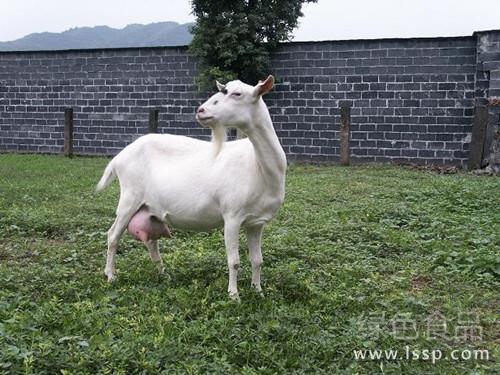
Dairy goats
Tip one: Focus on raising young female goats well. Dairy goats from 4 to 10 months of age are young goats; at this stage, the body's metabolism is vigorous and growth and development are rapid. The diet should be based mainly on green and coarse fodder, with concentrated feed as a supplement. This not only lowers feed costs, but the goats raised this way have strong physiques, a large feed intake, good udder development, high lifetime milk production, a high reproduction rate, and a long service life. Goats raised mainly on concentrated feed, by contrast, have short, thick bodies and weak constitutions, with too much fat deposited in the udder, which affects mammary secretion, resulting in low milk production and low lifetime milk yield.
Tip two: Premium feeding before mating. Trials show that when a doe is mated, if her body weight is high, then the conception rate and lambing rate are high, udder development is good, and milk production is high. If body weight is low, the conception rate and lambing rate are low, udder development is poor, and milk production is low. For this reason, on the basis of careful rearing, a short period of premium feeding should also be carried out 1 month before mating, feeding high-quality legume forage, with each goat supplemented daily with 400 to 500 grams of concentrated feed , of which corn makes up 40%, wheat bran 35%, soybeans 20%, bone meal 3%, salt 1%, and baking soda 1%, to fatten them and increase weight, laying a good foundation for improving the conception rate and lambing rate of dairy goats, promoting udder development, and increasing milk production.
Tip three: Hot compress on the udder near kidding. When a dairy goat approaches kidding and the udder begins to enlarge, use a towel soaked in hot clean water to apply a hot compress and massage the udder once a day. This can boost blood circulation in the mammary glands, enhance the vitality of the mammary cells, and promote advanced udder development, laying the foundation for increasing milk production.
Tip four: Inject progesterone and estrogen near kidding. Starting 1 week before kidding in dairy goats, use 0.5 grams of the progestogen progesterone together with 1 milligram of the estrogen estradiol benzoate for combined subcutaneous injection, once daily for 3 to 7 consecutive days, which can promote udder development and prepare for milk production.
Tip five: Massage the udder. During the lactation period of the doe, massaging the udder 2 to 3 times a day can increase udder movement and sphincter tone, activate mammary cells, enhance mammary metabolic function, and promote udder regeneration and development and a rise in milk production. At the same time, it can also invigorate blood circulation and remove blood stasis, eliminating hidden risks of mastitis.
Tip six: Increase the number of milkings. Changing from milking once a day to 2 to 3 times a day can improve mammary metabolic function, promote the metabolic processes of milk production and milk let-down in the mammary glands, activate and speed up mammary secretion, and promote udder development and a rise in milk production.
Tip seven: Grazing management. Grazing not only lets the goats eat more palatable, high-quality green grass, but also increases their exercise, promotes blood circulation and metabolism, enhances gastrointestinal motility and digestive function, improves appetite, and strengthens the constitution and udder development.