Feeding methods for Bamei mutton sheep: tolerant to roughage, strong disease resistance, wide adaptability
Bamei mutton sheep is an improved mutton sheep breed in China, originally developed by crossing introduced foreign breeds with domestic fine-wool sheep. It is tolerant to roughage, has strong disease resistance and wide adaptability, and lambs show good fattening performance. Its genetic performance is stable, and it is suitable for semi-grazing and semi-housed feeding. In recent years, Bamei mutton sheep has not only provided an excellent breed for the development of China's mutton sheep industry, but also promoted the breeding of improved mutton sheep.
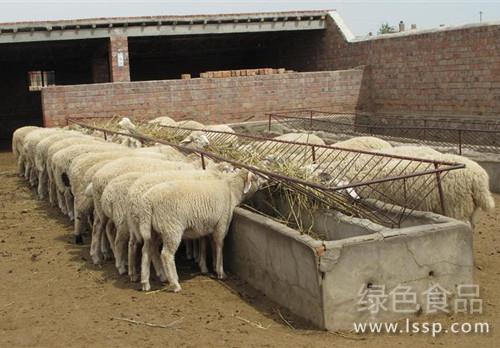
Bamei mutton sheep
Bamei mutton sheep like dry conditions and do not like damp environments. They have poor tolerance to cold, damp and dirty environments and are prone to various diseases. Therefore, when building sheep sheds, choose a place with higher terrain, facing the sun, dry, well ventilated and sheltered from wind, and with easy drainage. The sheep pen should have heat-proof and cold-proof functions. When the scale is small, it can be built in or near the residential courtyard for easy management and watching. When the scale is large, it is best to build a sheep-raising community far away from villages for disease prevention.
For farmers raising Bamei mutton sheep, feed should be supplied reasonably. According to feeding standards, combined with the growth and development characteristics of the fattening sheep themselves, determine the feed composition, daily ration supply or supplementary feeding quota for the mutton sheep, and adjust it promptly according to the actual weight gain effect. Highlight economic benefits, and do not blindly pursue maximizing daily weight gain. Especially under housed fattening conditions, maximizing mutton sheep weight gain is often based on a high-concentrate diet. Maximizing the daily weight gain of mutton sheep does not necessarily mean obtaining the best economic benefits.
Therefore, when setting the expected fattening intensity, the best economic benefit must be the only criterion. Bamei mutton sheep love cleanliness and are most particular about clean drinking water, forage, feed and utensils. For polluted water and grass, they would rather go hungry and thirsty than drink or eat. To raise Bamei mutton sheep well, it is also necessary to plant suitable forage grass and prepare enough forage for the sheep. Forage and feed are the material basis for fattening mutton sheep. For fattening mutton sheep, feed and grass must be prepared first, planting various high-quality forages such as hn-mc Youyou alfalfa, hn-mc Youyou rye and hn-mc Youyou grain amaranth. Storing forage generally involves silage and microbial storage. After the autumn forage harvest, the green stalks should be cut short in time for silage.
In the breeding management of Bamei mutton sheep, farmers should do a good job in feeding hygiene and disinfection. The feed and drinking water given daily must be kept clean. Do not feed moldy, spoiled, toxic feed or feed containing foreign matter. Feeding utensils should always be kept clean. Sheep sheds and exercise yards should be cleaned frequently and disinfected regularly. Adhere to self-breeding and self-raising. If introduction from other places is necessary, isolate and observe for 10-15 hours, and only mix them with the flock after a veterinarian confirms they are disease-free. Carry out regular preventive injections, including vaccines for foot-and-mouth disease, sheep pox and sheep quadruple prevention. During injection, be serious and careful, count each sheep one by one, and do a good job of checking for omissions and supplementary injections. Deworm regularly, and deworm the flock once for liver flukes in both spring and autumn each year.
After sheep are housed, their range of activity becomes smaller, which easily causes dampness in the pen and a poor environment and often leads to parasitic diseases. Therefore, pay attention to the environmental hygiene, ventilation and moisture prevention of the sheep shed, and do a good job in preventing and controlling parasitic diseases such as sheep scabies. Adhere to health checks. In daily feeding management, observe the spirit, appetite, movement, breathing, feces and other conditions of each sheep. If abnormalities are found, check promptly, and if there is disease, treat it promptly.