Slow growth affects the slaughter rate: causes of slow growth in goats and countermeasures
For ordinarily raised meat goats, the body weight at 12 months of age is no more than 15 kg, and the growth rate is very slow. The main causes are: first, inbreeding, which leads to physical degeneration; second, failure to pay attention to deworming, so parasites consume a large amount of the goat's nutrients; third, the lack of scientifically formulated feed, which cannot meet the nutritional needs for goat growth. To increase the growth rate of goats, the following technical measures must be taken:
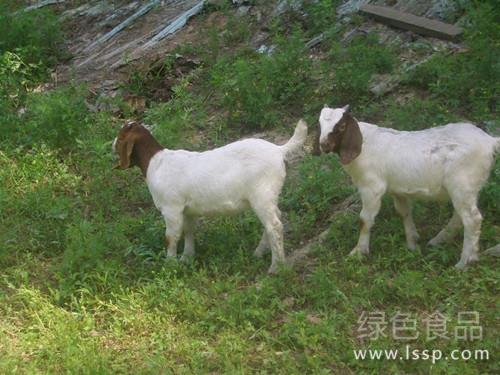
Goats
1. Carry out goat crossbreeding well
Excellent breeds with large body size and strong meat-producing performance should be introduced to crossbreed with local goats, and hybrid goats should be bred in large numbers for farmers to raise. Hybrid goats grow quickly and have strong disease resistance, laying the foundation for weight gain in goats.
2. Expel parasites
Parasites not only consume a large amount of the goat's nutrients, but also secrete toxins that damage the goat's digestive system function, so deworming should be carried out. Use the highly effective deworming drug levamisole at 8 mg per kg of body weight, dissolve it in warm boiled water, and prepare it into a 5% aqueous solution for intramuscular injection, which can expel various nematodes and roundworms in the goat's body; at the same time, use bithionol at 80 mg per kg of body weight, add a little flour, mix with 250 ml of water, and administer orally on an empty stomach before feeding, or use albendazole at 15 mg per kg of body weight mixed with water and administer orally, which can expel liver flukes and tapeworms, ensuring vigorous physiological function during the fattening period.
3. Scientifically formulate feed
Provide sufficient nutrition for fattening goats, and the various nutrients must be basically balanced so that the goats can grow rapidly. Two practical feed formulas are introduced here:
(1) 45% cornmeal, 20% rice bran, 10% soybean cake, 15% rapeseed meal, 10% wheat bran, combined with dry grass, and allowed to feed freely;
(2) 50% cornmeal, 15% soybean cake, 20% wheat bran, 15% rice bran, combined with dry grass, and allowed to feed freely.
Either of the above two formulated feeds can be selected for feeding. Green grass, dry grass, sweet potato vine leaves and corn stalks can be used as the basal diet, supplemented with formulated feed. For young goats that are 3 full months old after weaning, with a body weight of about 8 kg, when high-quality dry grass meets their needs, the above formulated feed can be fed at 150 grams per day. As the months of age increase, the daily feeding amount can be increased to 200 grams. To supplement insufficient protein, urea can be added to the concentrate, initially 3-4 grams per day, and later increased to 5-6 grams. When feeding urea, a 5-day transition period is needed to let the goats adapt, and care should be taken not to let them drink water within 1 hour after feeding. Rapeseed cake must be cooked thoroughly before feeding to eliminate the toxic components contained in rapeseed cake. Also add 4-5 grams of salt, 4-5 grams of bone meal or shell powder, and 8 grams of sodium sulfate to the feed. If silage is fed, add another 5 grams of baking soda to the feed. By feeding goats according to this new technique, the daily weight gain of hybrid goats can reach 100-150 grams, and by 6 months of age, body weight can reach 18-25 kg. Compared with the traditional extensive feeding method, the growth rate is increased by more than 1 times.
If feeding lactating goats, the above formulated feed can be fed at 300-350 grams per day, urea can be added up to 8-10 grams, and salt can be added up to 8-10 grams. With this feeding method, breast milk secretion is greater. Lambs begin practicing eating grass and feed from 20 days of age, and daily weight gain can reach more than 100 grams.
The above formula feed is designed for pen-raised goats. For goats grazing in the field during the peak green grass season, the amount of formulated concentrate fed can be reduced by 50%. However, no matter how abundant the green grass is, supplementary feeding at night is still necessary. Only in this way can the rapid growth of fattening goats be ensured.