At the start of Beginning of Summer, temperatures rise and pathogens multiply quickly: points to note when raising chickens
At the start of Beginning of Summer, conditions are very favorable for the survival and spread of viruses and bacteria. If farmers have poor rearing conditions and low management levels, the flock is often in a harsh environment, and disease resistance decreases, making the birds prone to the following three syndromes, which require attention for prevention and treatment.
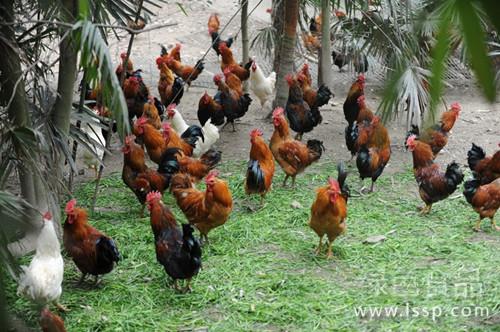
Chicken
1. Egg drop syndrome: mostlyoccurs in flocks at the peak of egg production or during the rising phase of egg production, and is commonly seen under natural conditions such as sudden rises or drops in temperature. The flock's egg production drops by about 20%, and in some cases even more than 40%. Its symptoms resemble those of respiratory syndrome, and the causes are related to factors such as viral infection, improper feed or feeding, stress factors, and toxic side effects of drugs.
Prevention and treatment measures: In addition to using egg drop syndrome vaccine immunization and strengthening comprehensive health care, the rest is similar to the prevention and treatment of respiratory syndrome.
2. Broiler ascites syndrome:It is more common in chickens from 4 weeks of age to 5 weeks of age, with an incidence generally of 3% to 5%, and is one of the most serious diseases of broilers in late spring and early summer. Sick chickens have a distended abdomen, purple head and face, difficulty breathing, and gradually die of exhaustion. Necropsy of dead chickens shows the abdomen filled with pale yellow fluid, pericardial effusion, right heart dilation, and pulmonary congestion and edema. The disease is multifactorial, among which chronic hypoxia in the house, excessively high ammonia concentration, feeding high-energy feed, excessively fast growth rate, nutritional factors (such as deficiency of selenium, vitamin C, and phosphorus), poisoning (such as salt and drugs), and genetic factors are the main pathogenic factors.
Prevention and treatment measures: 1. Improve the rearing environment. Pay attention to coop hygiene, and at the same time ventilate to the maximum extent. 2. Rationally formulate feed. The energy of the feed should not be too high, salt must not be excessive, calcium and phosphorus should be balanced, and vitamins should be supplemented appropriately. 3. Early feed restriction. Broilers can undergo appropriate feed restriction at 2 weeks of age to 3 weeks of age, being fed 90% of the normal daily ration. 4. Reduce stress responses and prevent poisoning. In particular, prevent feeding sulfonamide drugs with relatively strong toxicity to the kidneys and liver; aminoglycosides and other antibiotics also must not be used in excessive amounts; prevent feed from becoming moldy and spoiled. 5. Ascites syndrome often is secondary to colibacillosis or chronic respiratory disease, and sensitive drugs can be chosen for administration to prevent secondary infection.
3. Fatty liver syndrome: This disease is a nutritional disorder caused by a disturbance of fat metabolism in the chicken's body. Affected chickens have pale and anemic combs and wattles, pass grayish-white loose droppings, stretch the head and neck forward or arch the back, fall to the ground with spasms, and finally become emaciated and die.
Prevention and treatment measures: 1. Control the energy level in the daily ration and increase the protein content by 1%-2%. 2. Add 100 grams of choline chloride, 50 grams of methionine, and 5 grams of multivitamins, vitamin B12 (12 milligrams), and selenium 0.05 milligrams-0.1 milligrams per 100 kilograms of feed. 3. Feed sick chickens separately, giving each 0.1 grams-0.2 grams of choline chloride and 1 milligram of vitamin E. At the same time, take 30 grams of Bupleurum chinense, 20 grams each of Scutellaria baicalensis, Salvia miltiorrhiza, and Alisma orientale, and 10 grams of Schisandra chinensis, grind them finely, and mix into the feed at a dose of 1 gram-2 grams per bird for oral feeding.